Updated5 min readApplication Guide
Aluminum Foil Containers for Catering: Full-Size, Half-Size, and Party Trays Buyer Guide
Choose catering aluminum foil containers by tray size, depth, rim strength, oven use, buffet handling, lid fit, carton packing, and export supply.

Quick Answer
Choose catering foil containers from filled weight, menu footprint, holding and reheating route, service equipment and how staff will lift the hot pack. Names such as full-size, half-size or party tray are market shorthand, not a universal dimensional standard; approve exact top and bottom dimensions, depth, rim, lid and support method before purchasing.
Translate catering names into measured formats
Start with the equipment and service route: oven or warming cabinet opening, rack, trolley, chafing setup, serving table, bag or crate, and available shelf height. Measure the maximum usable envelope and the number of filled packs expected in each position.
Then record top outer and inner size, usable base, height, wall angle, rim, lid height and piece-weight range. Two trays sold under the same catering nickname may not share lids, fit the same rack or carry the same hot load.
| Catering route | Format priority | Approval focus |
|---|---|---|
| Buffet line | Equipment fit, hot holding and repeated serving | Rack/chafing fit, rim and utensil access |
| Family or party tray | Broad base, filled support and lid headspace | Two-hand lift, sag and stack |
| Catering side dish | Depth, portion yield and rapid packing | Fill line, lid speed and carton count |
| Oven-to-service | Heat route and hot handling | Support, distortion and opening after heat |
Design around the filled menu and center of gravity
Rice, pasta and vegetables spread load across the base; meat portions, bones or a ladled corner create concentrated loads; thin sauce shifts during carrying. Set normal and worst-case fill weights and show where that weight sits rather than approving by litre capacity alone.
Large pans often need two-hand handling or an external sheet, rack or carrier. The instruction and service equipment are part of the safe route; a tray should not be judged by someone gripping one hot rim in an unrealistic demonstration.
- Run two-hand and intended-carrier lift tests at service temperature.
- Check a deliberately uneven fill as well as a level fill.
- Record base sag, wall buckling, rim roll and lid movement.
- Define the maximum stack during holding and transport.
Validate hot holding, reheating and service together
Use the actual food, cover, hold time and equipment. Check moisture loss, steam, sauce contact, lid engagement, rim stability and whether staff can uncover and serve without deforming the pan or contacting unsafe hot surfaces.
If food is chilled or frozen before reheating, include that conditioning and any condensation or seal changes. The aluminum pan, board lid, clear lid, film, label and outer carrier may have different use limits and instructions.
- Measure equipment clearances with the lid fitted.
- Repeat opening and serving at realistic intervals.
- Check hot surfaces and support instructions with operators.
- Revalidate after food, lid or equipment changes.
Protect large trays through packing and event logistics
Large nested trays can save cube but expose broad rims and corners to carton compression. Specify sleeve quantity, separators if needed, carton orientation, gross weight, stacking limit, trolley or pallet pattern, vehicle handling and receiving checks.
Model the real event route: warehouse pick, vehicle loading, kitchen staging, hot or cold holding, returnable equipment and waste handling. A pack that survives sea freight can still fail when a catering team repeatedly lifts an overfilled carton.
- Set a carton weight that staff can handle safely.
- Inspect de-nesting after shipment compression.
- Keep lids segregated and counted by tray code.
- Include emergency substitute rules for event operations.
Prepare a catering sample brief for Alustar
Send menu photos, portion and filled weight, equipment dimensions, holding and reheating route, service method, lid preference, stack, carton limit, order pattern, destination and required documents. Identify any local full-size or half-size reference by measured dimensions, not name alone.
Alustar can compare existing deep, shallow, rectangular, round or reinforced formats and arrange samples for filled-route trials. Convert the passing tray, lid, support and packing method into one repeat-order specification.
- Mark equipment and menu values as fixed or flexible.
- Test the heaviest and most liquid credible dishes.
- Approve both empty nesting and filled handling.
- Archive the exact lid and carton with the tray code.
Purchase Catering Aluminum Foil Trays for Events and Production
Catering Aluminum Foil Trays must carry the real food load through cooking or reheating, hot holding, transport, buffet handling, and service. Send the pan footprint, depth, filled weight, oven or warmer dimensions, lid, stack height, handling route, peak-event volume, and replenishment plan.
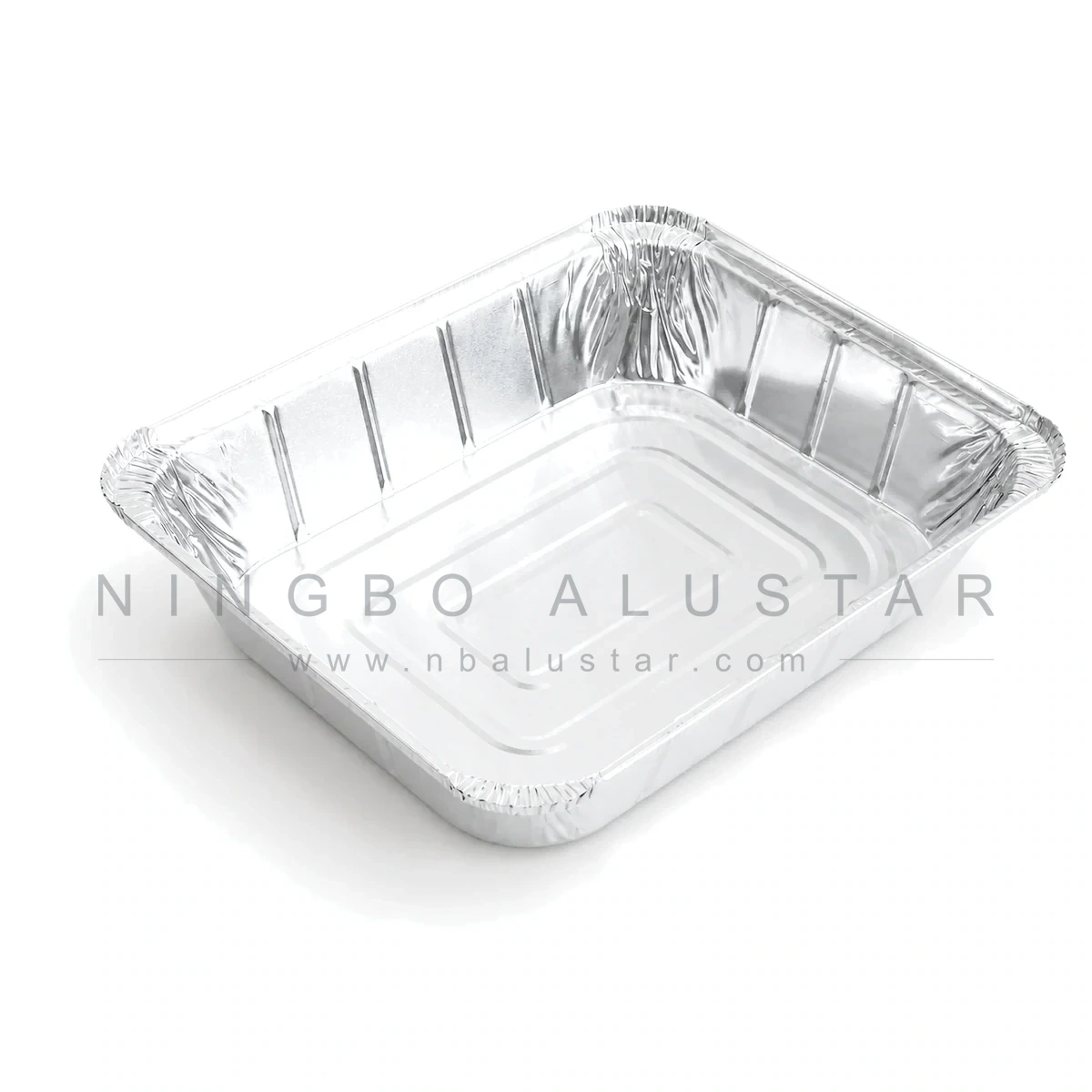
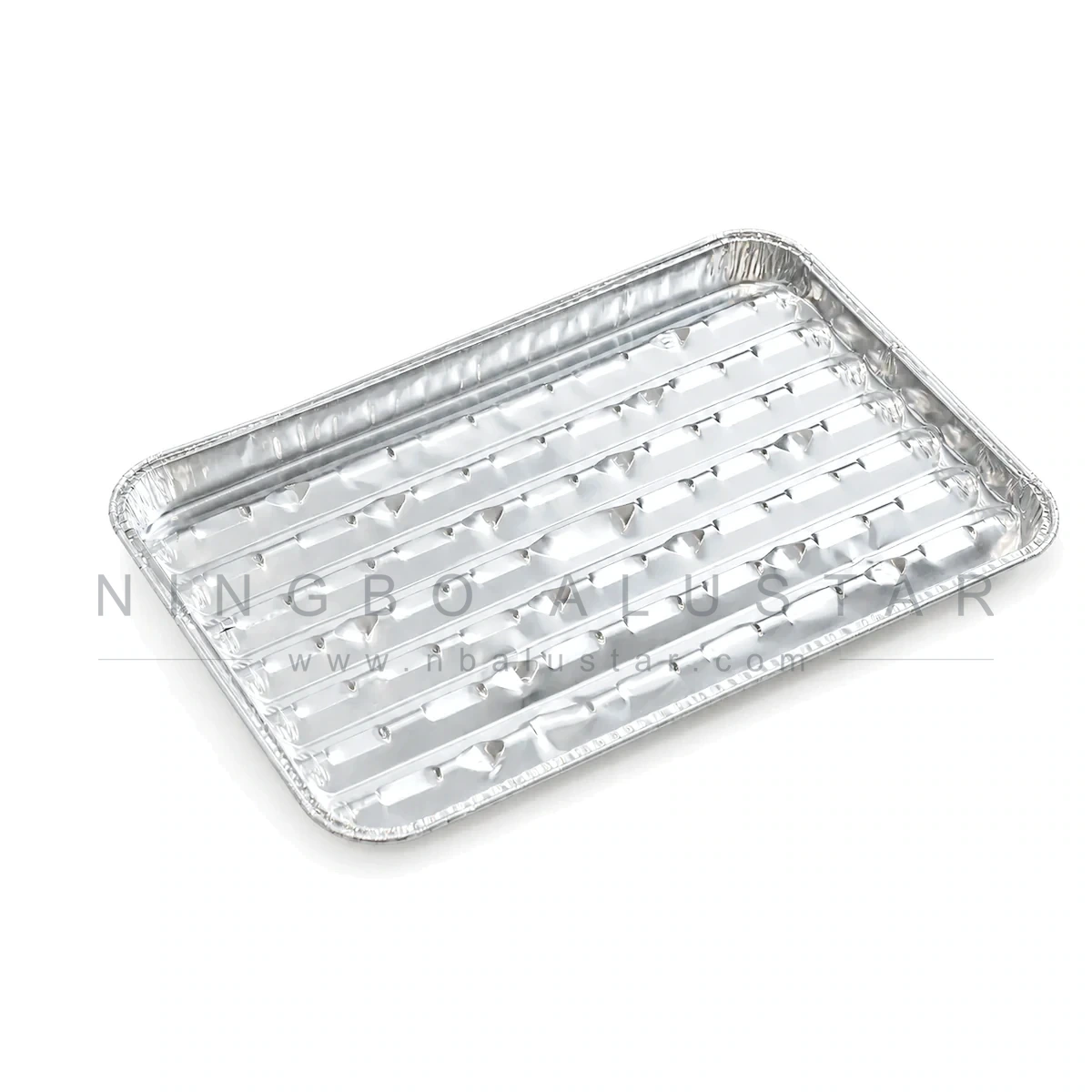
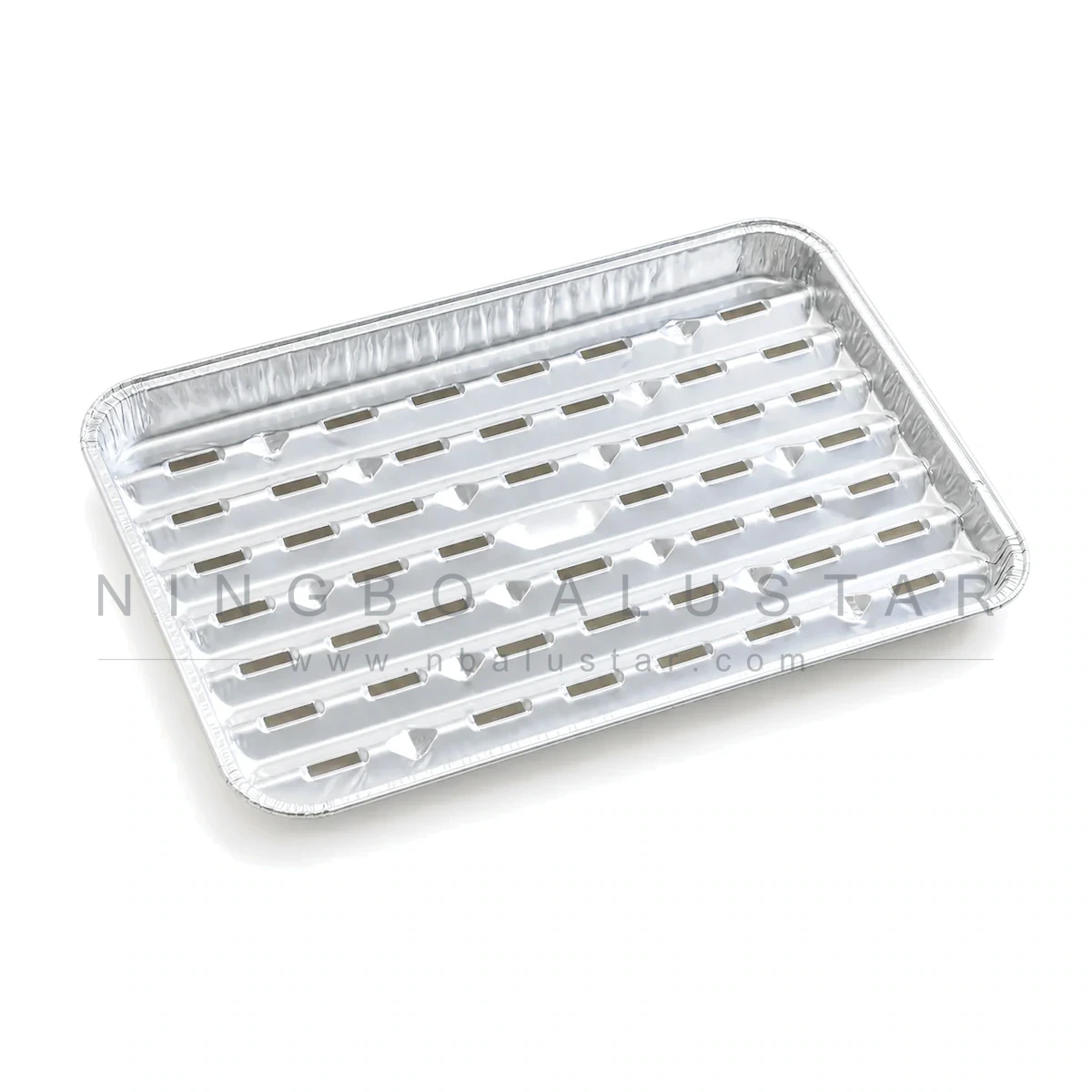
Caterers, hotels, central kitchens, rental suppliers, and distributors are welcome to source catering trays from Alustar. We can compare full-size, half-size, deep, divided, roasting, and party formats with their matching closures and export cartons.
- Test lift points and base support at maximum filled weight.
- Confirm fit with kitchen racks, warmers, chafers, and serving stations.
- Use stronger rims or secondary support where staff handling demands it.
- Plan seasonal safety stock and cartons around peak event calendars.
Direct B2B procurement
Catering Foil Tray Manufacturer
Source full-size, half-size, deep, roasting, and party trays for hotels, events, central kitchens, hot holding, transport, and service.
View solutionSources and further reading
Continue this buying path
Use these related guides to move from initial selection to specifications, compliance, and supplier evaluation.
Gulf Food Packaging
Aluminum Foil Containers for Gulf Family Meals, Machboos, and Catering
Read guideApplication Guide
Airline Meal Aluminum Foil Trays: What Catering Buyers Need to Check
Read guideApplication Guide
BBQ and Baking Aluminum Foil Trays: Selection, Purchasing, and Supply Chain Management
Read guideProduct Guide
Aluminum Foil Roasting Pans: Deep Trays, Large Trays, and Oven Use
Read guideRelated aluminum foil products
Buyer next steps
FAQ
Are full-size and half-size foil trays universally standardized?
Do not assume so. Market names can refer to different outer dimensions, depths, rims and lids. Approve measured dimensions and equipment fit for the exact product and destination.
How should a large catering pan be lifted when hot?
Use the validated method—often two hands plus an external rack, sheet or carrier for heavy loads. Test with the actual food and temperature and put the support requirement into operator instructions.
What should a catering tray hot-hold test include?
Include the real food, fill, lid, equipment, duration, stack and service actions. Check base and rim stability, lid movement, steam, leakage, opening, utensil access and presentation throughout the route.
What should buyers send for a catering foil tray quotation?
Send measured equipment space, menu and filled weight, route temperatures, support and lid method, pack and carton limits, quantity pattern, destination and documents. Include a local reference tray only as a measured sample, not a nickname.