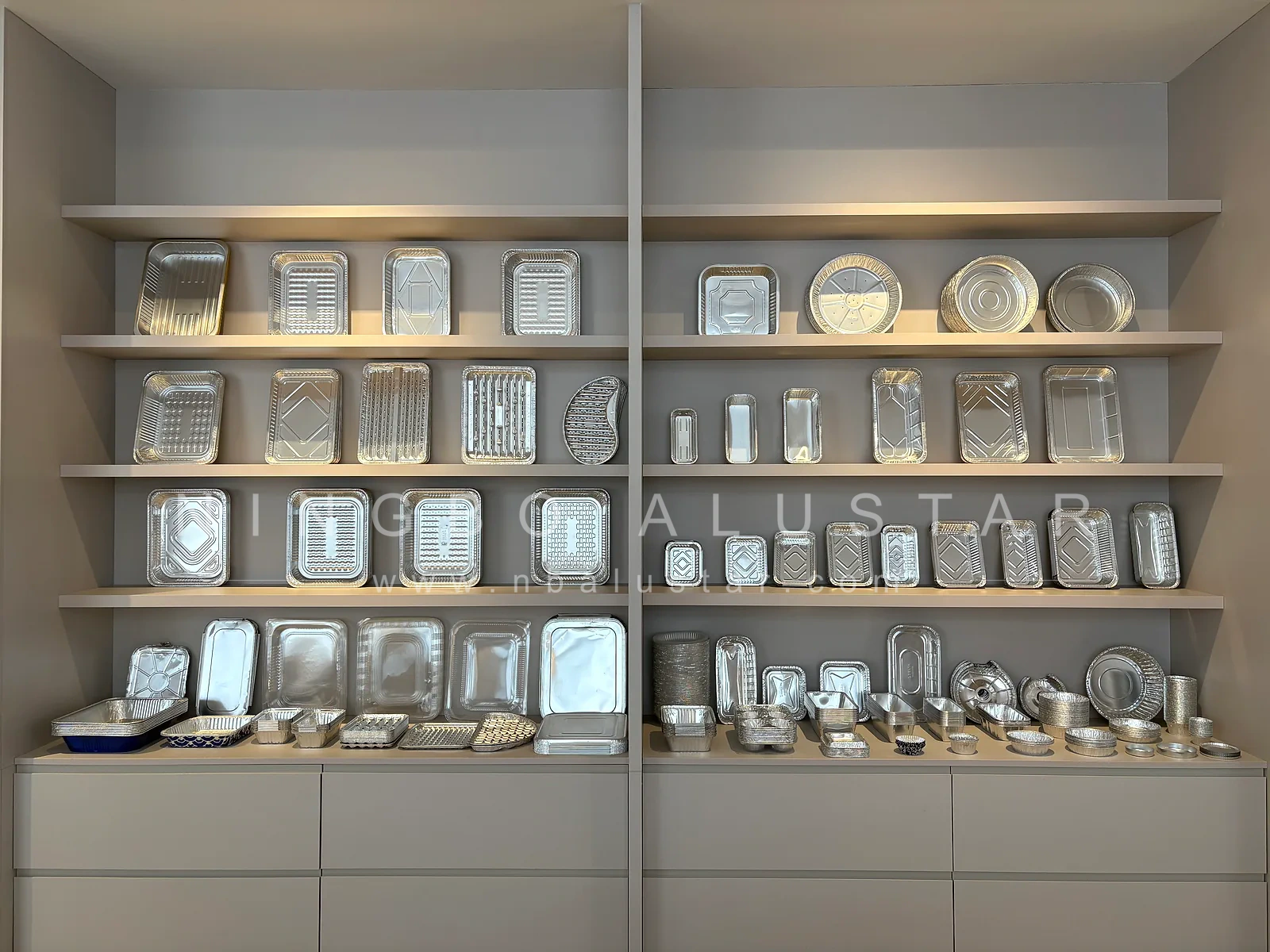
Located in Ningbo, one of the world's major harbor cities, Alustar benefits from efficient logistics and convenient access to international shipping routes. This location helps the company support customers across Europe, Japan, America, and other global markets.
Founded
Established in 2007
Core Material
Food-contact aluminum foil
Main Markets
Europe, Japan, America, and global buyers
Custom Work
Special designs and tooling available
Direct B2B procurement
Catering Foil Tray Manufacturer
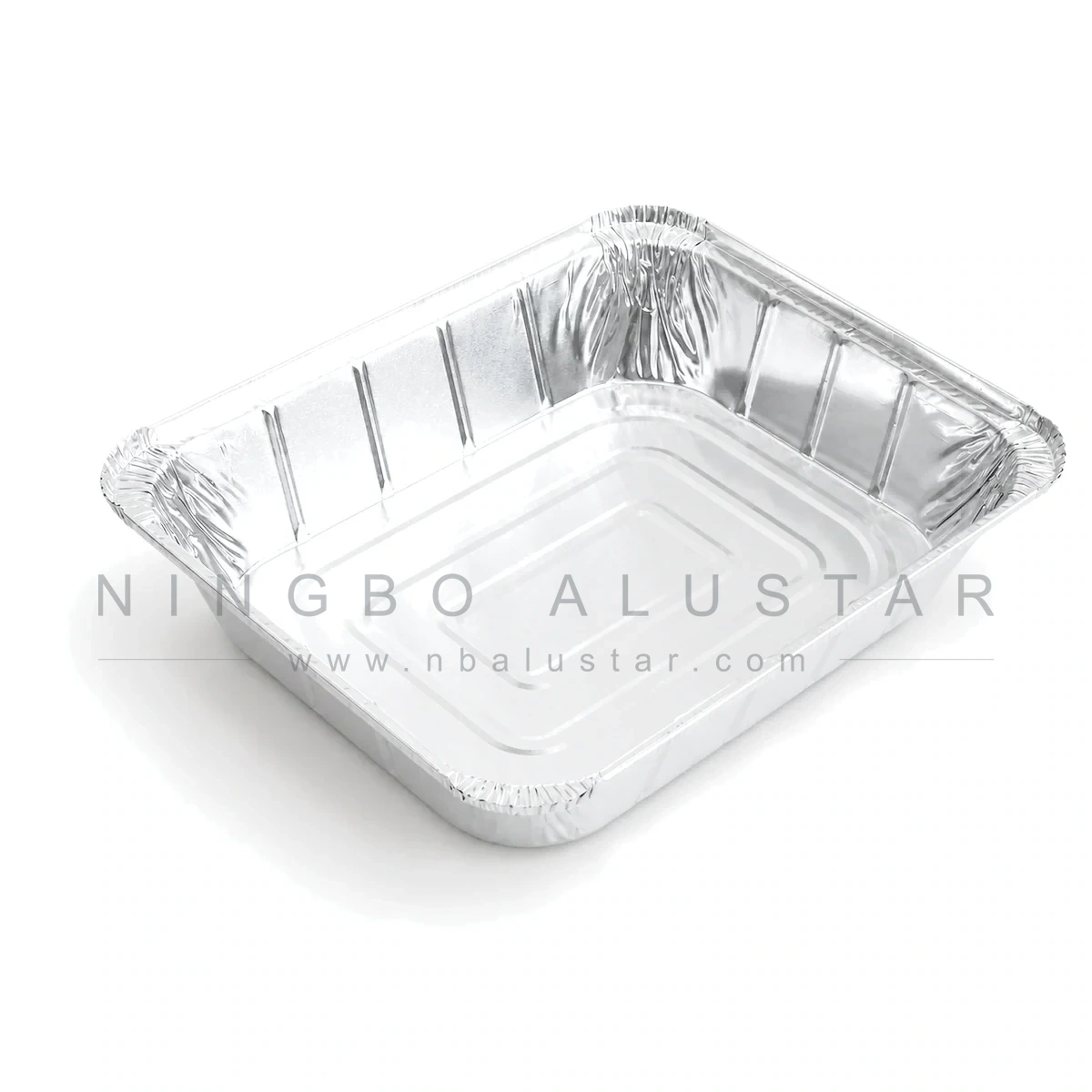
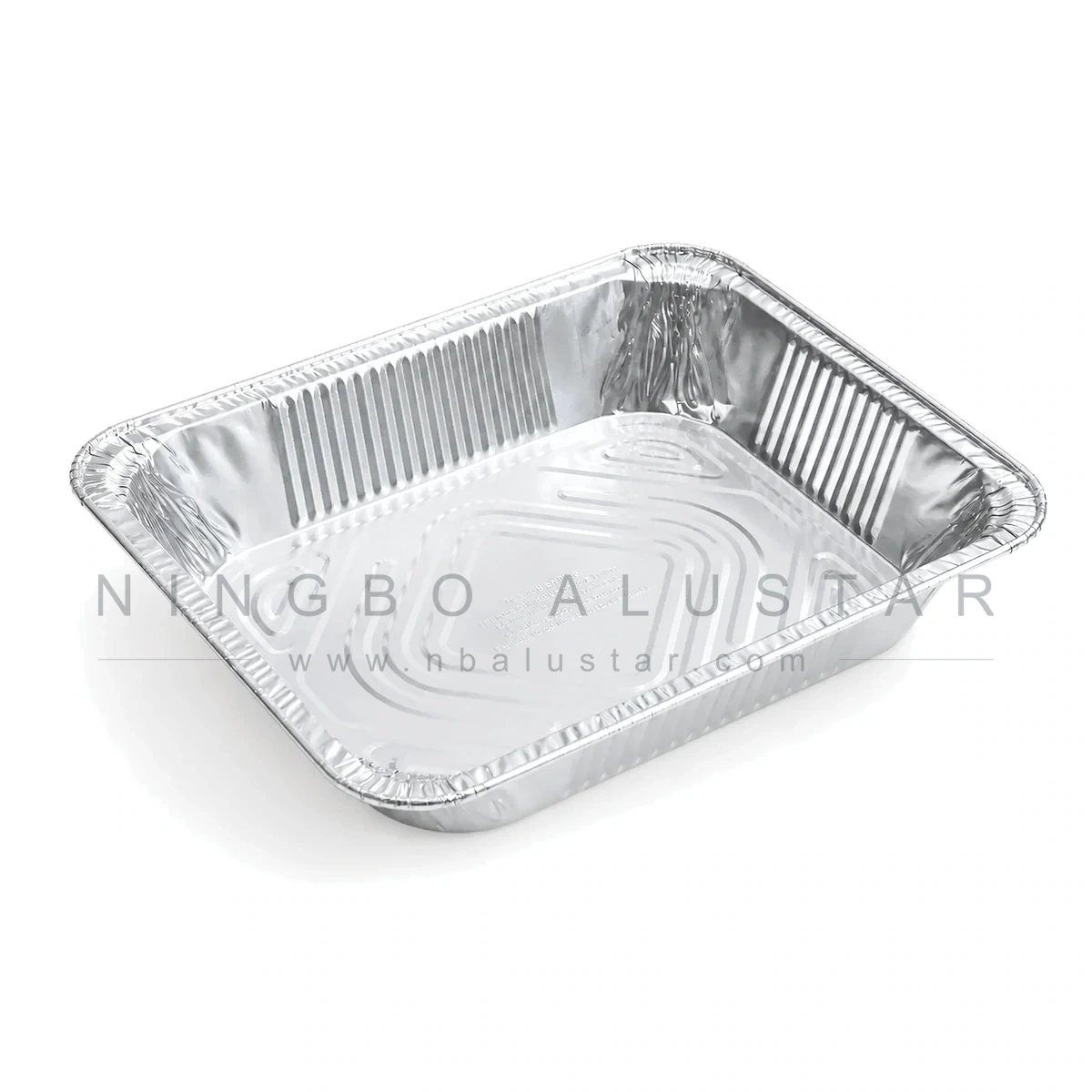
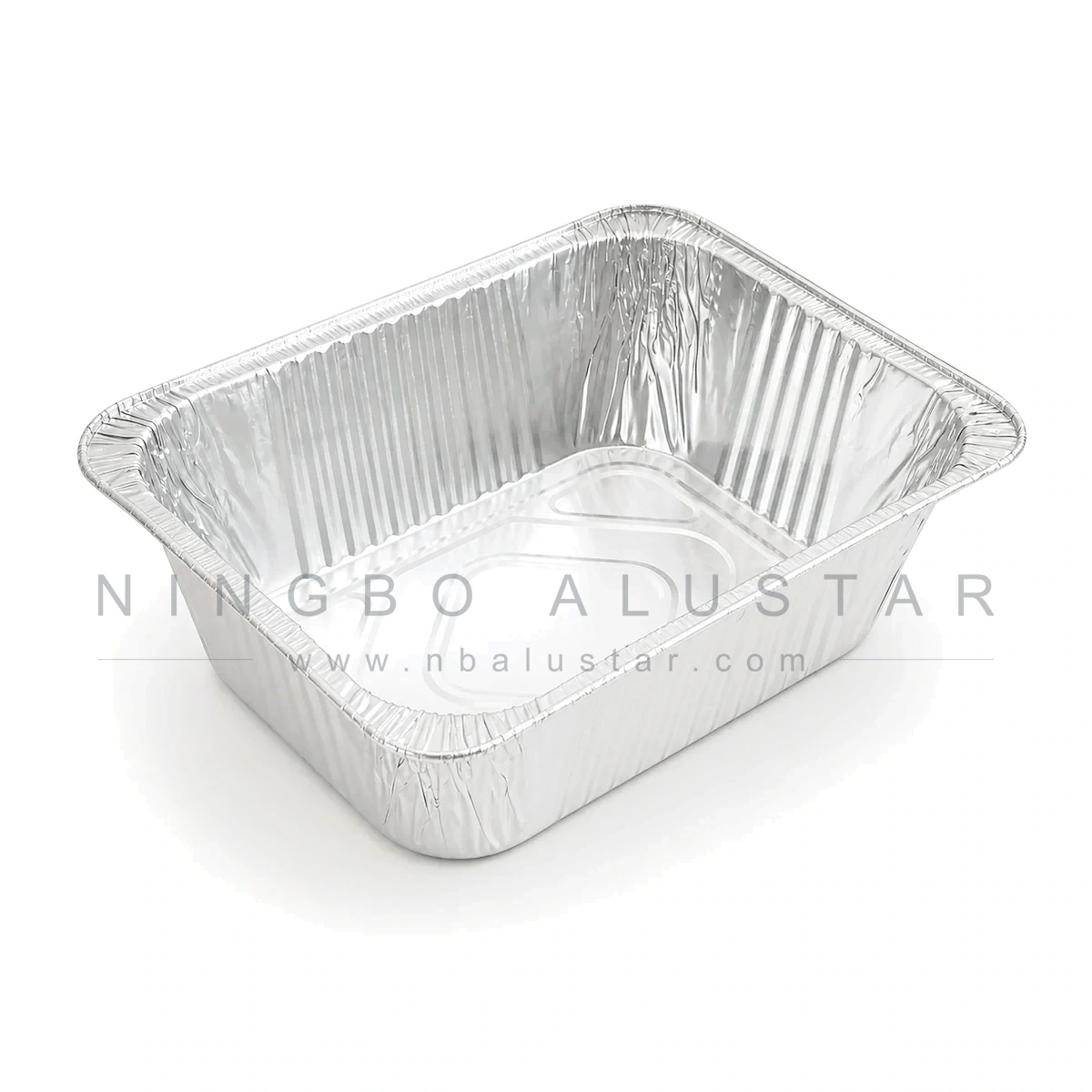
Source full-size, half-size, deep, roasting, and party trays for hotels, events, central kitchens, hot holding, transport, and service.
Application Guide
Aluminum Foil Containers for Catering: Full-Size, Half-Size, and Party Trays Buyer Guide
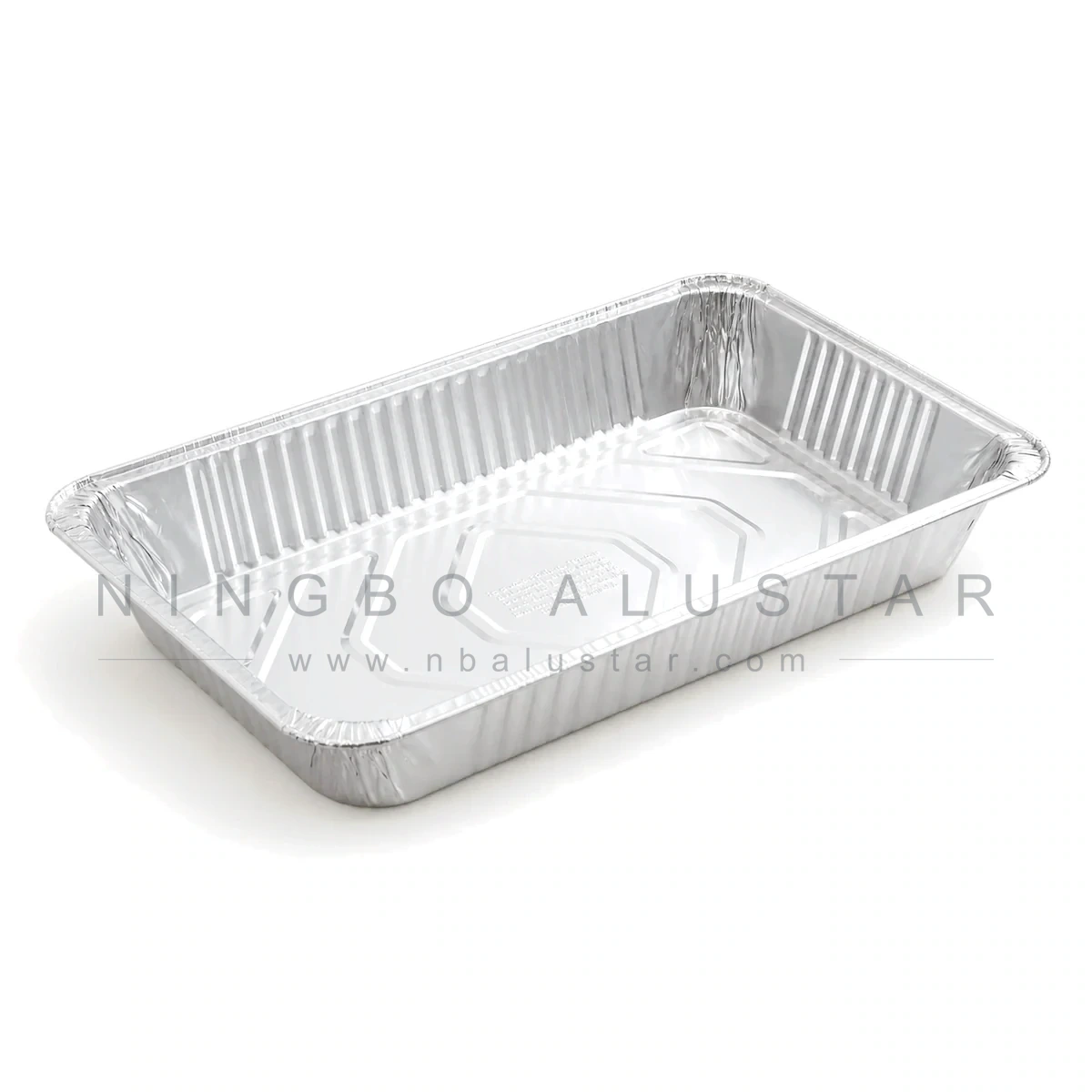
Choose catering foil containers from filled weight, menu footprint, holding and reheating route, service equipment and how staff will lift the hot pack. Names such as full-size, half-size or party tray are market shorthand, not a universal dimensional standard; approve exact top and bottom dimensions, depth, rim, lid and support method before purchasing.
Start with the equipment and service route: oven or warming cabinet opening, rack, trolley, chafing setup, serving table, bag or crate, and available shelf height. Measure the maximum usable envelope and the number of filled packs expected in each position.
Product Guide
Aluminum Foil Roasting Pans: Deep Trays, Large Trays, and Oven Use
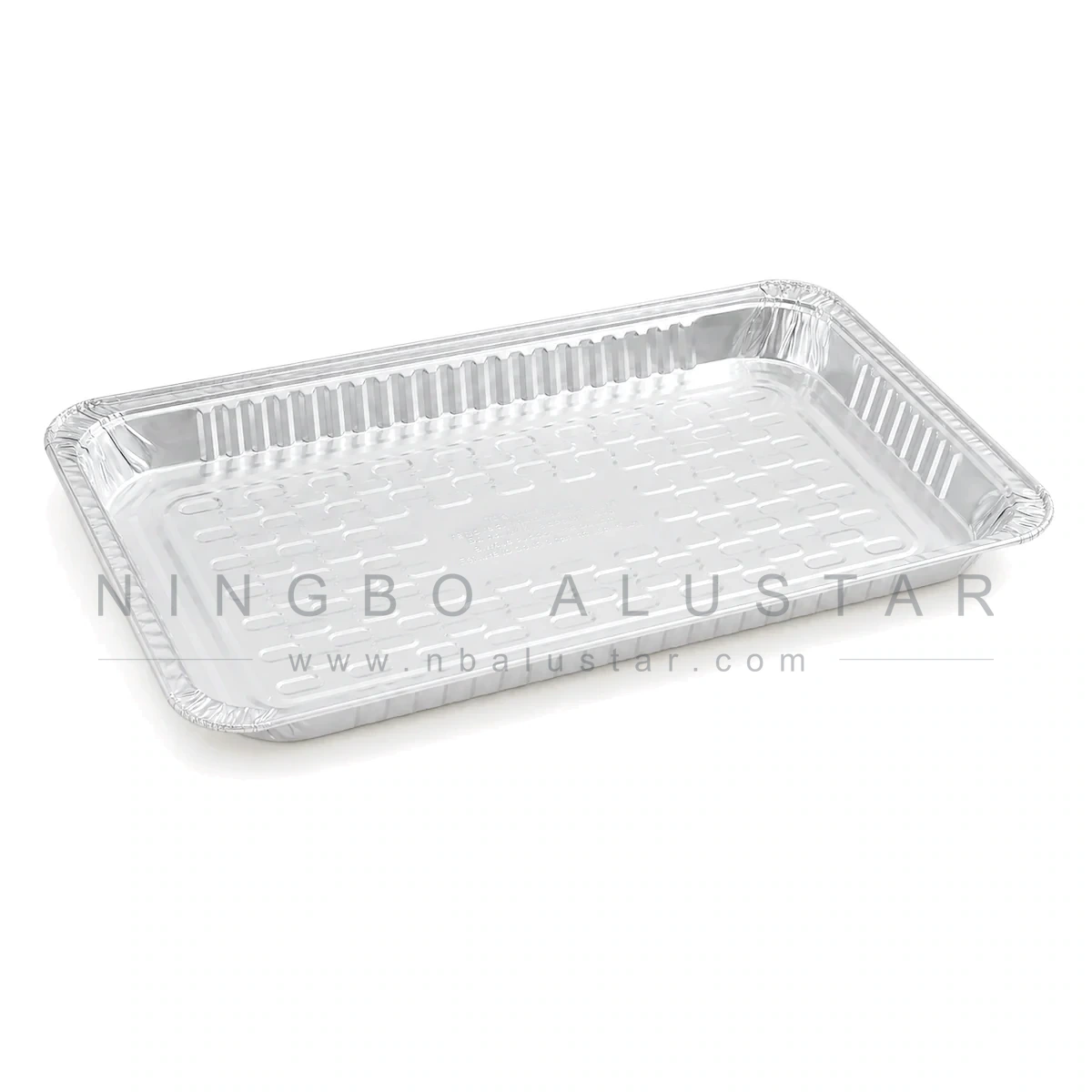
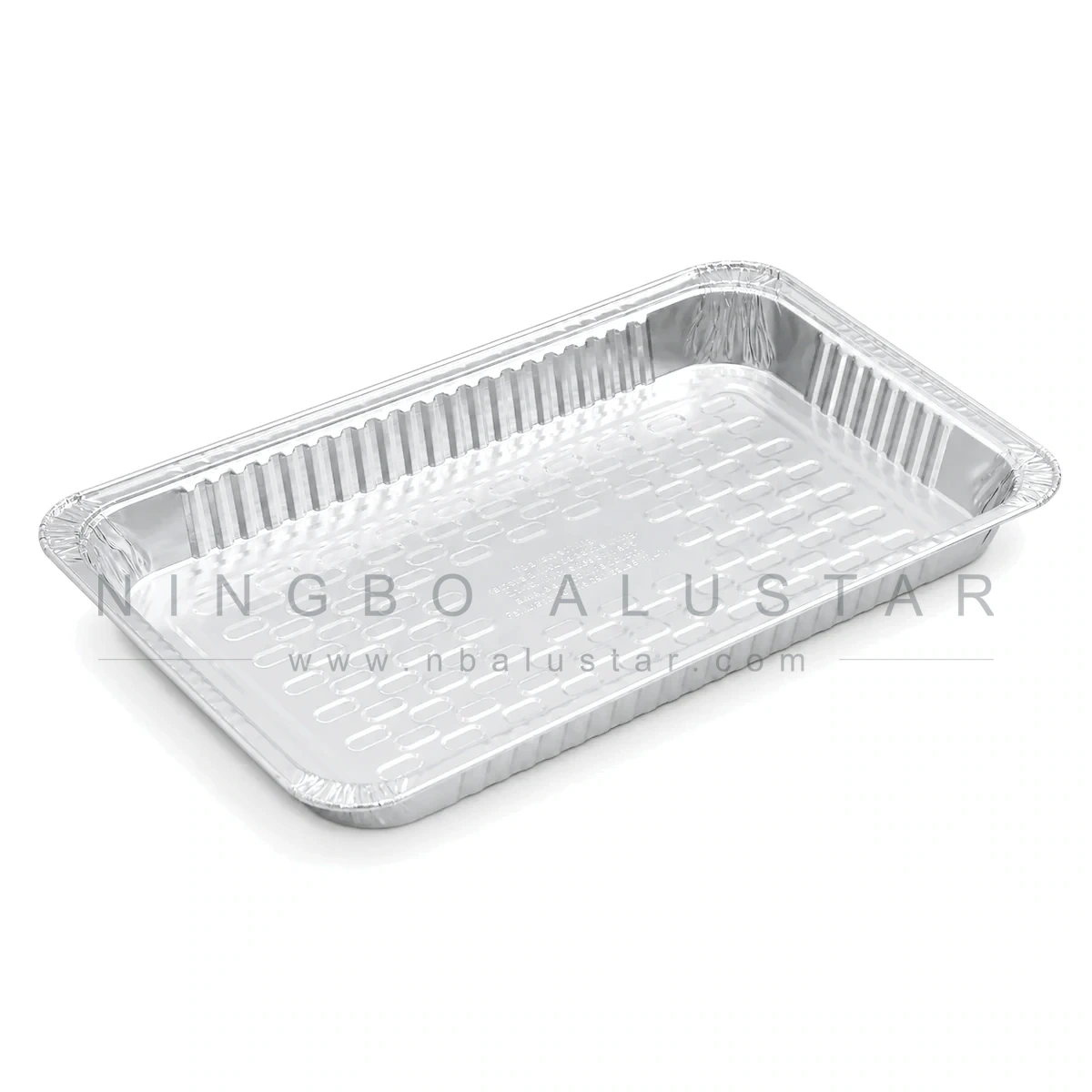
Choose a foil roasting pan from the cooked load and support route: food mass, grease volume, center of gravity, rim grip, oven or grill support, drainage requirement, hold time, and the way the hot pan is transferred and served. A non-perforated grill tray such as S820, perforated SR820, and deeper container route such as SV889 perform different jobs. Always test the pan with the real food, appliance support, catch tray or rack, cooking cycle, hot lift, rest period, serving utensils, and disposal route; empty-pan stiffness is not a hot-load rating.
The word roasting pan covers several load paths. A deep pan may contain a heavy roast and liquid; a shallow solid tray may catch grease or support smaller food; a perforated tray intentionally lets heat, smoke, and rendered liquid move through openings. Substituting one route for another changes both cooking behavior and where hot grease goes.
Application Guide
BBQ and Baking Aluminum Foil Trays: Selection, Purchasing, and Supply Chain Management
The right BBQ or baking aluminum foil tray should be selected from the real food load and transport route, not from catalogue capacity alone. Buyers should convert the application into a written specification, approved sample, and quotation with clear conditions of use.
In modern catering and food processing, successful packaging is not proven by a factory catalogue alone. Many risks, including rim deformation, seal leakage, and load failure, only appear after the tray is filled, sealed, stacked, and moved through long-distance cold-chain or ambient logistics.
Material Guide
Aluminum Foil Container Thickness Guide: Gauge, Strength, Weight, and Cost
There is no universal best thickness for an aluminum foil container. The correct specification is the lightest validated finished structure that safely supports the food, lid, stack, heating or cooling route, and transport conditions. Control incoming foil thickness, finished-piece weight, measurement locations, geometry, and functional results together; a vague label such as standard or heavy duty is not an acceptance criterion.
Thickness is useful, but it answers only part of the buying question. Incoming foil, formed containers, and different measurement locations are not interchangeable data points. A stable specification connects the material entering the press to the weight, geometry, and performance leaving it.
Size Guide
Product Range
Start with real Alustar products, then confirm the application, finished-piece specification, lid and packing as one order.
SF72R Medium-Depth Full-Size Turkey Roasting Pan – New Tooling. Dimensions: outer 525x330 mm, inner 495x300 mm, bottom 470x270 mm, height 50 mm.
MOQ · OEM / ODM · RFQ
Send a quote-ready buying brief
A useful RFQ lets engineering, production, quality and logistics price the same requirement.
Food or application and filled weight
Drawing, sample or target dimensions
Lid, sealing and temperature route
Trial quantity and annual forecast
Logo, artwork, inner pack and carton
Destination market, documents and delivery term
Buyer Resources
Aluminum Foil Container MOQ Guide: What Affects Minimum Order Quantity?
MOQ is not one factory-wide number. A plain tray from an existing mold may start with a production-friendly trial quantity, while a printed retail pack, embossed logo, special coating, dedicated lid, new tool, or low-volume mixed SKU adds a separate material or setup minimum. Break the project into tray, lid, artwork, carton, tooling, and shipment MOQs before negotiating a launch plan.
Custom Aluminum Foil Packaging: OEM and ODM Options for Food Brands
For most buyers, the fastest custom packaging route is to use an existing tray mold, confirm lid fit, then customize carton, label, embossing, or sleeve before considering new tooling.
Aluminum Foil Container Quality Inspection Checklist Before Shipment
A useful pre-shipment inspection starts with the approved sample and order specification, then records the sampling plan, defect limits, nine checklist items, measurements, functional tests, and final pass, hold, or corrective-action decision.
Are full-size and half-size foil trays universally standardized?
Do not assume so. Market names can refer to different outer dimensions, depths, rims and lids. Approve measured dimensions and equipment fit for the exact product and destination.
How should a large catering pan be lifted when hot?
Use the validated method—often two hands plus an external rack, sheet or carrier for heavy loads. Test with the actual food and temperature and put the support requirement into operator instructions.
What is the difference between S820 and SR820?
S820 is an existing non-perforated grill-tray route and SR820 an existing perforated route. The perforated system needs a defined collector and drainage path; neither should replace the other without a complete cooking and hot-handling trial.
Can an aluminum foil roasting pan be lifted by its rim when hot?
Only if that exact filled route has been validated and the approved instruction permits it. Heavy hot food and liquid often require a rigid sheet, board, or other support plus defined two-hand grip points.
Products
Product Range
Start with real Alustar products, then confirm the application, finished-piece specification, lid and packing as one order.
From a food-packaging idea to a validated foil container.
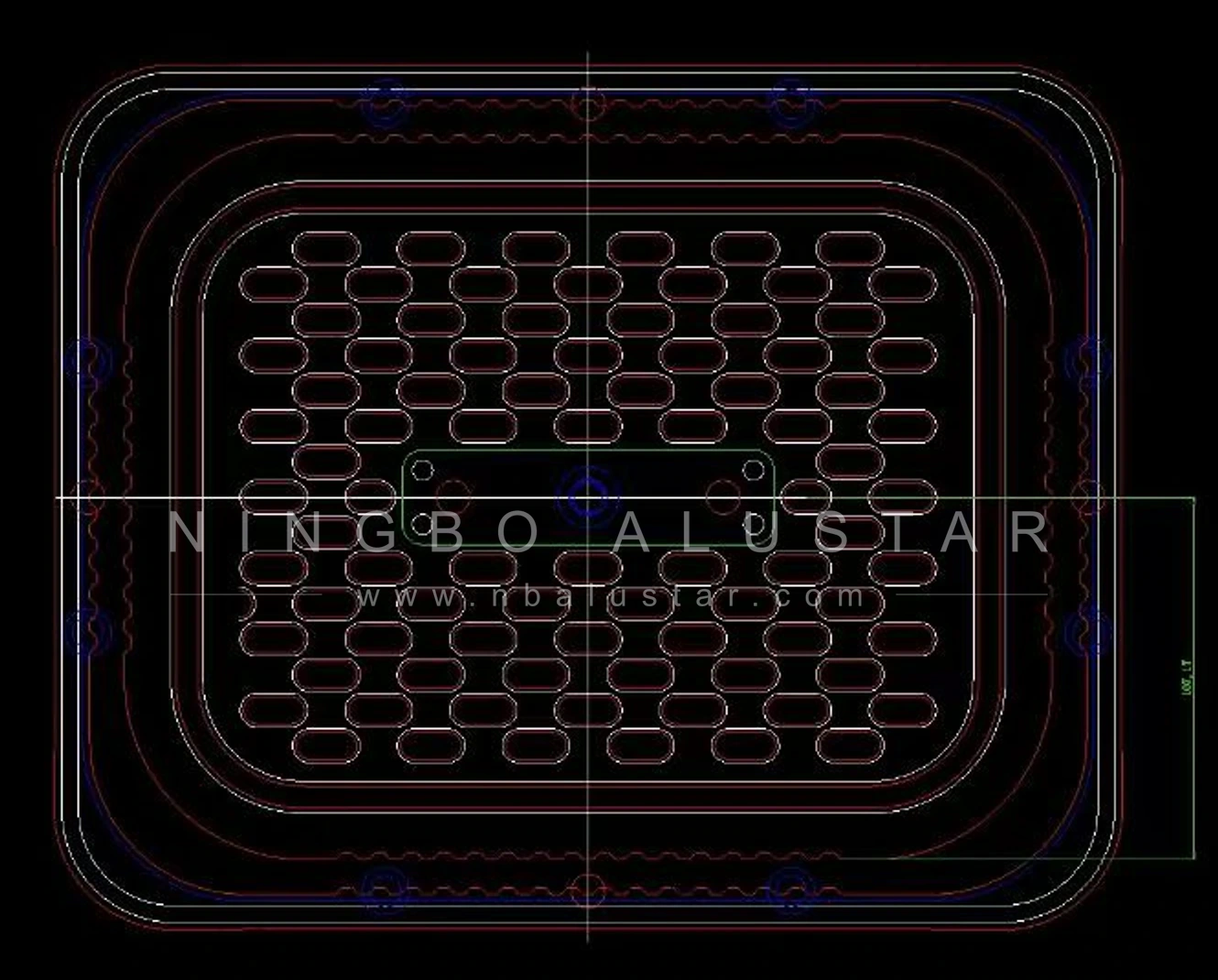
Alustar does more than select a catalogue size. Its team can translate a food portion, load, lid, equipment envelope, packing route, and brand requirement into a structural concept, controlled 2D drawing, 3D forming review, tooling trial, and finished container.
Concept sketch and functional requirement translation
Controlled 2D engineering drawing and revision management
3D forming, draft, rim, reinforcement, and nesting review
Tooling trial, dimensional checks, filled-route validation, and mass-production approval
Workshop & Production
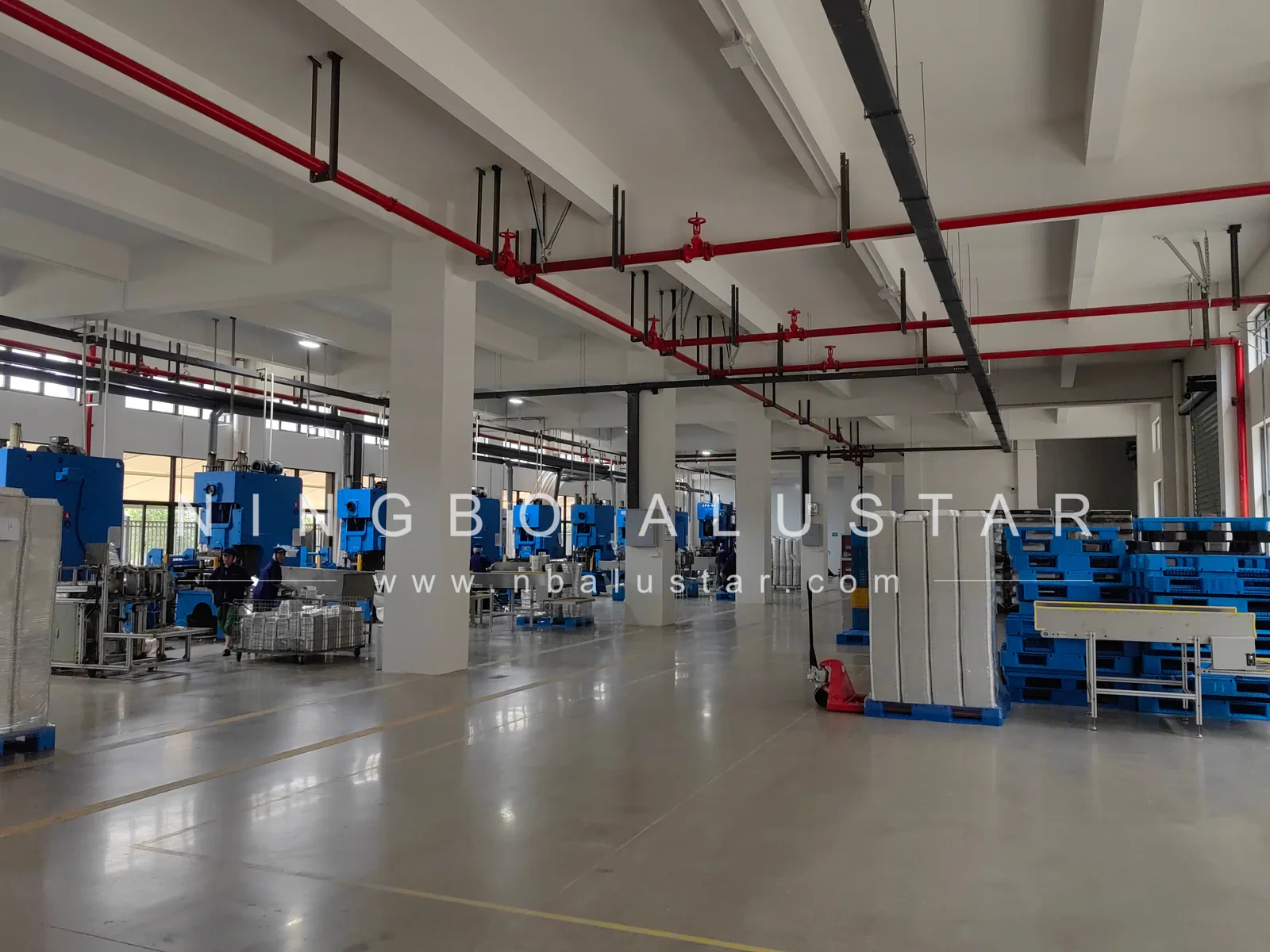
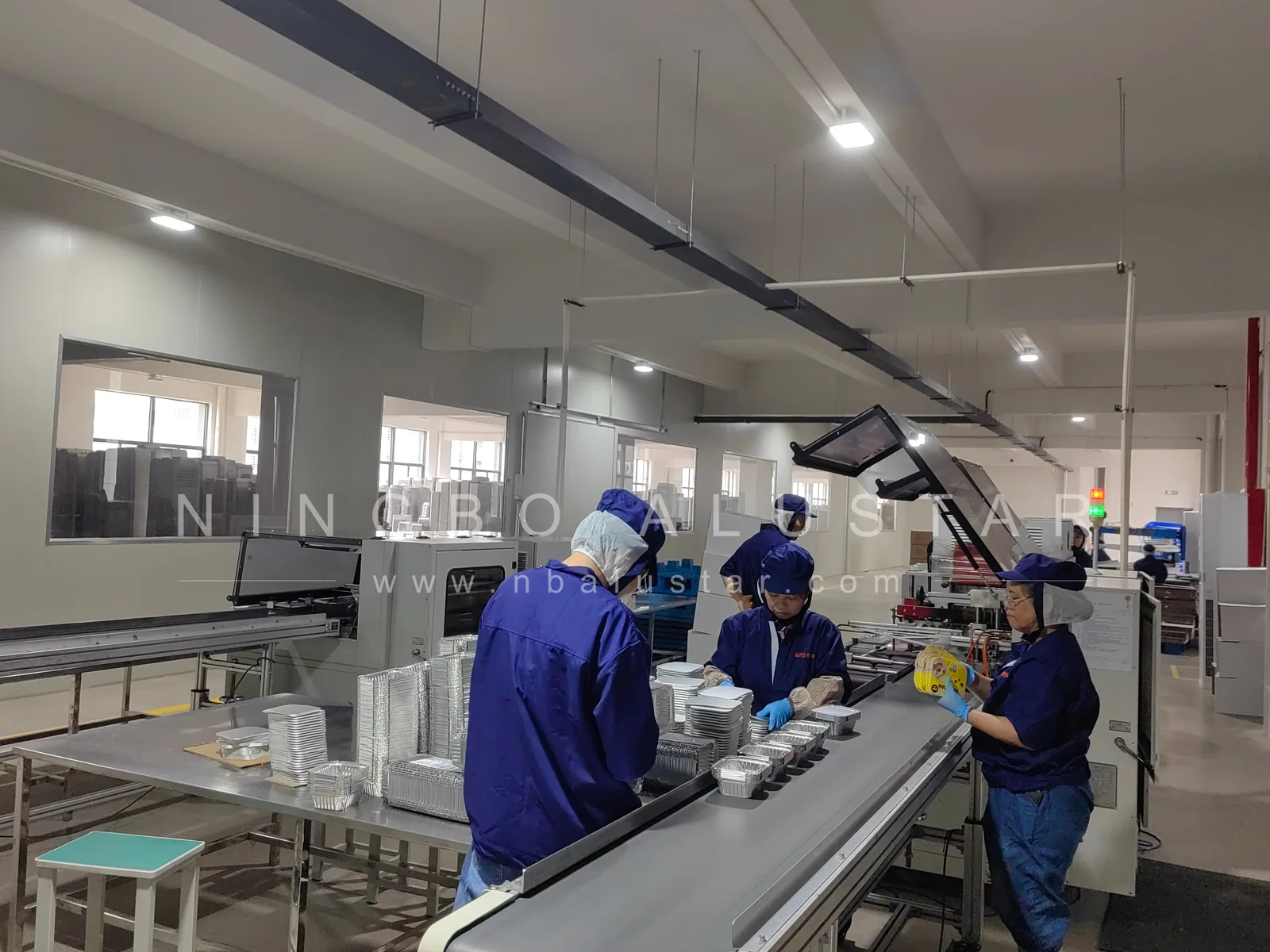
Real production scenes from stamping, inspection, packing, and finished-goods handling.
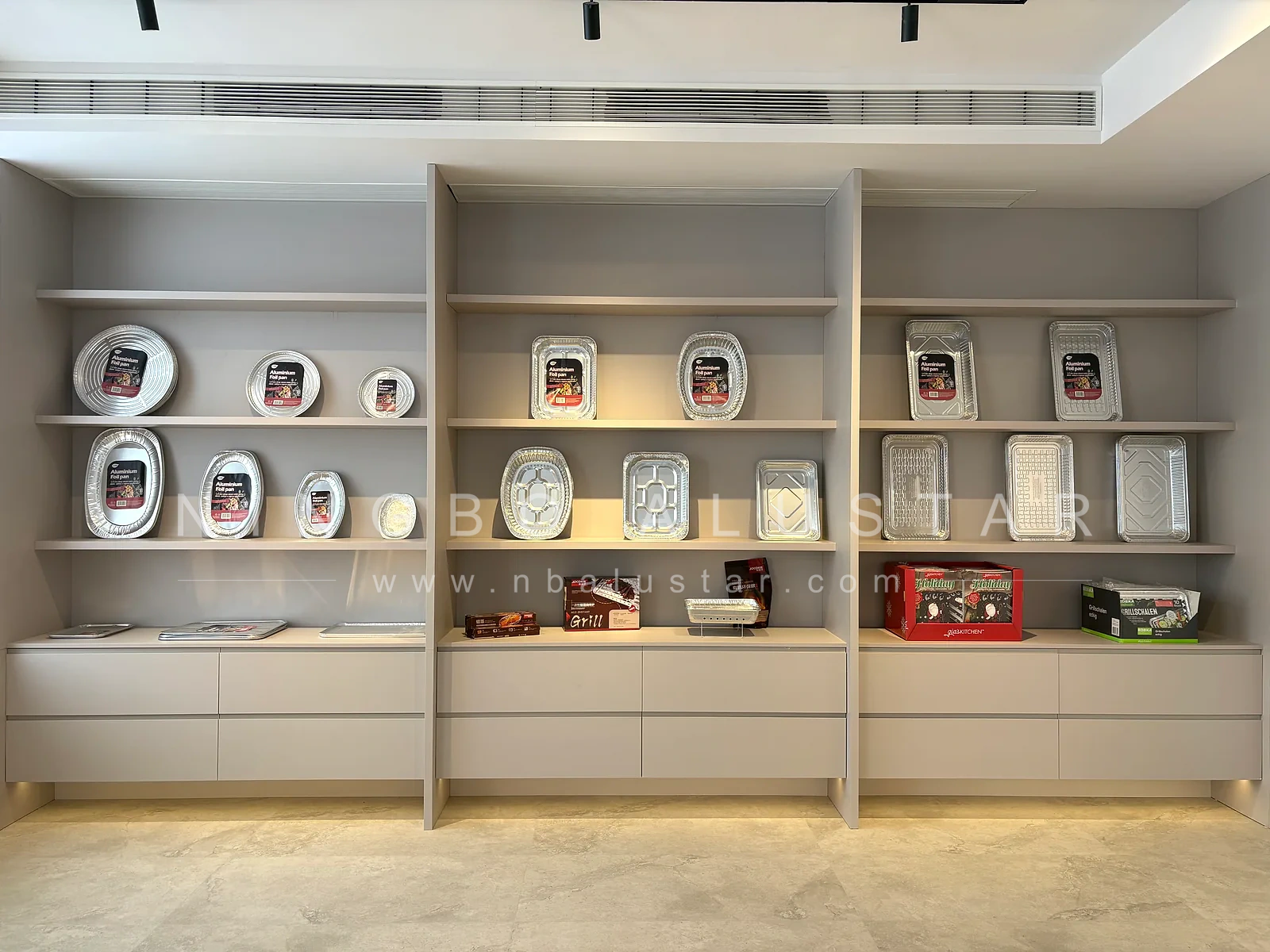
The workshop uses organized equipment layouts, clear logistics aisles, and hands-on checks to support stable aluminum foil container production and export packing. Buyers can review shapes, rim structures, lid compatibility, packed samples, and display ranges before confirming tooling or bulk orders.
Clean production floor
Packing operation
Packaged samples
Certificates
Compliance & Food Contact
Review the published document scope, date, tested sample and stated result, then confirm which files apply to the actual order.