Updated5 min readManufacturing
Custom Aluminum Foil Packaging: OEM and ODM Options for Food Brands
Custom foil packaging can start from existing molds or move into new tooling, depending on brand goals, MOQ, timeline, and food route.
Quick Answer
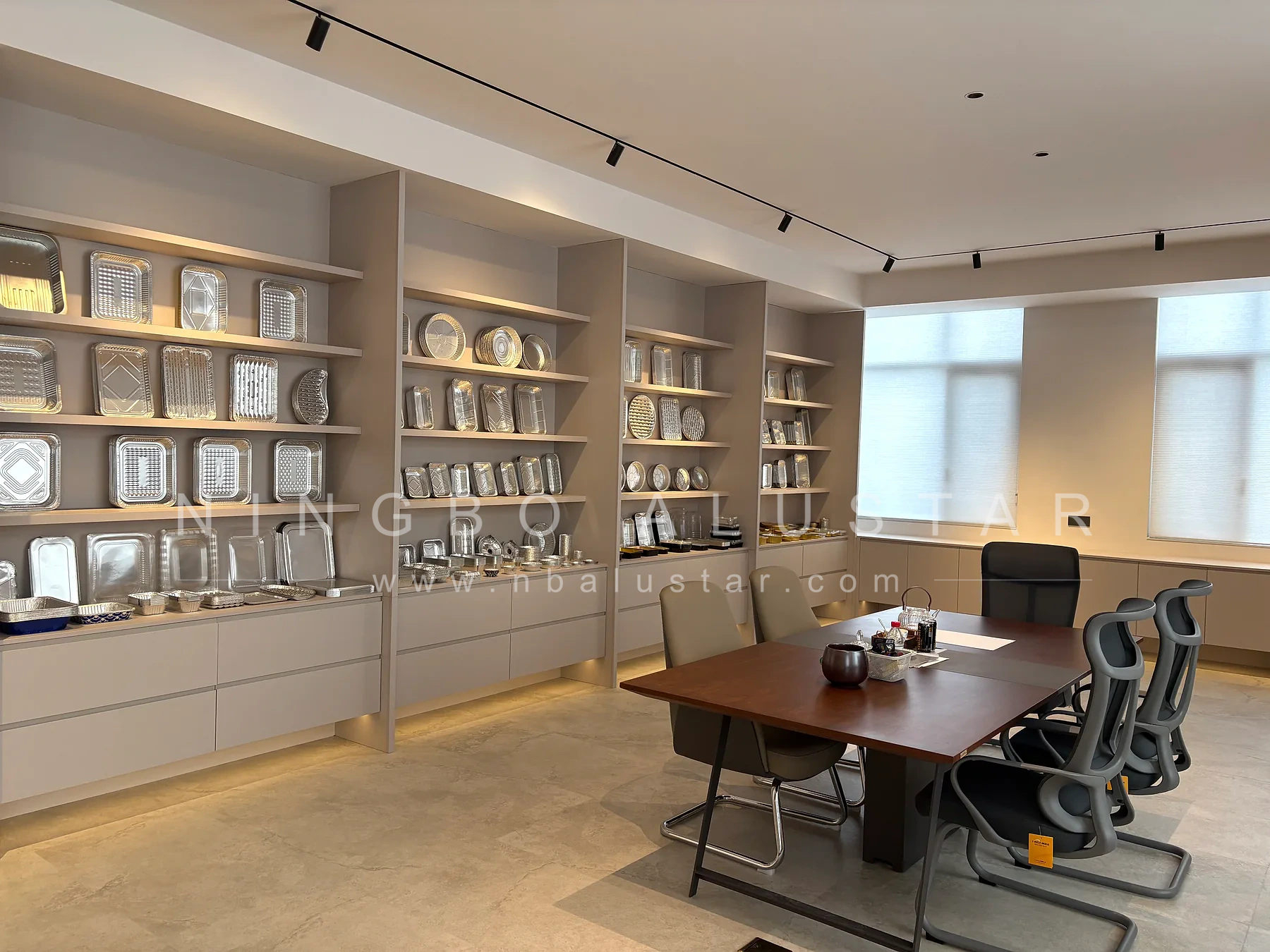
For most buyers, the fastest custom packaging route is to use an existing tray mold, confirm lid fit, then customize carton, label, embossing, or sleeve before considering new tooling.
Real development process
From customer requirement to finished container
Alustar can develop a container from a customer sample, reference model, CAD file, or functional requirement. Customer drawings, model numbers, and branding remain confidential and are not published.
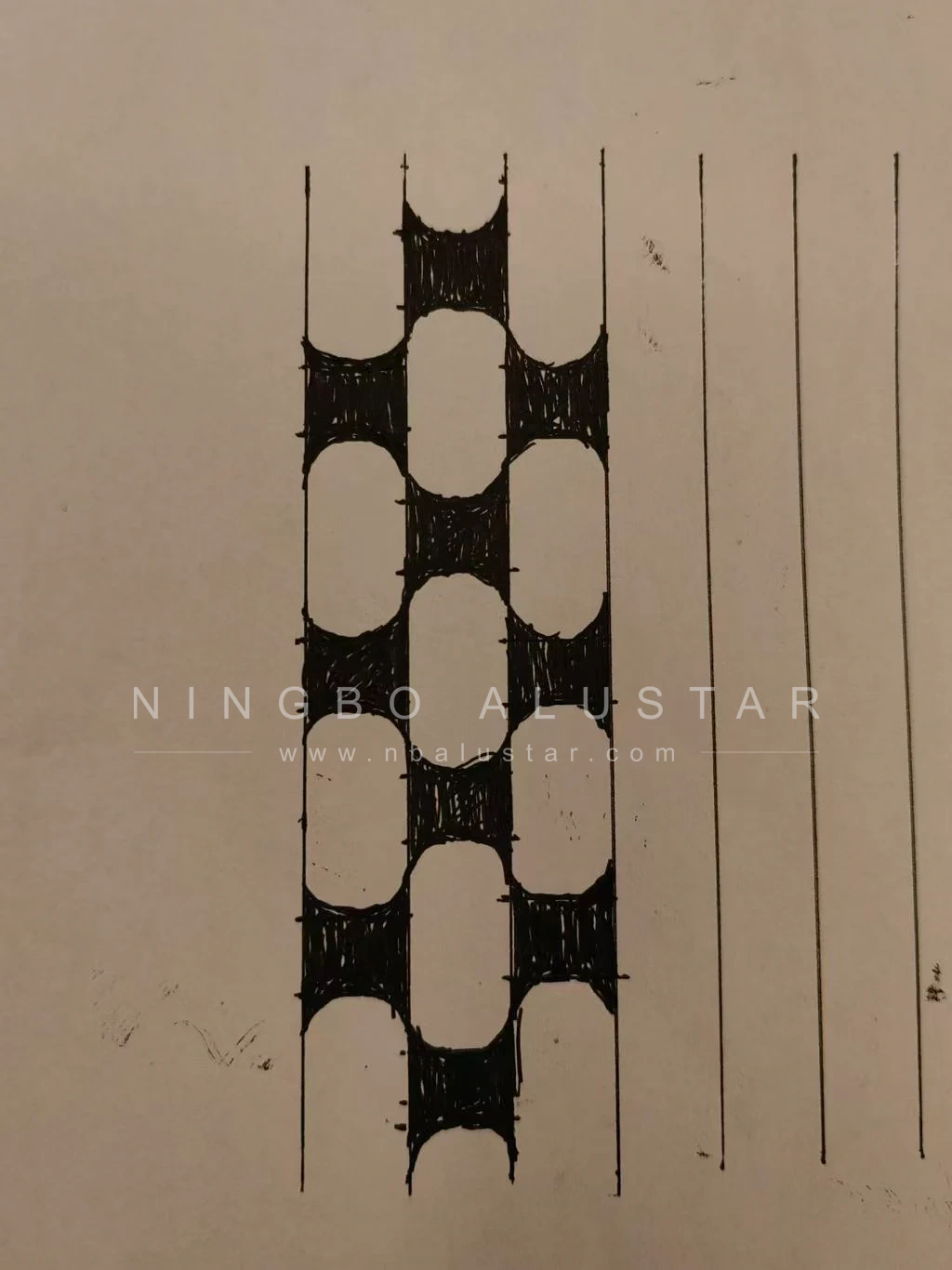
1. Concept and material layout
This real Alustar sketch illustrates how a food, load, opening, and reinforcement requirement can become an initial structural concept.
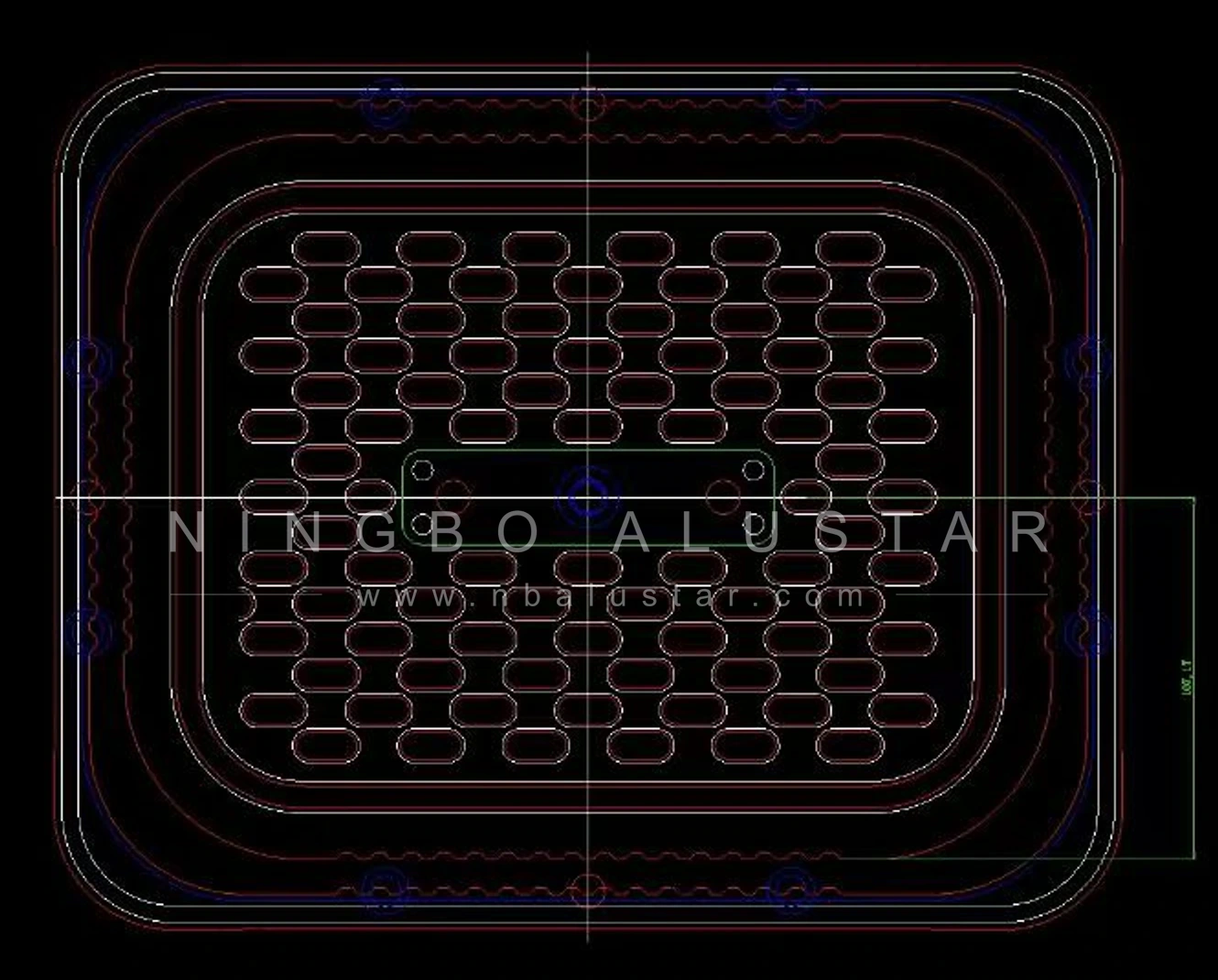
2. 2D engineering drawing
The cleaned engineering view defines the opening, rim, base pattern, wall transitions, nesting, and lid-related geometry before tool development.
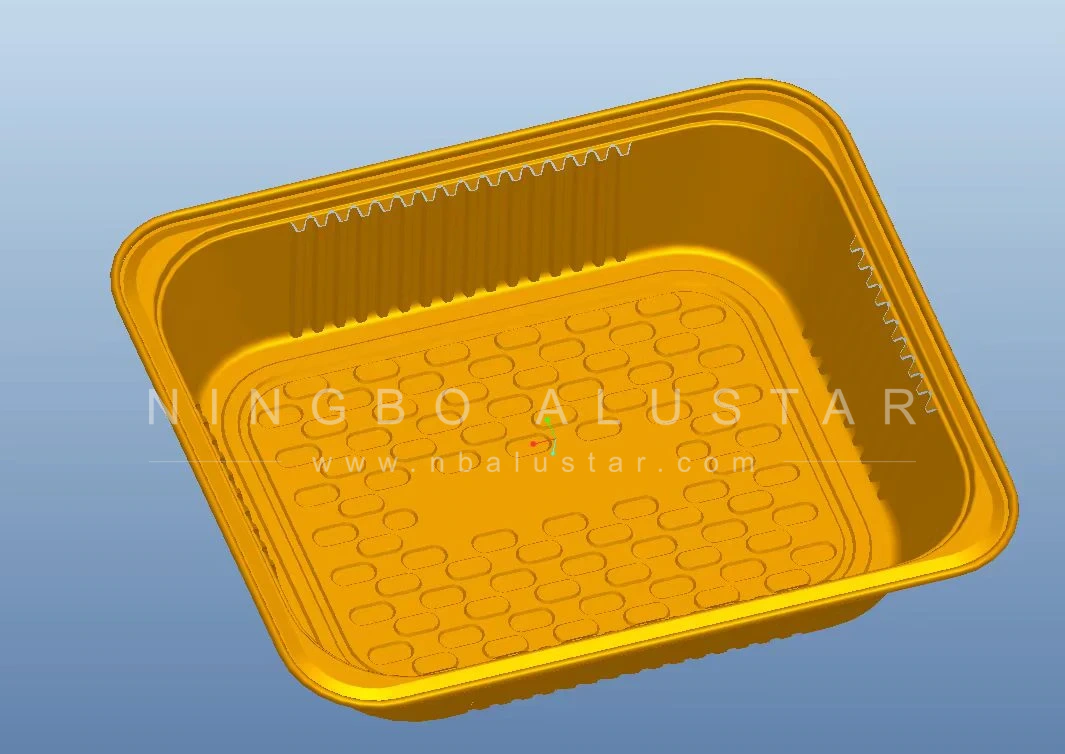
3. 3D forming review
A 3D model helps review draft, depth, reinforcement, clearances, and likely forming behavior before a physical trial.
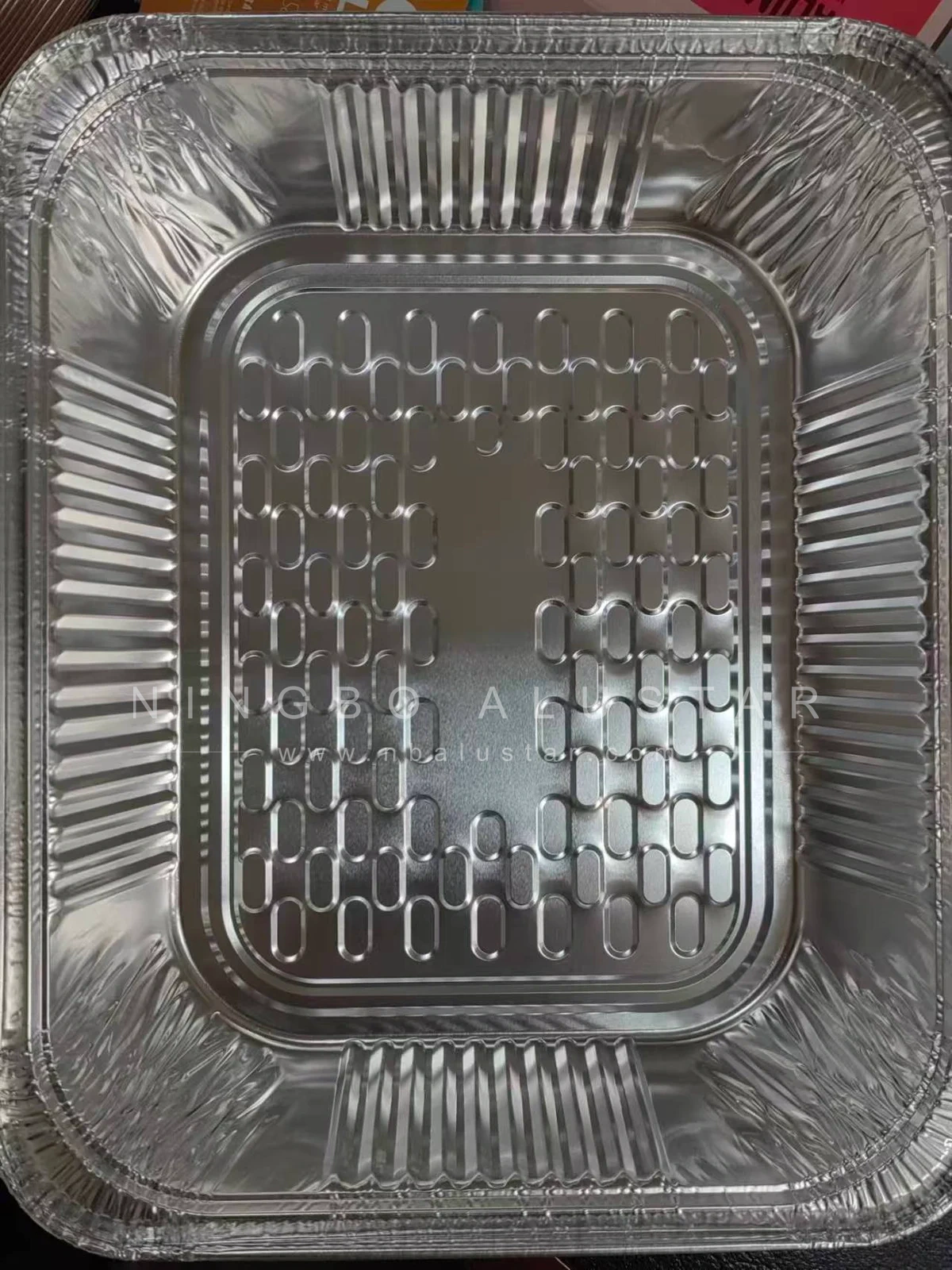
4. Trial and finished sample
The matching finished Alustar container shows how a concept and controlled drawing become a formable product for dimensional and filled-route validation.
Start with the customization level
Custom aluminum foil packaging does not always require a new mold. Many food brands can launch faster by selecting an existing container size and customizing outer cartons, barcodes, labels, sleeves, or embossed branding.
New tooling makes sense when the food portion, equipment fit, retail shelf plan, or brand shape cannot be served by an available mold.
OEM and ODM decision table
OEM is usually closer to buyer-defined packaging. ODM is usually closer to supplier-supported development from available solutions.
| Route | Best for | Main risk |
|---|---|---|
| Existing mold + private label | Fast launch and repeat orders | Must confirm size and lid fit. |
| Embossed logo | Brand recognition on tray | May need volume commitment. |
| Printed carton or sleeve | Distributor and retail presentation | Artwork approval and printing lead time. |
| New tooling | Unique portion or equipment fit | Higher MOQ, tooling cost, and sampling time. |
Documents and samples
A complete custom project should include samples, drawings or size confirmation, material and food-contact documents, packing details, and artwork approval files.
Before production, buyers should approve the tray, lid, carton layout, carton marks, pallet method, and any barcode or private-label information.
Convert the commercial idea into design inputs
A request such as make it premium or copy this size is not a design brief. Define the food, portion, process, equipment, closure, presentation, distribution, destination, forecast, target cost, and features that cannot change.
Separate needs from preferences. Equipment fit, food safety, filled handling, and closure may be mandatory; a decorative base pattern may be flexible if it conflicts with formability or cost.
- Assign a measurable target to each critical need.
- Provide drawings or redacted references where possible.
- Define normal and worst-case application conditions.
- Agree on which party owns unresolved assumptions.
Review formability, rim, nesting, and material layout
The concept must be manufacturable from foil at stable speed. Draw depth, corner radii, ribs, compartments, base detail, wall angle, trim, and rim affect metal flow, wrinkles, tearing, stiffness, nesting, and scrap.
The drawing should show critical dimensions and datums. A 3D model supports geometry review, but tooling and acceptance still need controlled 2D dimensions, tolerances, material assumptions, and revision history.
- Review the tray and intended lid in the same design meeting.
- Check how operators separate and lift nested trays.
- Use realistic material and finished-weight targets.
- Record why critical geometry changes are accepted or rejected.
Define tooling deliverables before payment
A tooling quote should identify the tool set, cavities, material, process, included trials, sample quantity, measurement report, correction loops, schedule, ownership, maintenance, storage, and acceptance point.
Clarify whether trimming, curling, embossing, lids, gauges, or auxiliary tools are separate. A low tooling number is not comparable if essential stages or corrections are excluded.
- Link payment milestones to accepted deliverables.
- Mark every tool and sample with the project and revision.
- Define treatment of backup, replacement, and modified tools.
- Agree on access or transfer if supply ends.
Move from first article to pilot and golden sample
The first article proves that a tool can form a shape under one setup. It does not prove stable production. Measure multiple pieces and test material flow, rim, nesting, lid, filled handling, equipment, and packing.
A pilot run should use production-representative material, speed, operators, inspection, and packing. Approve a golden sample and specification only after the real application and pack have passed.
- Separate dimensional, visual, and functional results.
- Log each correction and the risk it addresses.
- Do not mix samples from different tool revisions.
- Retain buyer and supplier references after approval.
Launch brand, packing, privacy, and repeat-order control
Custom development often includes private drawings, models, logos, menus, and forecasts. Use access control, redacted review files, approved artwork, and clear rules for sub-suppliers, photography, samples, and disposal.
Alustar can connect product development with unit packs, labels, cartons, marks, pallet or container loading, inspection, and repeat-order files. The goal is not one attractive sample but a controlled supply program.
- Use one approved code across product and packing documents.
- Require written approval for engineering and artwork changes.
- Keep customer information out of public case studies unless authorized.
- Review complaints, capacity, and specifications before every major repeat cycle.
Source Custom, OEM, and Private Label Aluminum Foil Containers
Custom Aluminum Foil Containers may involve an existing mold with branded packing, a modified lid system, logo embossing, or a completely new tool. OEM Aluminum Foil Containers normally follow a buyer-controlled specification, while Private Label Aluminum Foil Containers also require disciplined artwork, barcode, pack-count, and market-claim approval.
Alustar welcomes brands, importers, and distributors to discuss confidential custom purchasing. Share the target shape, capacity, sample or drawing, launch volume, forecast, lid, artwork scope, destination market, and launch date; we will separate standard-mold, custom-tooling, packaging, and validation costs.
- Choose standard-mold private label when shape differentiation is not essential.
- Use controlled drawings and signed samples for dimensional or tooling changes.
- Approve every artwork panel, barcode, label, carton mark, and pack count.
- Record tool ownership, maintenance, revision control, and reorder rules in writing.
Direct B2B procurement
Custom Aluminum Foil Containers
Develop a container around the required shape, size, depth, rim, thickness, lid, drawing, tooling trial, filled test, and production approval.
View solutionSources and further reading
Continue this buying path
Use these related guides to move from initial selection to specifications, compliance, and supplier evaluation.
Engineering & Customization
Five Patented Reinforced Aluminum Foil Container Designs: From Sketch to Production
Read guideManufacturing
OEM vs ODM Foil Packaging: Which Manufacturing Model Fits Your Brand?
Read guideSupplier Selection Guide
How to Choose an Aluminum Foil Container Manufacturer in China
Read guideBuyer Resources
Foil Tray Lid Compatibility Guide: Board, PET Dome, PP Lid, and Sealing Film
Read guideRelated aluminum foil products
Buyer next steps
FAQ
Do custom foil containers always need a new mold?
No. Many projects start from existing molds and customize branding or packing first.
What information should I send for OEM foil packaging?
Send target size, capacity, food use, lid type, order quantity, destination market, and branding requirements.