Updated4 min readManufacturing
OEM vs ODM Foil Packaging: Which Manufacturing Model Fits Your Brand?
A practical guide for distributors comparing custom tooling, embossing, and private-label aluminum foil packaging.
Quick Answer
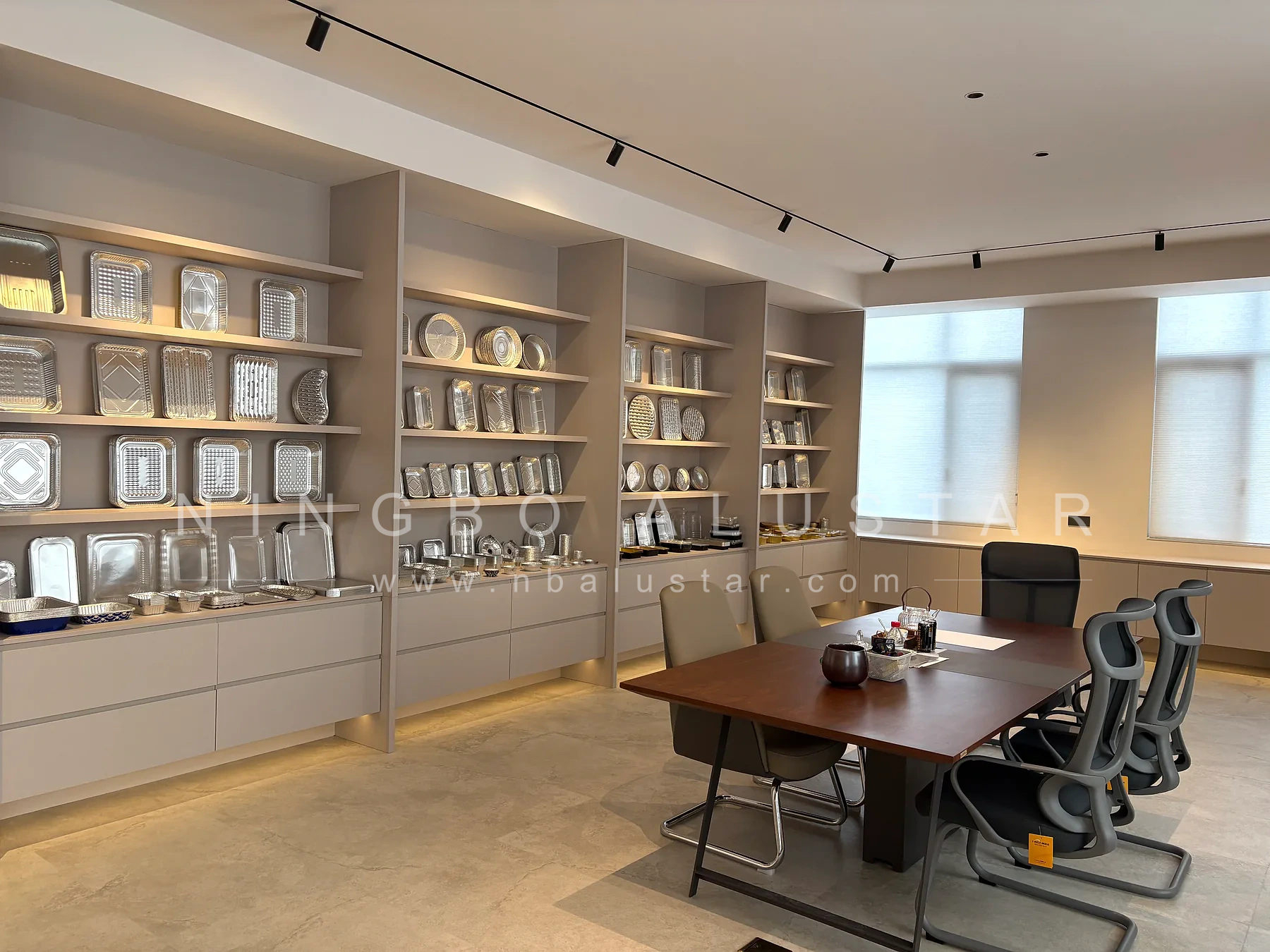
Choose OEM when you already have a defined product specification; choose ODM when you want the supplier to recommend sizes, lids, packing, and launch-ready options.
The simple difference
OEM usually starts from a buyer's target specification, drawing, sample, or brand requirement. ODM usually starts from the factory's existing product range and development experience.
In aluminum foil packaging, the practical choice is often mixed: use an ODM existing mold, then add OEM carton printing, label, embossing, or packing style.
Which route should importers choose?
The right route depends on launch timeline, order volume, market testing, and how unique the final food packaging needs to be.
| Need | Recommended route | Reason |
|---|---|---|
| Fast market test | ODM existing mold | Lower risk and faster samples. |
| Private label distributor SKU | Existing mold + OEM carton | Good balance of speed and branding. |
| Unique retail product | OEM tooling | Better control over shape and shelf fit. |
| Equipment-specific tray | OEM or co-development | Dimensional tolerance is critical. |
Questions to ask a supplier
Ask whether the supplier has similar molds, matching lids, test reports, carton options, and export cases. Also confirm how tooling ownership, sample approval, and future repeat orders are handled.
Define who owns each decision
OEM and ODM are useful labels only after decision rights are clear. List who owns the product brief, geometry, engineering calculations, drawings, tooling, artwork, testing, regulatory review, packing, and final approval.
A project may mix both models. A buyer can select a supplier's standard tray, provide private-label artwork, and request a custom carton without commissioning a new container design.
- Create a responsibility matrix before quotation.
- Name one technical and one commercial approver on each side.
- Separate buyer-supplied requirements from supplier proposals.
- Record assumptions that still need validation.
Protect drawings, tooling, brand assets, and know-how
Confidentiality should cover drawings, physical samples, model numbers, brand files, forecasts, menu information, and test results. Access should be limited to people and sub-suppliers who need it for the project.
Tool ownership needs more than a payment receipt. Define location, identification, maintenance, storage, permitted use, modification, transfer, replacement, and the treatment of derived or backup tools.
- Share redacted files during early feasibility where possible.
- Use controlled file names and revisions.
- Prohibit use of buyer branding outside approved production.
- Agree on return or destruction of confidential material at project end.
Run a stage-gate development process
A controlled project moves through brief, feasibility, concept, drawing, tooling, first article, filled-product validation, packing trial, pilot run, and bulk release. Each gate has inputs, outputs, approvers, and open risks.
Do not release tooling because a rendering looks attractive. Critical dimensions, rim and lid concept, nesting, equipment, material, target weight, pack, and validation method should be agreed first.
- Set measurable exit criteria for every gate.
- Keep unresolved risks visible rather than accepting them silently.
- Use pilot quantities that reproduce normal material and process conditions.
- Release bulk production only after technical and commercial approval.
Compare total project economics
OEM based on an existing mold can reduce tooling and validation time. ODM or custom development may create differentiation, but it adds engineering, trials, tooling, minimum volumes, longer lead time, and change-management cost.
Model the business over expected volume and life. Include design, tools, samples, tests, artwork, pack inventory, scrap, line trials, freight volume, launch delay, and the cost of maintaining unique lids or spare parts.
- Compare cost per usable delivered unit.
- Separate one-time and recurring costs.
- Define volume points where new tooling becomes rational.
- Reserve budget and time for at least one correction loop.
Contract the project and the future changes
The agreement should reference the approved brief, drawing, tooling terms, samples, tests, artwork, pack, quality plan, timeline, price assumptions, and remedies. It should also explain which language or document controls when files conflict.
After launch, no change to material, weight, tooling, dimensions, lid, sub-supplier, packing, or artwork should occur without a documented review. A stable repeat order is part of the design outcome.
- Define acceptance and rejection at every sample stage.
- State ownership of data, reports, drawings, and physical references.
- Set notice periods and revalidation rules for changes.
- Keep an approved-supplier exit and tooling-transfer plan.
Direct B2B procurement
Private Label Aluminum Foil Containers
Build an OEM or private-label program with logo options, labels, retail packs, carton artwork, barcodes, confidentiality, and reorder control.
View solutionSources and further reading
Continue this buying path
Use these related guides to move from initial selection to specifications, compliance, and supplier evaluation.
Engineering & Customization
Five Patented Reinforced Aluminum Foil Container Designs: From Sketch to Production
Read guideManufacturing
Custom Aluminum Foil Packaging: OEM and ODM Options for Food Brands
Read guideSupplier Selection Guide
How to Choose an Aluminum Foil Container Manufacturer in China
Read guideQuality Guide
Aluminum Foil Container Quality Inspection Checklist Before Shipment
Read guideRelated aluminum foil products
Buyer next steps
FAQ
Is OEM always more expensive than ODM?
Not always, but new tooling, sampling, and special packing usually raise the first-order cost.
Can I combine OEM and ODM?
Yes. Many foil packaging projects use an existing ODM tray and OEM branding or packing.