Updated9 min readEngineering & Customization
Five Patented Reinforced Aluminum Foil Container Designs: From Sketch to Production
Five Alustar appearance designs combine a reinforced base, stepped upper opening, protected inner rim platform, and tighter corner radii. This guide shows the real path from an idea and drawing to a finished container.
Quick Answer
Alustar's five design-patented container structures are intended to distribute load more effectively through the base, opening, rim, and corners. Buyers should verify any strength advantage with like-for-like filled tests using the same material, dimensions, piece weight, temperature, support, and handling route.
Alustar original products
Five design-patented reinforced container appearances
These are Alustar's own finished products and original reinforced structures. Labels A–E simply make the five appearances easy to identify in this article.
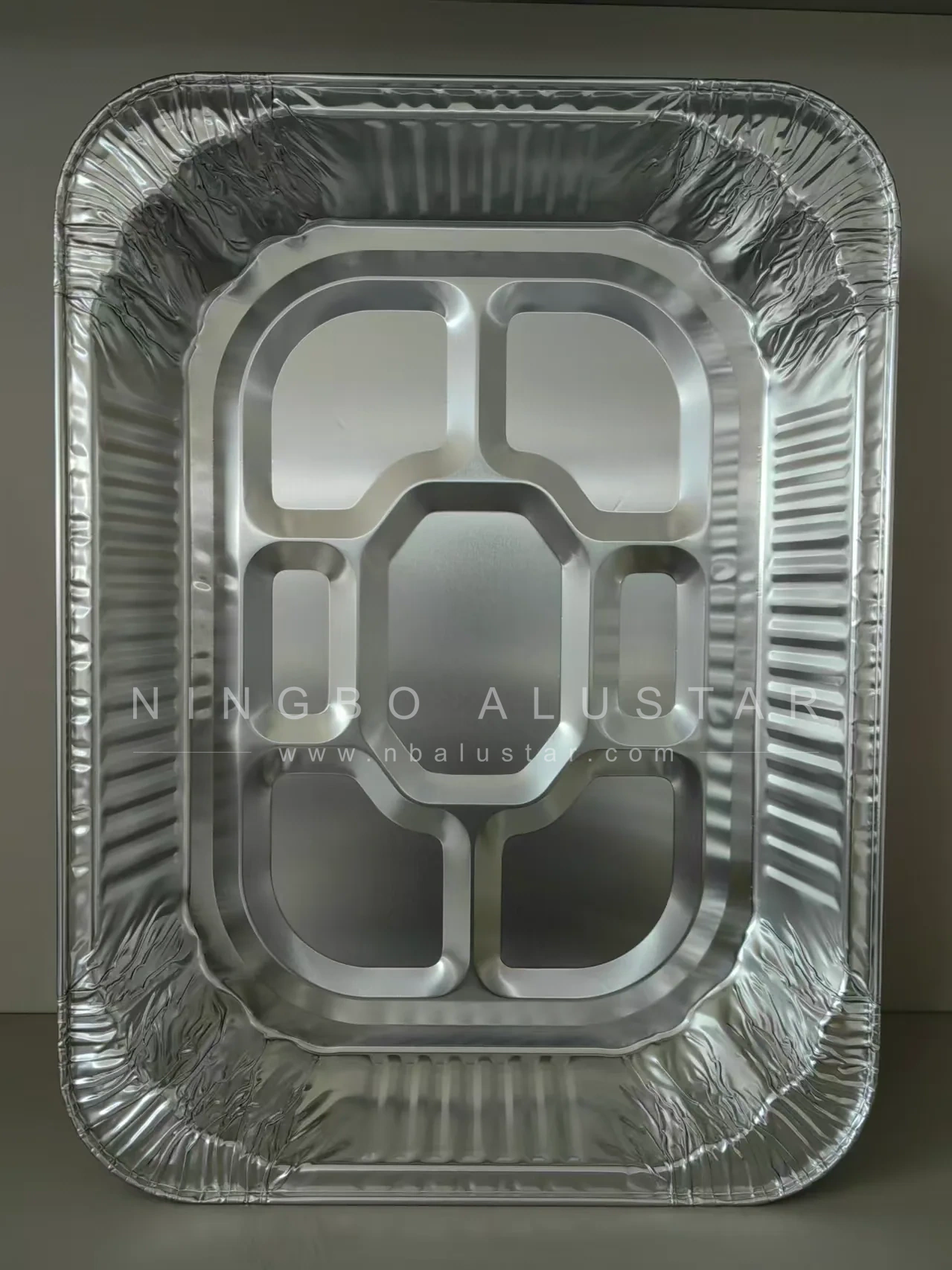
Patented design A
A compartment-led load path combines a reinforced center, defined channels, supported opening, and tighter corner transitions.
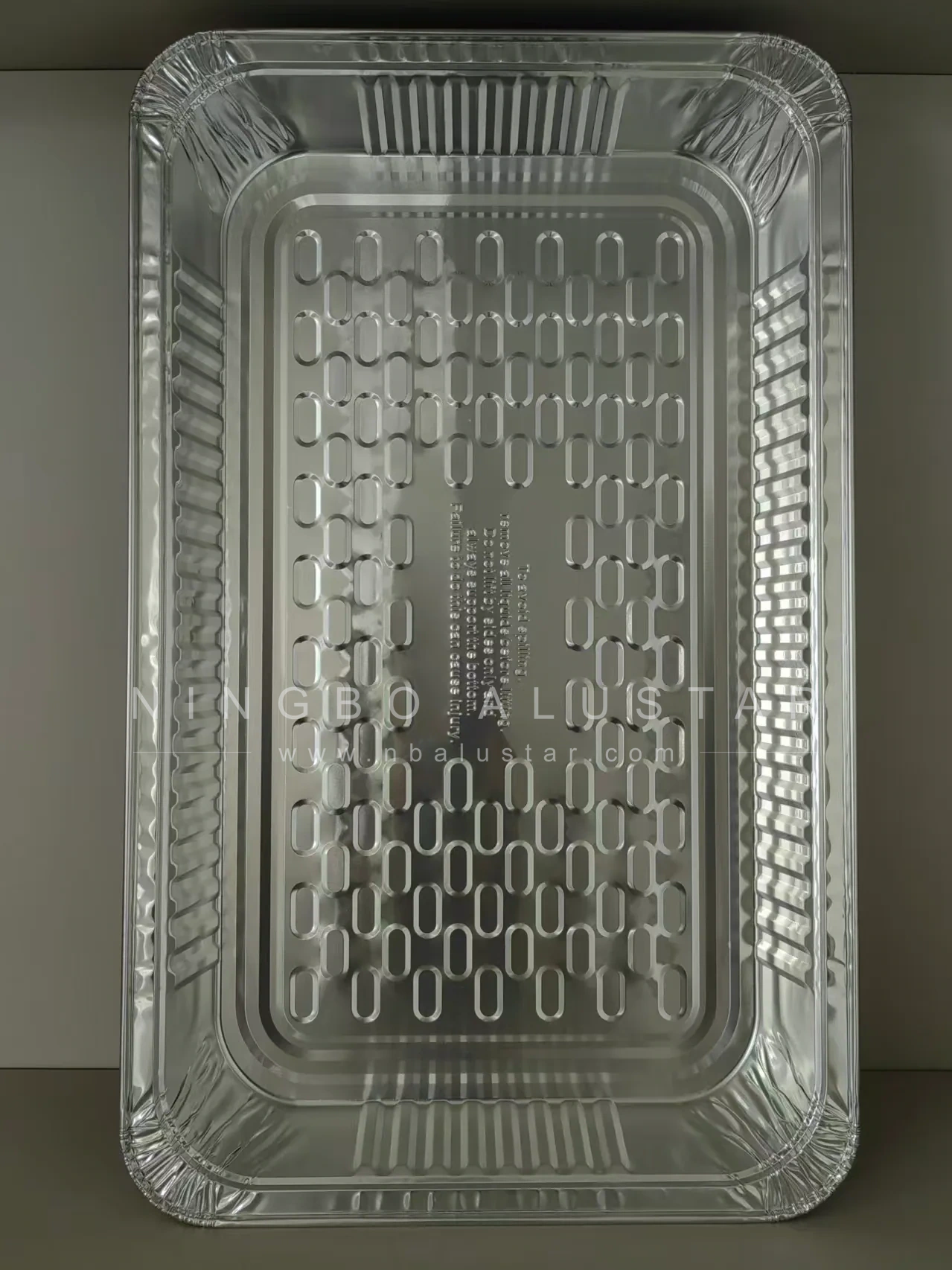
Patented design B
An elongated format uses a distributed bottom pattern and perimeter steps for family-size, catering, or production-line handling routes.
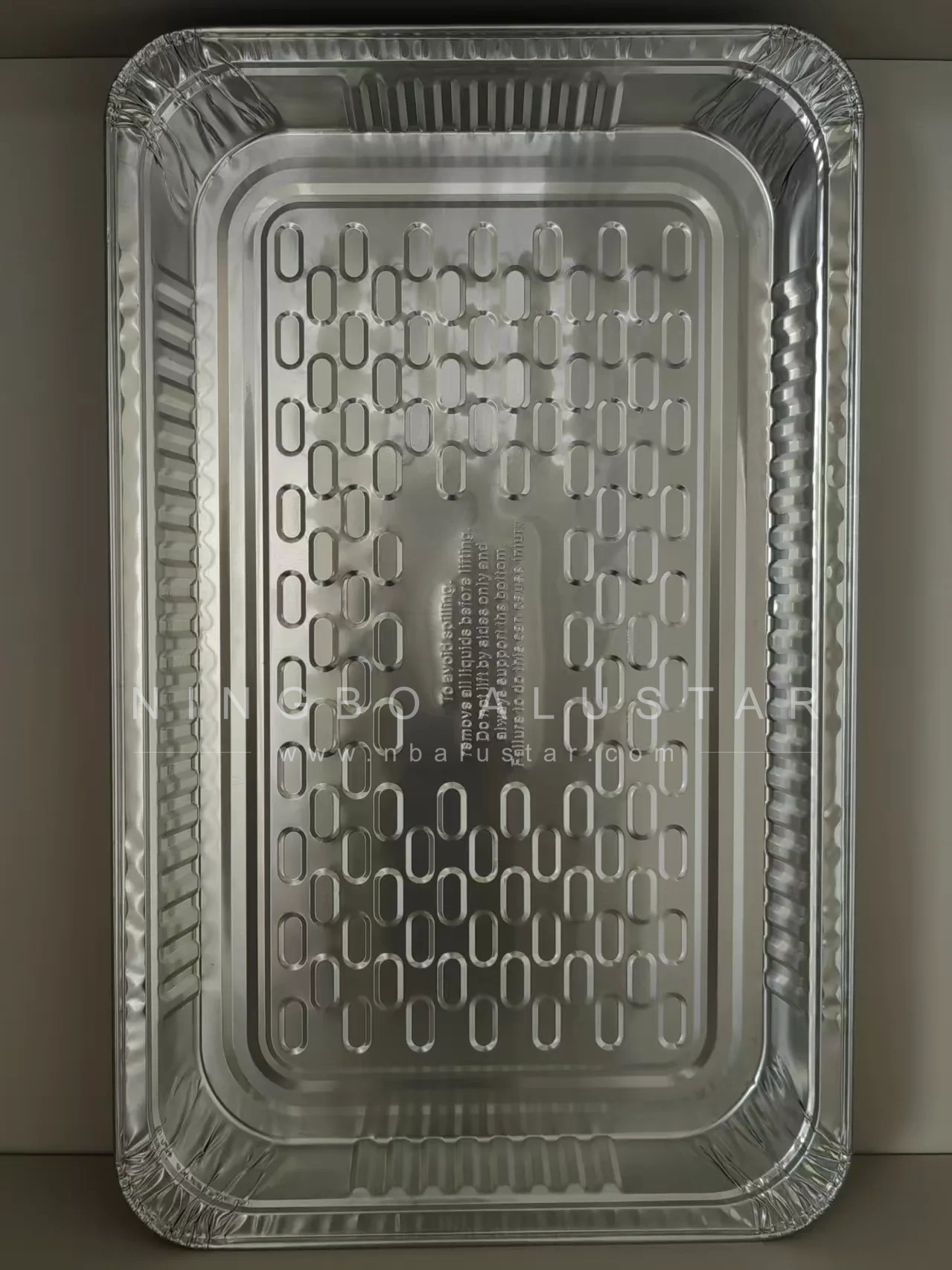
Patented design C
A second long-format structure shows how base-rib spacing and the upper frame can be tuned for a different length-to-width ratio.
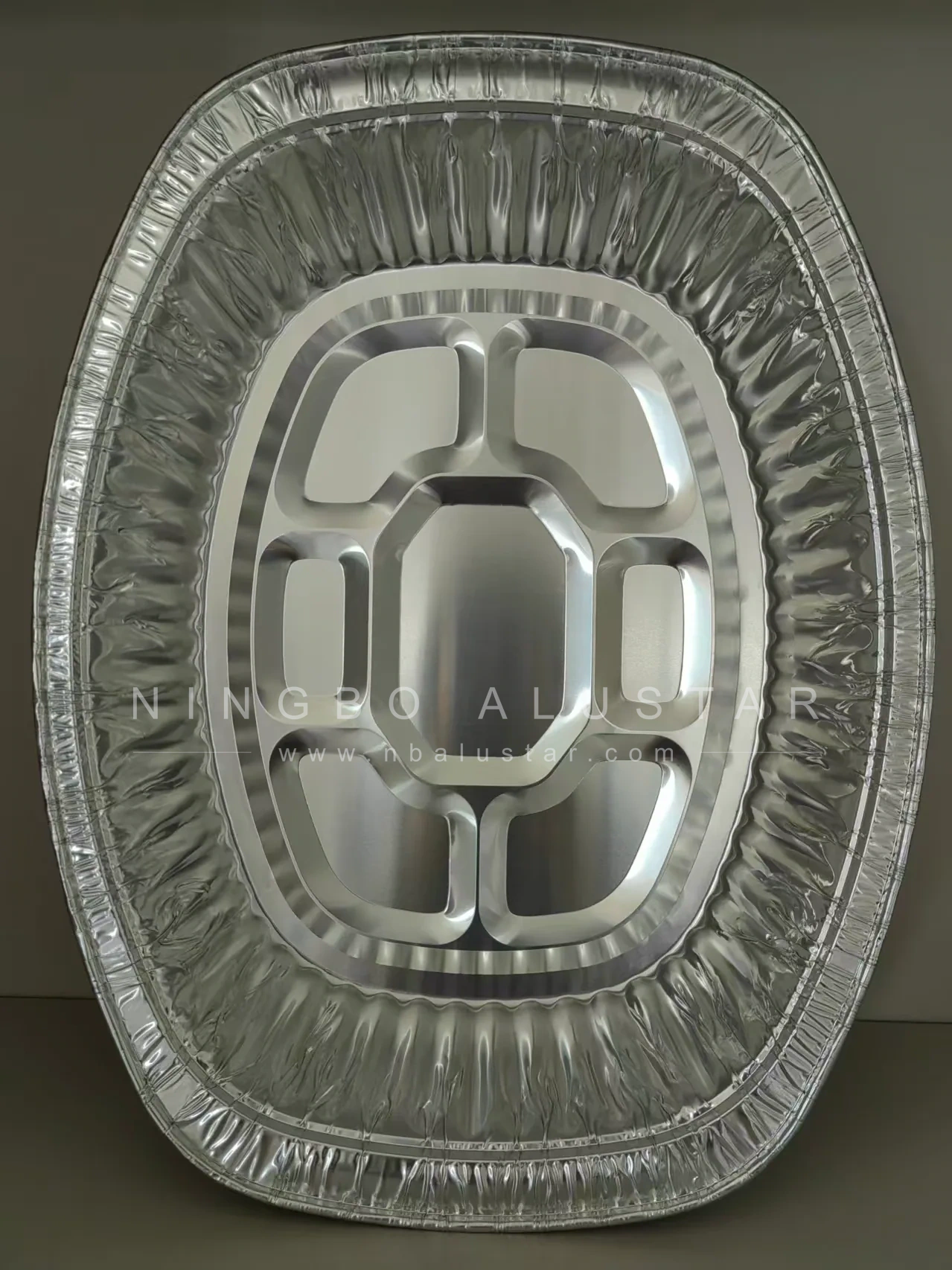
Patented design D
A rounded presentation format carries load through a structured central base while preserving a broad food-service opening.
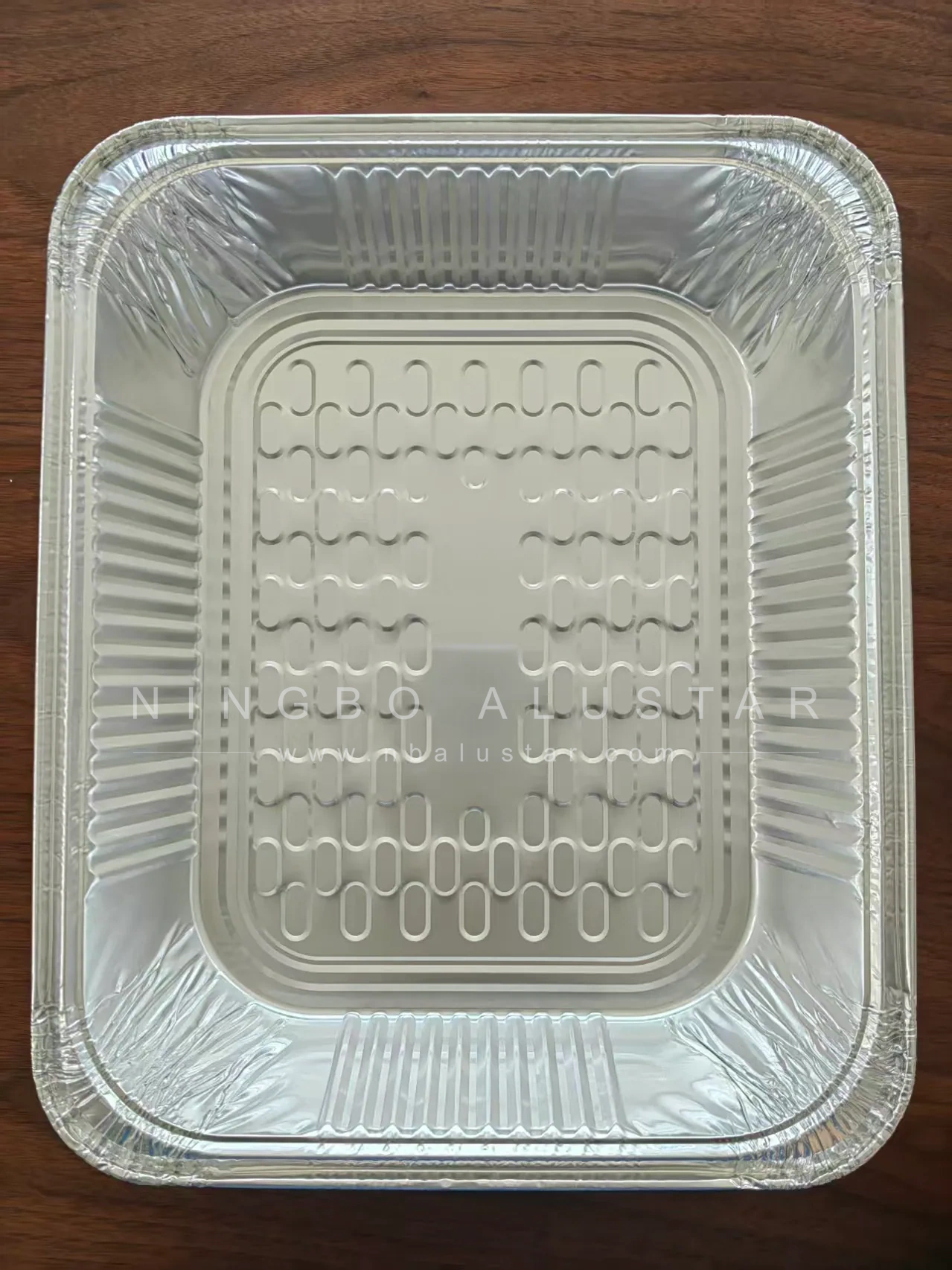
Patented design E
The square meal format combines a reinforced base field, stepped opening, protected rim platform, and supported corners.
Real development process
From structural idea and drawing to finished container
These four images document the same Alustar-owned container from the first structural sketch through engineering drawing and 3D review to the finished product. Alustar can also design containers for customers, and customer-supplied drawings and design information are kept confidential.
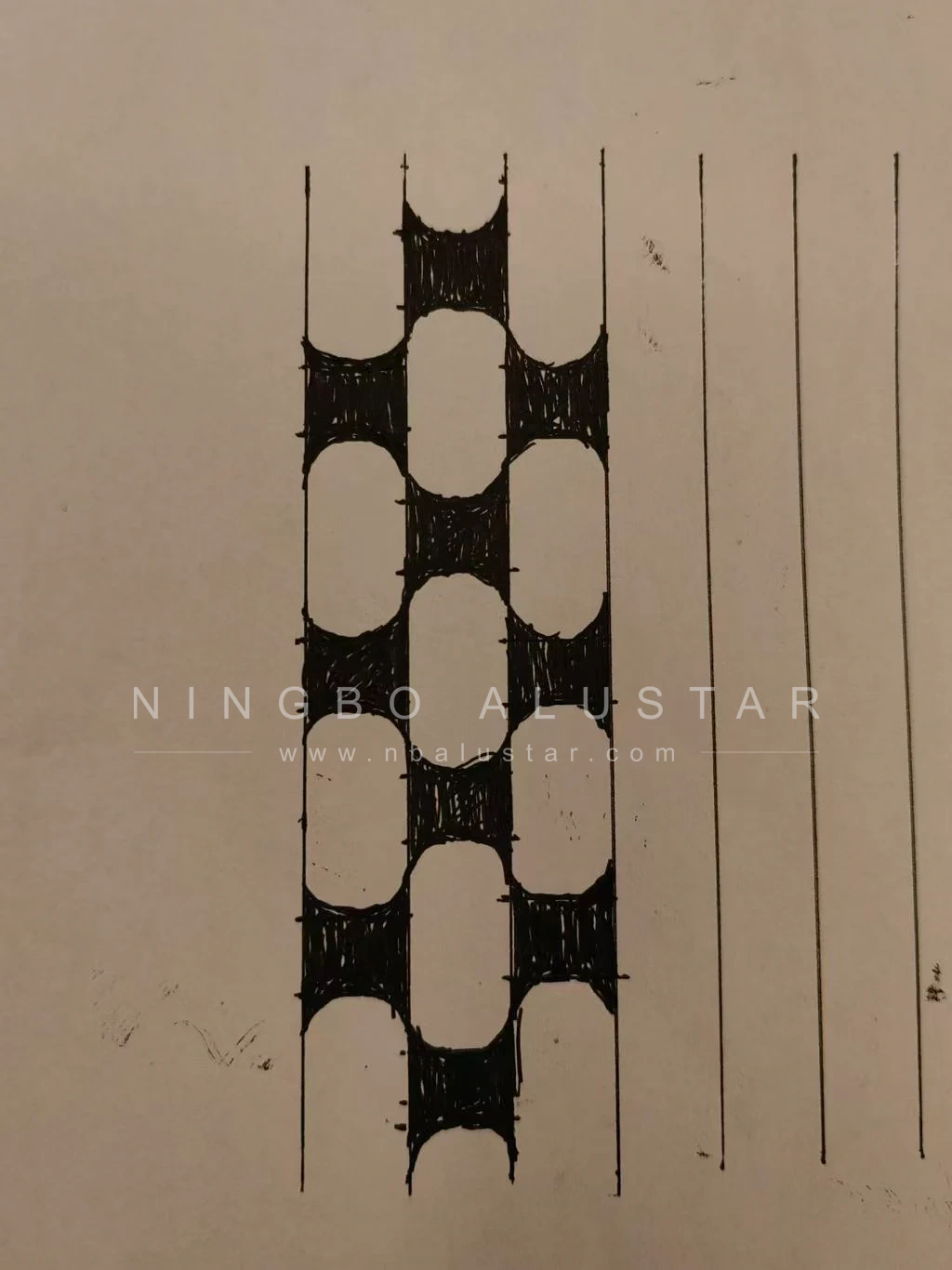
1. Original structural concept
The first sketch explores how repeating reinforced zones can break up the base and guide the load into a more stable perimeter.
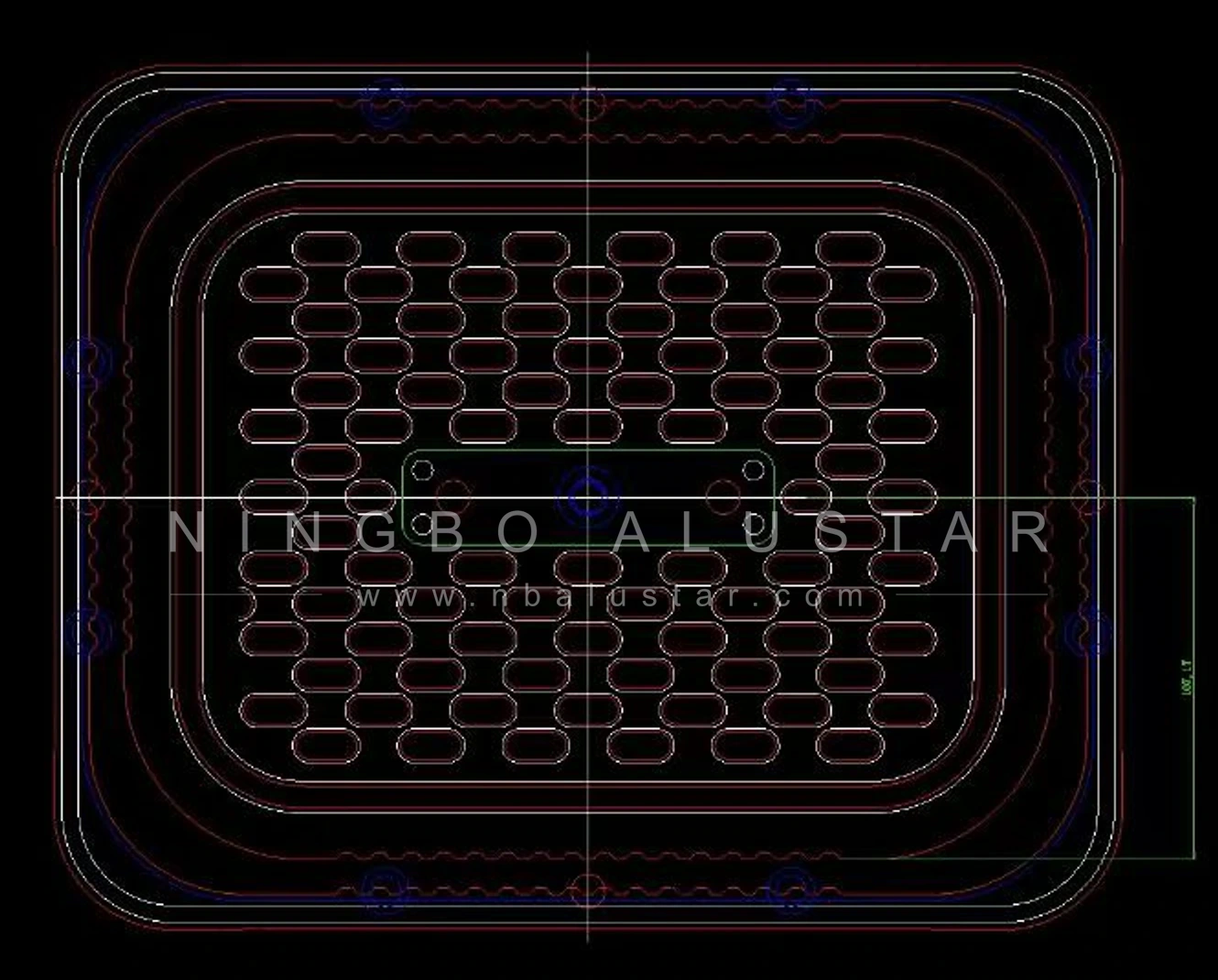
2. 2D engineering drawing
The engineering drawing defines the opening, rim, base pattern, reinforcement paths, and reference dimensions without the original phone-screen interface.
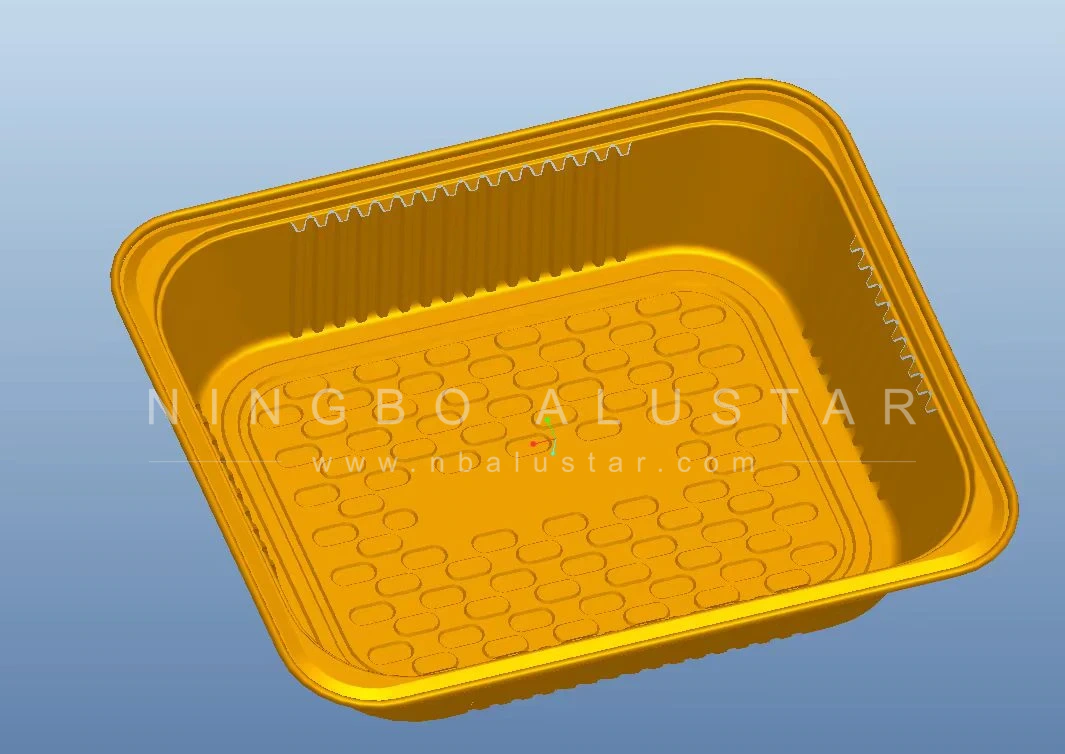
3. 3D forming review
The 3D model connects the drawing to draft, depth, wall transitions, rim geometry, reinforcement, and likely forming behaviour.
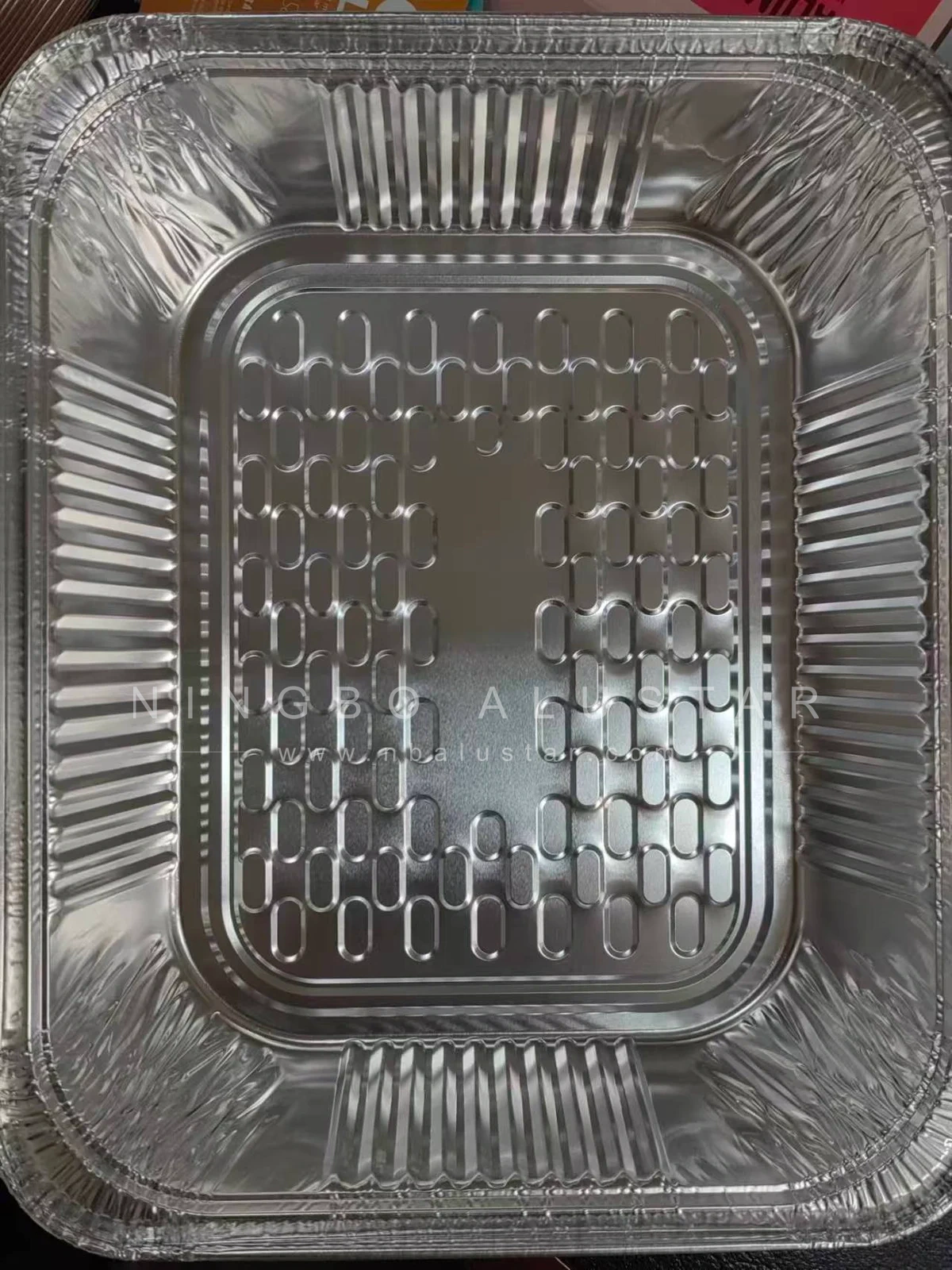
4. Finished Alustar container
The finished product shows the same base pattern, supported perimeter, sidewall features, and formed rim translated into aluminum foil.
One design system, four reinforcement decisions
A foil container does not become dependable because one rib looks deep. Base geometry, wall transitions, opening, rim, and corner radius work as one load path when a filled tray is lifted, stacked, transported, reheated, or served.
Alustar developed this five-design series around four recurring structural decisions. The shapes vary by format, but the engineering intent is consistent: control deflection and protect the areas most likely to lose shape during real handling.
| Design decision | Engineering intent | Buyer check |
|---|---|---|
| New reinforced base pattern | Break up large flat panels and guide load into surrounding ribs. | Measure filled-base deflection and lift stability. |
| Raised step around the upper opening | Create a more continuous upper frame and support the rim zone. | Check diagonal twist, opening shape, and lid fit after handling. |
| Slightly downturned inner rim platform | Reduce easy folding at the inner flange during gripping and closing. | Inspect rim damage after packing, lidding, and repeated opening. |
| Smaller corner radii | Increase corner definition and local support where walls meet. | Check corner collapse and filled-tray stability from all four sides. |
1. A redesigned bottom pattern supports the filled tray
Large unsupported foil panels can oil-can or sag when food mass, sauce, or a central portion loads the base. A planned pattern adds shaped zones that interrupt the flat span and direct force toward stronger transitions.
The pattern is not decoration alone. Its depth, spacing, orientation, and connection to the base perimeter must remain formable at production speed without unacceptable thinning, tearing, or nesting problems.
- Review performance with the intended fill, not an empty hand-flex demonstration.
- Check lifting from short edges, long edges, corners, and one-handed service positions.
- Inspect whether reinforcement causes marking, unstable nesting, or food-pooling problems.
- Record finished piece weight and material condition with every comparison sample.
2. The stepped upper opening acts as a continuous frame
Alustar adds a reinforcing step around the upper opening so the perimeter behaves more like a connected frame. This zone matters when the tray is lifted while full, when containers are separated from a nested stack, and when a lid engages the rim.
The step also has to coexist with wall draft, curl geometry, lid clearance, equipment guides, and packing density. A stronger-looking opening is useful only when it still runs through the complete production and packing route.
- Measure the opening before and after filled handling.
- Test the exact tray-and-lid pair across several production samples.
- Check that the step does not interfere with de-nesting or automatic feeding.
- Use diagonal measurements to expose twist that length and width can miss.
3. A slightly downturned inner rim platform resists easy folding
The inner platform beside the curl is intentionally angled slightly downward. The design aims to make the rim less eager to fold inward when an operator grips the tray, fits a board lid, or closes the perimeter.
This detail is small in a drawing but important in use. It must be evaluated together with foil temper, finished weight, curl consistency, corner formation, lid style, and the amount of food loaded into the tray.
- Inspect long edges and corners separately after closing.
- Count permanent folds, local buckles, and lid-release failures.
- Repeat the test after hot filling, cooling, or reheating where relevant.
- Keep an approved physical rim sample beside the controlled drawing.
4. Tighter corner radii increase local corner support
Corners connect the base, walls, opening, and rim. Reducing the radius can create more defined corner support and reduce the broad soft transition found in some conventional forms.
A tighter radius also raises forming difficulty. Alustar reviews material flow, draw depth, wrinkle control, thinning, release, and repeatability before accepting a corner simply because it looks sharper in CAD.
- Inspect all four corners because one cavity or direction can behave differently.
- Compare corner wall thickness and visible stress marks during trials.
- Test filled lifting after realistic storage and temperature conditioning.
- Confirm the selected radius remains compatible with lids and packing equipment.
Five protected appearances, five practical food-service formats
All five photographs show Alustar's own finished products. Labels A through E simply distinguish the appearances in this article: compartment, elongated, rounded-presentation, and square meal formats.
Alustar states that all five appearances are protected by design patents. Each combines its base pattern, upper-opening step, inner rim platform, and corner geometry into one appearance and load path.
- Design A: compartment-led base structure for separated meal presentation.
- Designs B and C: elongated reinforced layouts for family portions or catering lines.
- Design D: rounded perimeter with a structured central load path.
- Design E: square format with a reinforced base and supported opening.
From a rough idea to a controlled engineering drawing
The container shown on this page began with Alustar's own structural concept. The team first explored how a base pattern could distribute load, then converted the opening, rim, corners, and forming route into measurable inputs.
The team then reviewed the hand sketch, controlled 2D drawing, and 3D forming model. Critical dimensions, draft, rim, corner transitions, reinforcement, nesting, material assumptions, and revision status stayed aligned.
- Define food, capacity, temperature route, closure, equipment, pack, and destination first.
- Separate mandatory functional requirements from visual preferences.
- Keep the sketch, 2D drawing, 3D model, and finished product tied to the same design revision.
- Approve every geometry revision before tooling or sample changes continue.
3D forming review connects geometry to manufacturability
A 3D view helps the team examine depth, wall angle, transitions, clearances, and likely material flow before physical trials. It also exposes conflicts between a desired appearance and stable high-speed forming.
CAD is not the final acceptance standard. A production-ready project still needs controlled dimensions, material and finished-weight targets, trial records, sample approval, packing checks, and a repeat-order revision file.
- Review trim, curl, embossing, reinforcement, and lid interfaces as one system.
- Check whether nested trays release cleanly by hand or equipment.
- Record design changes and the risk each change is intended to solve.
- Do not mix samples from different drawing or tool revisions.
Trial parts prove the complete route—not just the shape
A first formed piece proves that one setup can make a shape. It does not yet prove repeatable production. Multiple trial samples should be measured and tested for rim quality, nesting, filled stiffness, lid fit, appearance, and packing.
The pilot run should use production-representative foil, speed, tooling, operators, inspection, and cartons. The buyer and supplier can then approve a golden sample and written specification for mass production.
- Measure several samples from the start, middle, and end of the run.
- Run normal and worst-case filled tests before approval.
- Check carton compression and stack performance using a defined method.
- Retain buyer and supplier reference samples for repeat orders.
Design rights and performance claims are different questions
WIPO explains that an industrial design protects the ornamental or aesthetic aspect of an article. A design registration should therefore not be presented as proof of a technical performance result.
Alustar separates the two claims: the five appearances are identified as design-patented products, while strength, deformation, lid retention, and stack behavior must be verified by an agreed test method and recorded results.
- Do not treat a patent certificate as a filled-load test report.
- Define what stronger means: less deflection, less rim damage, better lid fit, or another metric.
- State the sample, method, conditions, and acceptance limit beside every result.
- Avoid unqualified competitor comparisons without like-for-like evidence.
A fair comparison keeps material and handling conditions equal
A heavier tray will often feel stiffer, so a fair design comparison must control alloy and temper, outer dimensions, depth, finished piece weight, fill mass and position, support points, temperature, time, and operator method.
The best protocol reproduces the buyer's route. It can combine filled deflection, diagonal twist, corner collapse, permanent rim deformation, lid fit after handling, nesting, leakage, and stack stability.
| Control | Why it matters | Suggested record |
|---|---|---|
| Material and piece weight | Separates geometry from simply using more metal. | Alloy/temper evidence, piece weights, lot IDs |
| Fill and temperature | Represents actual load and material response. | Food simulant, mass, position, temperature, conditioning time |
| Lift and support | Edge, corner, and one-hand lifts create different stresses. | Photos, fixture, sequence, measured deflection |
| Stack and transport | Compression and vibration may change rim or lid fit. | Stack height, duration, force, post-test inspection |
| Acceptance | Prevents subjective pass/fail decisions after seeing results. | Limits agreed before testing and signed report |
Where reinforced structures can create buyer value
Ready meals and takeout routes value confident lifting and closure retention. Catering and family portions place more mass across a larger base. Roasting and hot-food routes add temperature, grease, steam, and handling variables.
A patented appearance can also help a private-label line look distinctive. The structure still has to match the menu, portion, lid, heating instructions, shelf presentation, packing method, and destination-market food-contact requirements.
- Prepared meals: test filling, sealing, cooling, distribution, reheating, and serving.
- Takeout: test leak control, lid retention, bag handling, and customer opening.
- Catering: test large filled loads, stacking, transport, and buffet service.
- Retail or private label: validate artwork, barcode, shelf stack, and consumer instructions.
Alustar design capability and protection of customer designs
Send the intended food, fill weight, target capacity, outer size envelope, depth, lid route, process temperatures, equipment limits, destination, annual forecast, target packing, and the problems the new design must solve.
Alustar can turn a customer sample, drawing, CAD file, equipment envelope, or functional brief into structural design, engineering drawings, 3D review, tooling trials, and a validated finished product. Customer designs, drawings, models, and branding are kept confidential.
- State measurable acceptance criteria for base, opening, rim, corners, lid, and packing.
- Ask for a drawing revision, trial report, approved sample, and production specification.
- Confirm tooling ownership, corrections, maintenance, storage, and repeat-order change control.
- Approve product, lid, unit pack, carton, marks, and inspection plan before mass production.
Sources and further reading
Continue this buying path
Use these related guides to move from initial selection to specifications, compliance, and supplier evaluation.
Manufacturing
Custom Aluminum Foil Packaging: OEM and ODM Options for Food Brands
Read guideManufacturing
OEM vs ODM Foil Packaging: Which Manufacturing Model Fits Your Brand?
Read guideQuality Guide
Aluminum Foil Container Quality Inspection Checklist Before Shipment
Read guideSupplier Selection Guide
How to Choose an Aluminum Foil Container Manufacturer in China
Read guideRelated aluminum foil products
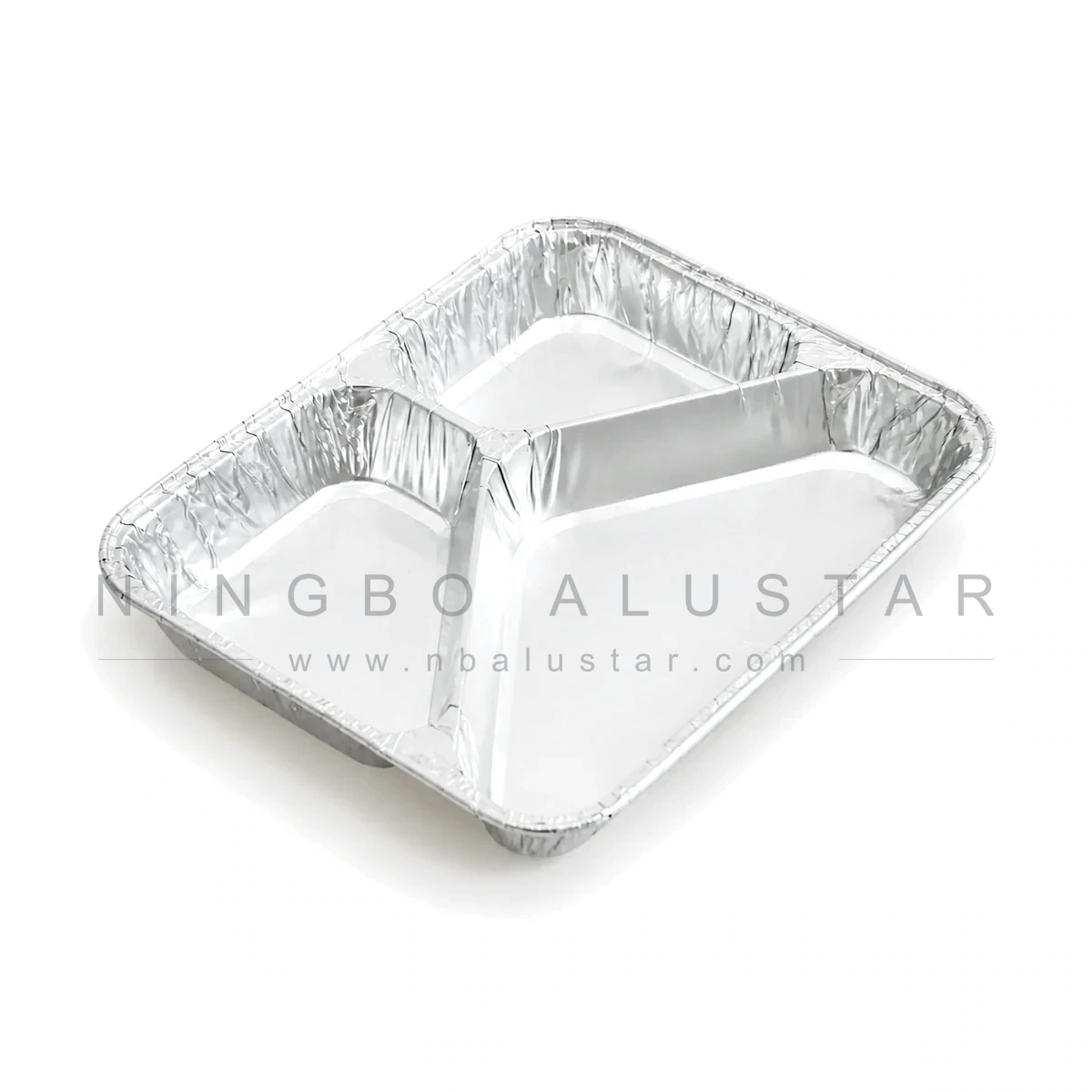
S823
S823 3-Compartment Foil Meal Tray
225x180 outer / 30 high
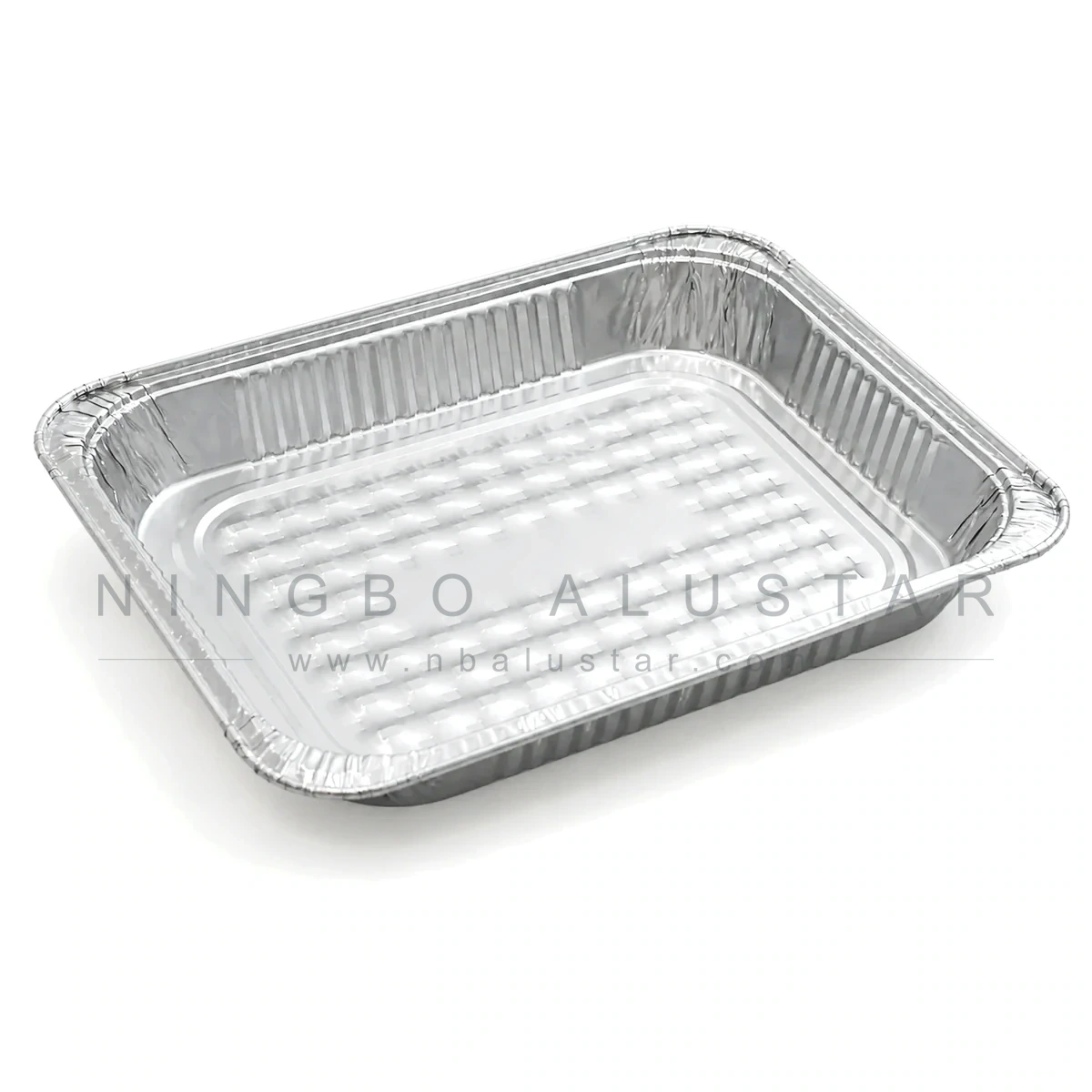
SF66C
SF66C 2.7 L Rectangular Foil Container – Grid-Pattern Base
325x260 outer / 40 high
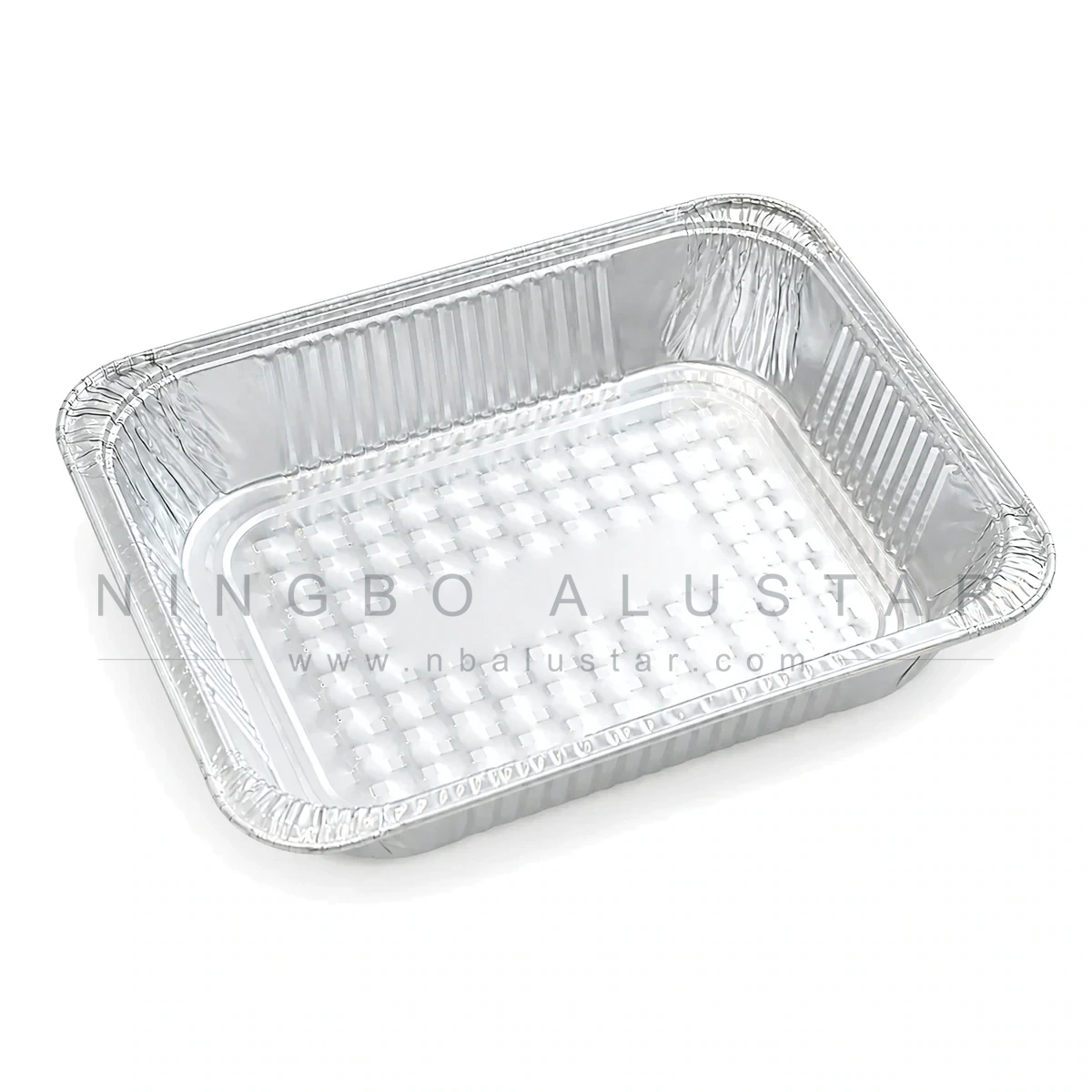
SF672C
SF672C 3.5 L Deep Half-Size Foil Pan – 2-Cavity Grid-Pattern Tooling
325x260 outer / 65 high
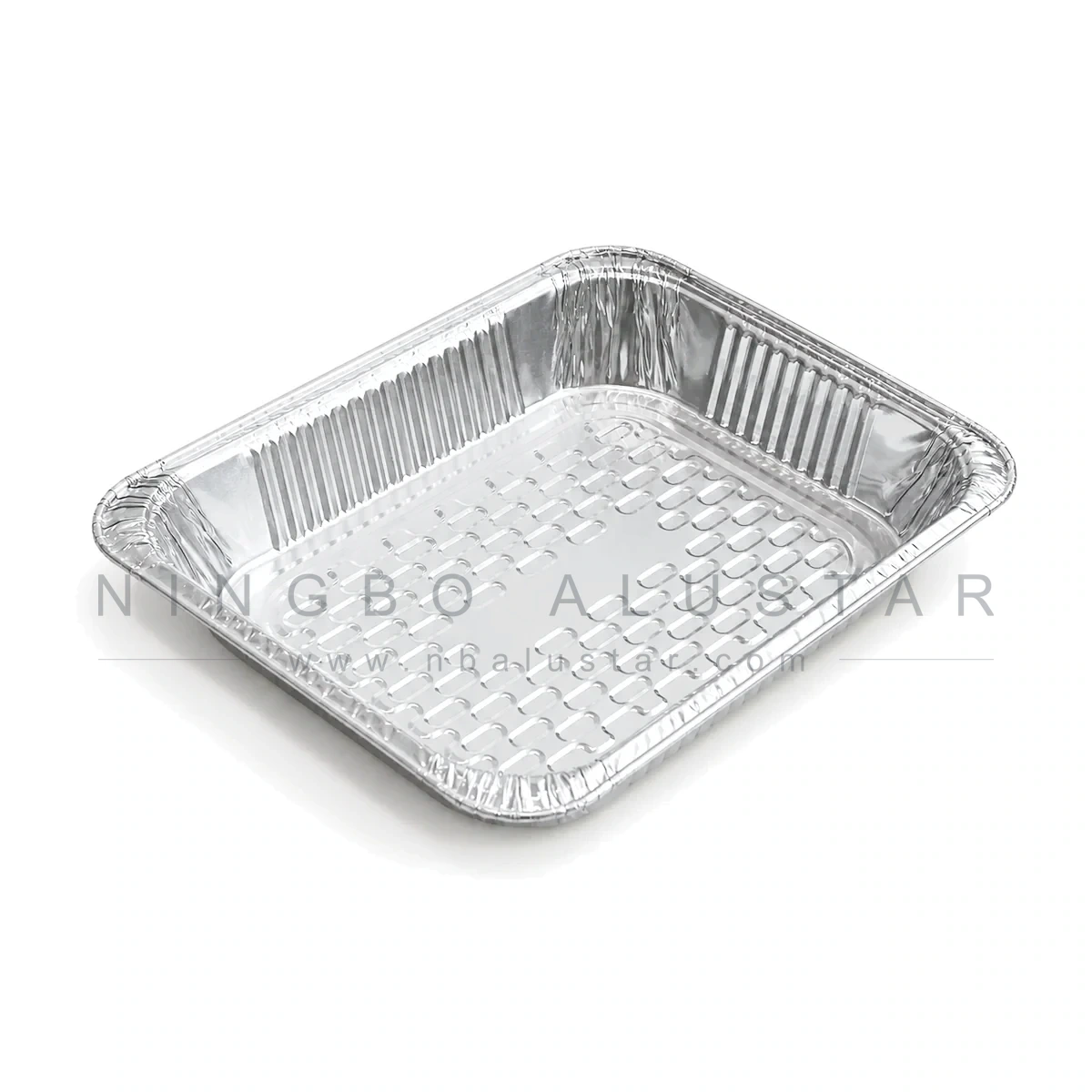
SF672D
SF672D 3.5 L Deep Half-Size Foil Pan – 2-Cavity Teardrop-Pattern Tooling
325x260 outer / 65 high
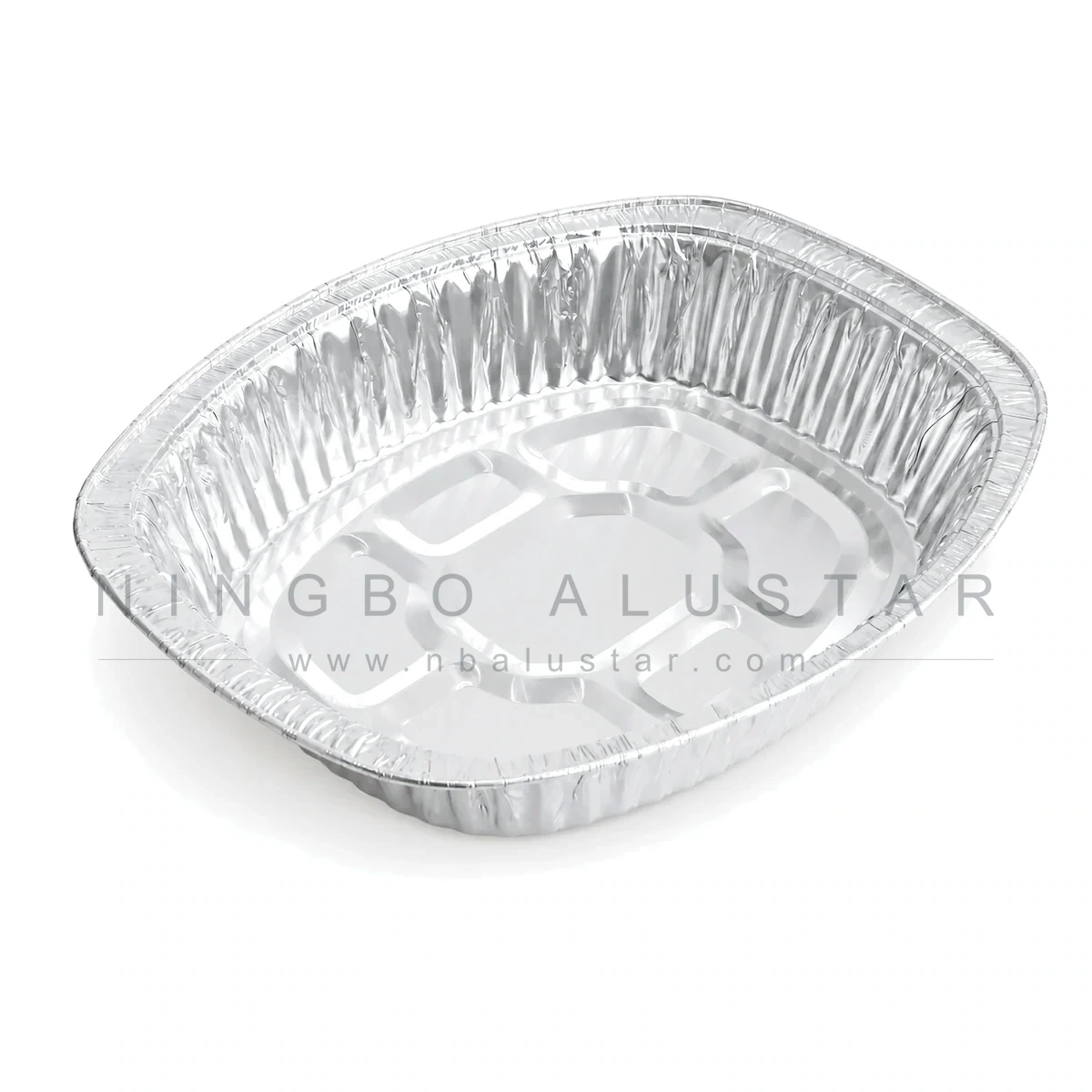
SF68R
SF68R Oval Turkey Roasting Pan – New Tooling
475x355 outer / 80 high
Buyer next steps
FAQ
Are all five containers protected by design patents?
Alustar states that the five appearances shown in the gallery are design-patented products. Patent numbers and legal scope should be confirmed from the relevant official registration documents for the target jurisdiction.
Does a design patent prove that a tray is stronger?
No. A design right protects appearance, while technical performance needs separate like-for-like testing with controlled material, weight, dimensions, fill, temperature, support, and handling.
What are the four main reinforcement features?
They are a new reinforced bottom pattern, a reinforcing step around the upper opening, a slightly downturned inner rim platform, and smaller corner radii intended to improve local support.
Can Alustar develop a tray from our own model or sample?
Yes. Development can start from a model, sample, drawing, CAD file, equipment envelope, or functional brief, subject to feasibility, tooling, MOQ, and validation. Customer-supplied design information is kept confidential.
How should buyers compare this design with another tray?
Keep material, temper, dimensions, finished weight, fill, temperature, support, time, and operator method equal. Define deflection, rim damage, corner collapse, lid fit, and stack acceptance before testing.
Will customer drawings or model numbers be published?
No. Customer names, logos, models, order data, and proprietary drawings are treated as confidential and excluded from public case material unless written authorization says otherwise.