Updated4 min readBuyer Resources
Foil Tray Lid Compatibility Guide: Board, PET Dome, PP Lid, and Sealing Film
The right lid depends on rim geometry, food height, display needs, heating route, and delivery pressure.
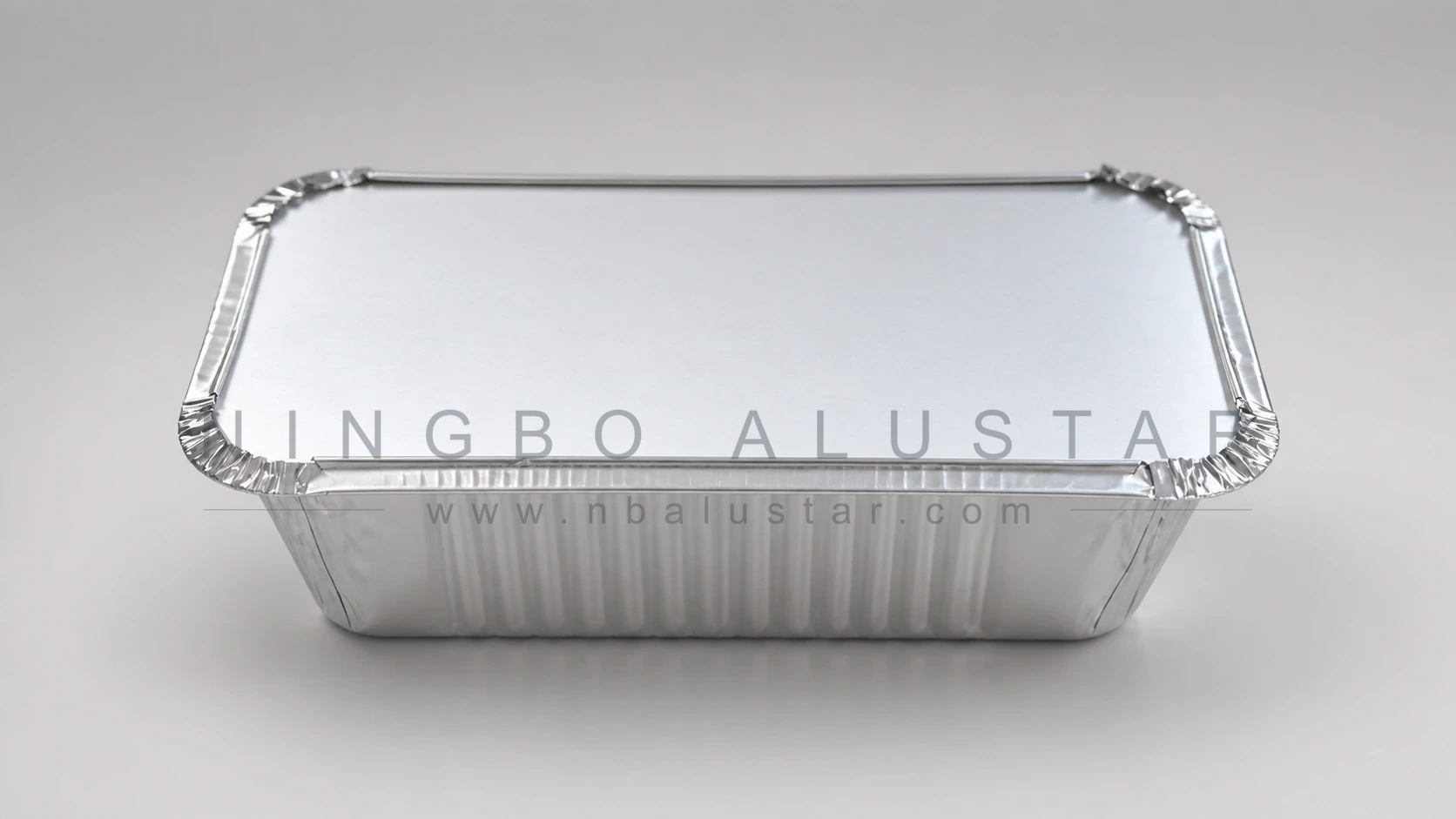
Quick Answer
Choose lids by application: board lids for economical takeaway, PET dome lids for display, PP lids for some chilled and delivery routes, and sealing film for automated meal packing.
Why lid compatibility matters
A foil tray can look correct in a catalog and still fail in real delivery if the lid does not match the rim tightly. The rim profile, rolled edge width, corner radius, tray depth, and filling height all affect how the lid performs.
Buyers should test lids with filled samples, not empty trays only. Sauce, steam, chilling, stacking, and transport vibration can expose problems that are invisible during a desk check.
- Check the lid after hot filling and cooling.
- Stack filled trays for a realistic delivery test.
- Confirm whether the lid is for heating, display, transport, or sealing only.
- Measure carton compression after long-distance shipping.
Common lid options
Board lids are common for cost-controlled takeaway and catering. PET dome lids help customers see bakery, deli, and prepared foods. PP lids can be useful for some chilled and takeaway applications. Sealing film is often selected for ready meal production lines.
| Lid type | Typical use | Buyer note |
|---|---|---|
| Foil board lid | Takeaway, catering, meal boxes | Economical and printable, but visibility is limited. |
| PET dome lid | Bakery, deli, display food | Good visibility; confirm temperature and transport needs. |
| PP lid | Chilled meals, selected takeaway | Check food-contact rules and heating route carefully. |
| Sealing film | Ready meals and automated packing | Requires equipment testing and stable rim control. |
How to confirm before bulk order
Ask the supplier to send tray and lid samples from the same production specification. Test opening, closing, stacked transport, carton packing, and the intended heating or chilling process.
For private-label orders, confirm whether the lid is packed with the tray, packed separately, or sourced from a second supplier. Mixed sourcing can create fit problems if tolerances are not controlled.
Treat rim and lid as one engineered interface
A lid does not fit because top length and width appear similar. Compatibility depends on rim profile, flange width, corner radius, curl, flatness, wall angle, material spring-back, and the closure's own tolerances.
Measure both components and define where contact, capture, sealing, and release should occur. Keep the exact tray-and-lid codes together in drawings, samples, quotations, cartons, and purchase orders.
- Overlay controlled drawings where possible.
- Check corners and long edges separately.
- Measure several cavities and production lots.
- Do not approve a lid from one hand-picked pair.
Select closure material from the route
Board lids can offer print area and stiffness. Foil lids can support specific heat-retention routes. Clear polymer lids improve visibility. Sealing films can suit automated lines, but each option has distinct equipment and use limits.
Confirm the full construction, including coatings, inks, adhesives, sealants, or anti-fog layers. The tray may tolerate one condition while the closure does not.
- Define hot, cold, frozen, and reheating conditions.
- Check food type, fat, acidity, and contact duration.
- Confirm print and adhesive areas relative to food contact.
- Use destination-specific evidence and instructions.
Diagnose lid failures by symptom
Loose corners may point to radius, curl, or closure tolerance. A lid that pops after filling may indicate overfill, steam, trapped pressure, rim contamination, or material memory. Difficult opening may come from excessive engagement or seal settings.
Change one variable at a time and preserve failed samples. A simple symptom-cause-action log prevents teams from repeatedly changing tray, lid, and process without learning which factor mattered.
- Photograph the failed position before opening.
- Record fill, temperature, time, equipment, and operator.
- Compare dimensions against approved references.
- Retest the correction across multiple samples and conditions.
Use a filled closure-validation protocol
Begin with incoming visual and dimensional checks, then close empty samples to assess alignment. Move to normal and worst-case filled trials across storage, transport, heating, cooling, opening, and service.
Set acceptance before testing. Record engagement, leakage, seal width where relevant, opening force, lid deformation, label performance, stack stability, and whether food contacts the closure unexpectedly.
- Use production-representative trays and lids.
- Include start, middle, and end of a sealing run.
- Condition samples for realistic time and temperature.
- Repeat after any material, tool, or supplier change.
Write lid compatibility into purchasing controls
The purchase specification should name both codes, materials, critical dimensions, closure method, pack ratio, unit and carton packing, artwork, use limits, test method, defects, and approved samples.
Alustar can help identify compatible standard tray and lid references, arrange pairs for testing, and discuss custom closure requirements. Final approval should always use the buyer's filled route.
- Prevent substitution without written approval.
- Receive and inspect tray and lid as a pair.
- Track complaints by both component lots.
- Keep spare-lid and shortage rules in the order plan.
Direct B2B procurement
Aluminum Foil Containers with Lids Wholesale
Buy the tray and closure as one verified system across foil-board, PET, PP, sealing film, packing, filled tests, and repeat supply.
View solutionSources and further reading
Continue this buying path
Use these related guides to move from initial selection to specifications, compliance, and supplier evaluation.
Lid Guide
How to Choose Aluminum Foil Containers with Lids: Foil-Board Lids, PET/PP Plastic Lids, and Heat-Seal Film Compared
Read guideSize Guide
Aluminum Foil Container Sizes: Capacity, Dimensions, Depth, and Lid Matching Guide
Read guideApplication Guide
Aluminum Foil Containers for Ready Meals: Freezer, Oven, and Retail Shelf Requirements
Read guideBuyer Resources
Takeout Aluminum Foil Containers: Buyer Guide for Restaurants and Distributors
Read guideRelated aluminum foil products
Buyer next steps
FAQ
Can one foil tray use several lid types?
Sometimes yes, but each lid must be tested with the exact tray rim, food height, and delivery route.
Are PET dome lids oven safe?
Usually no. PET lids are mainly used for visibility and cold or ambient display, so heating instructions must be confirmed separately.