Updated4 min readBuyer Resources
Takeout Aluminum Foil Containers: Buyer Guide for Restaurants and Distributors
Capacity, lid fit, rim memory, stacking, and delivery route all decide whether a takeout foil container performs well.

Quick Answer
For takeout food, choose aluminum foil containers by food volume, sauce level, delivery time, lid security, and stack pressure.
Start with the food
Rice meals, noodles, roasted meat, pasta, curry, and baked dishes behave differently in transit.
The safest purchasing process is to test the actual menu item inside the container, close the lid, stack filled samples, and check leakage.
Delivery packaging checklist
Capacity alone is incomplete. Outer size, bottom size, height, wall angle, rim style, and lid material all shape the user experience.
- Use deeper trays for saucy meals.
- Choose stronger rims for stacked orders.
- Check lid clearance with real portions.
- Confirm export carton strength.
Distributor assortment planning
Distributors usually perform better with a focused range of small, standard, and larger meal trays plus compatible lids.
Private-label cartons and clear SKU names improve repeat orders.
Build a menu-to-container matrix
Group dishes by physical behavior instead of cuisine name. Dry bakery foods, oily roasted meats, thin sauces, thick curries, rice meals, noodles, and family portions place different demands on depth, base area, rim, lid, and handling.
For each menu item, record portion weight, maximum fill height, free liquid, garnish, temperature, hold time, delivery time, and whether customers reheat the food in the pack.
- Use shallow trays for presentation when spill risk is low.
- Use adequate headspace for sauced or high-profile foods.
- Separate incompatible foods with compartments or multiple packs.
- Keep one approved container and lid pair per menu family.
Simulate the full delivery route
A package may leave the kitchen level, ride tilted in a courier bag, sit beneath other orders, cool during travel, and be carried by one rim. Test those moments with the real food and realistic delivery duration.
Record leakage, lid movement, wall buckling, base sag, heat transfer to the outer bag, condensation, label adhesion, opening, and final food presentation. Empty-tray tests cannot reproduce these loads.
- Test upright, tilted, and short inversion where relevant.
- Stack hot and cooled meals at the real order count.
- Use the actual courier bag, separator, cutlery, and outer bag.
- Define a failure threshold before comparing suppliers.
Select the closure as a system
Board lids, foil lids, polymer lids, and sealing films provide different visibility, stiffness, heat behavior, branding space, and closing methods. The tray rim must be designed and controlled for the selected closure.
A lid that fits an empty tray can fail with steam, sauce, overfill, rim contamination, vibration, or cold storage. Validate closure with normal and worst-case portions.
- Check corner engagement and opening force.
- Confirm headspace and venting strategy.
- Test labels or tamper features after condensation.
- Keep lid code and packing ratio in the purchase specification.
Plan a focused restaurant or distributor range
Too many near-identical SKUs create picking errors and weak inventory turns. A stronger range normally begins with a small portion, standard meal, larger family portion, one or two compartment options, and clearly matched lids.
Name products by code, usable size, and application rather than local nicknames alone. Put the same identifiers on samples, price lists, cartons, warehouse locations, invoices, and reorder forms.
- Track sales and complaints by tray-and-lid pair.
- Use pack counts that fit restaurant storage and usage rate.
- Separate consumer packs from bulk food-service packs.
- Retire duplicate SKUs only after customers migrate to an approved alternative.
Turn a menu trial into a repeat-order specification
Approval should produce a controlled file: product code, dimensions, finished weight range, rim, lid, food applications, unit pack, carton, marks, pallet, defect rules, and photographs of the accepted filled result.
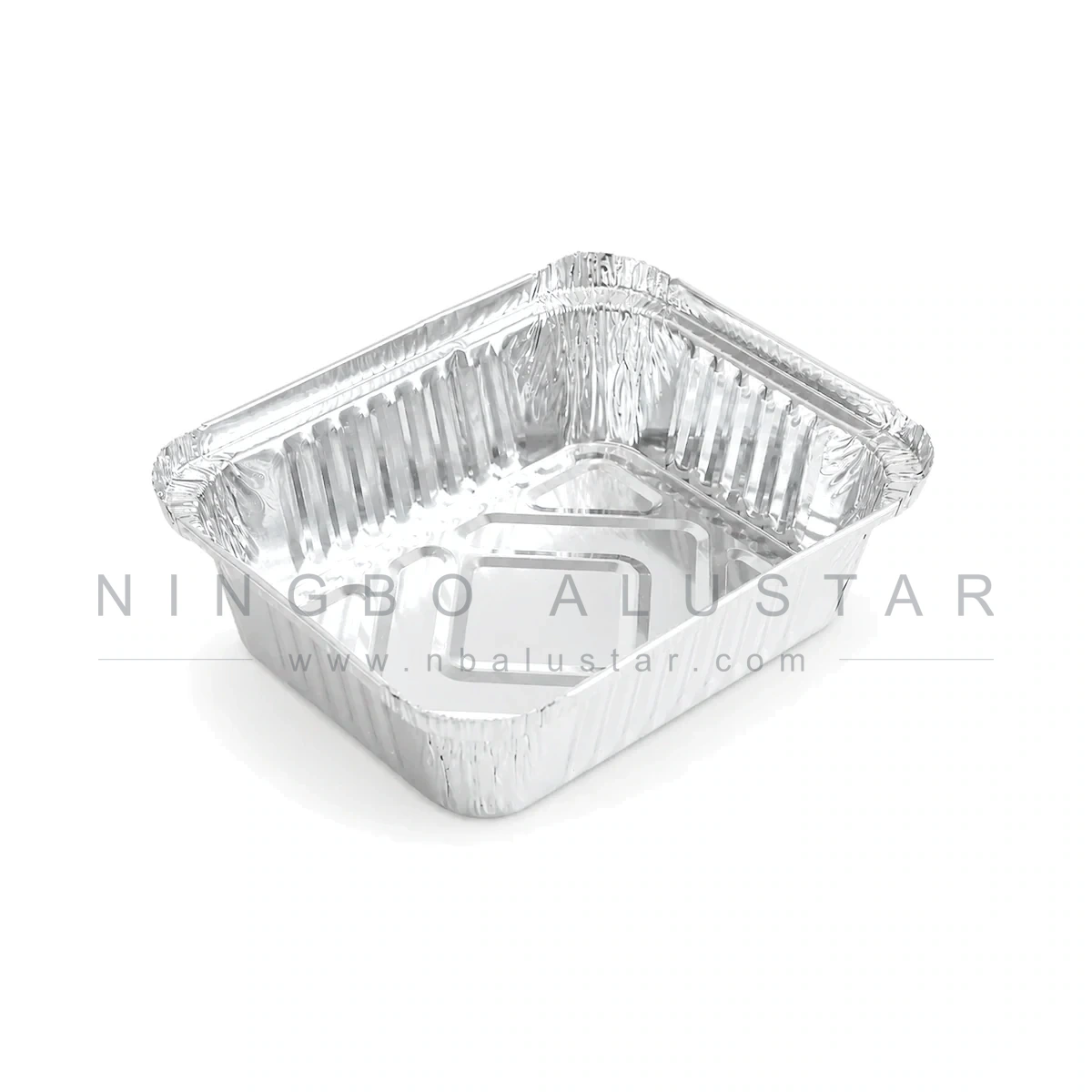
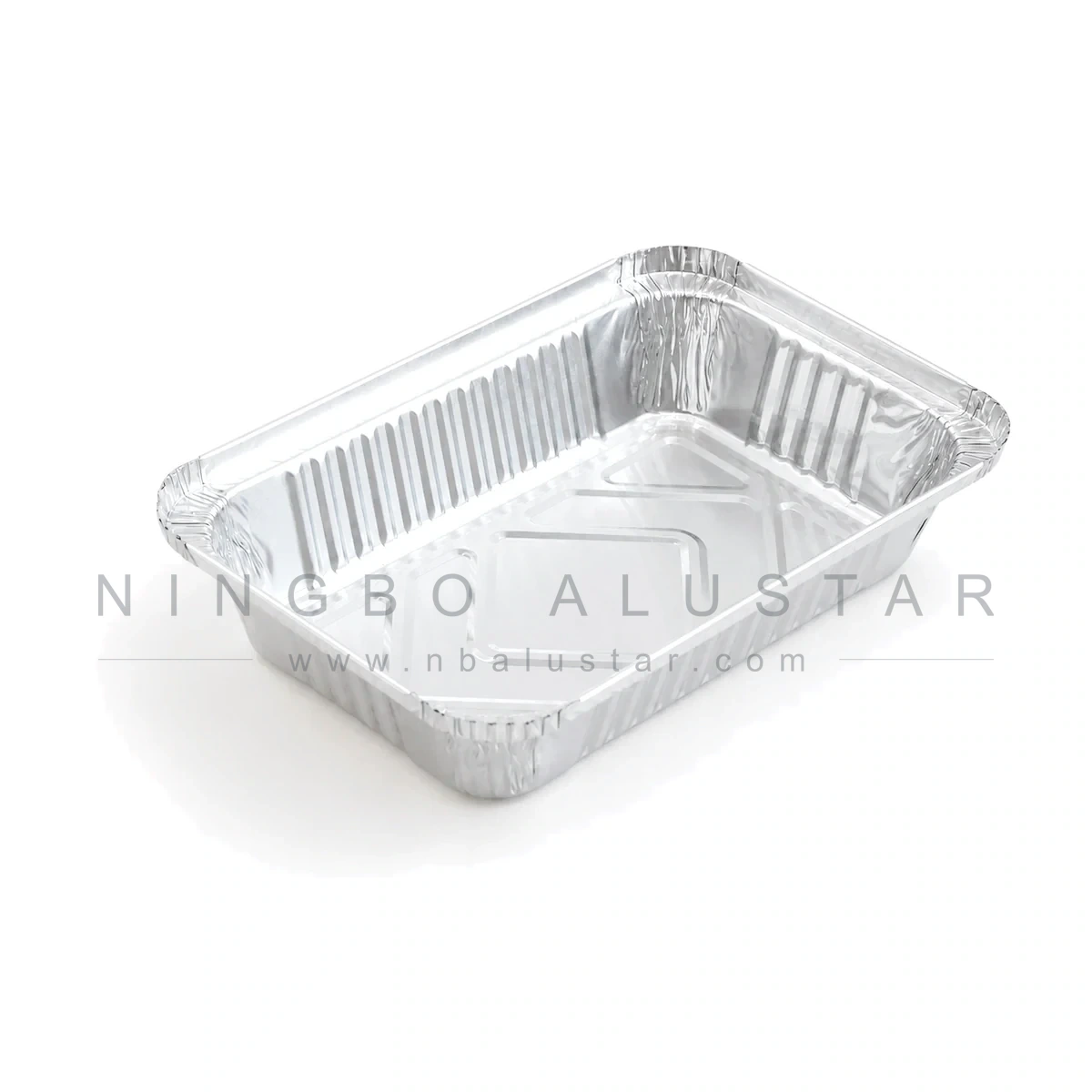
Alustar can compare standard rectangular, raised-corner, compartment, round, and family-size options. Send the menu and route first, then use samples to select the smallest range that performs reliably.
- Give every specification a revision and approval date.
- State whether reheating or oven use was actually validated.
- Keep receiving checks aligned with the approved pack.
- Require written notice before material, tooling, lid, or packing changes.
Buy a Takeaway Aluminum Foil Container for the Real Menu
A Takeaway Aluminum Foil Container should be selected with the actual meal, sauce level, filled weight, lid, delivery time, stacking pattern, and customer opening experience. Send the menu and portion details instead of asking for a generic one-litre tray; usable volume and rim performance matter more than the market nickname.
Restaurants, delivery kitchens, importers, and food-service distributors are welcome to purchase from Alustar. We can compare standard shapes, compartments, lid choices, filled-sample tests, inner packs, and delivery cartons before an order is approved.
- Fill samples with the hottest, heaviest, and most liquid menu items.
- Check leakage, rim deformation, lid lift, stack stability, and opening force.
- Choose separate SKUs when dry, sauced, and compartment meals conflict.
- Record tray, lid, pack count, carton, and handling instructions for reorders.
Direct B2B procurement
Takeaway Aluminum Foil Container Supplier
Match takeaway containers to the real menu, portion, sauce, delivery time, lid, stacking route, distributor pack, and reorder volume.
View solutionSources and further reading
Continue this buying path
Use these related guides to move from initial selection to specifications, compliance, and supplier evaluation.
Application Guide
Aluminum Foil Tray Uses: Takeout, Catering, Bakery, BBQ, Airline, Ready Meals, and Retail Food
Read guideMexican Food Packaging
Aluminum Foil Containers for Mexican Food, Takeout, and Fiesta Catering
Read guideLid Guide
How to Choose Aluminum Foil Containers with Lids: Foil-Board Lids, PET/PP Plastic Lids, and Heat-Seal Film Compared
Read guideProduct Guide
Rectangular Aluminum Foil Containers: Takeout, Catering, and Ready Meal Buyer Guide
Read guideRelated aluminum foil products
Buyer next steps
FAQ
Are foil containers suitable for saucy food?
Yes, if the depth, rim, fill level, and lid type match the food route.
Which lid is best for takeout foil containers?
Board lids, plastic lids, and sealing film each fit different delivery and display needs.