Updated6 min readProduct Guide
Rectangular Aluminum Foil Containers: Takeout, Catering, and Ready Meal Buyer Guide
A rectangular aluminum foil container guide for takeout, catering, ready meals, airline meals, lid matching, and export packaging.
Quick Answer
Select a rectangular foil container by the complete meal and production footprint: usable base, corner radius, depth, long-edge stiffness, closure system, equipment clearance, and carton orientation. Rectangular packs use shelf and oven space efficiently, but their corners and long sides do not carry load equally. Qualify the exact food and lid through portioning, sealing, heating or chilling, conveyor movement, two-direction lifting, filled stacking, delivery, and opening. A catalogue length-by-width description is not enough to approve a takeout or ready-meal program.
Map the rectangle to the packing operation
Rectangular formats work best when the tray orientation is deliberate. A manual takeaway counter values easy scooping and reliable hand closure; an automated ready-meal line needs registration, repeatable flange presentation, and clearance through denesters, fillers, sealers, and conveyors; a catering pack must tolerate heavier lifting and longer holds.
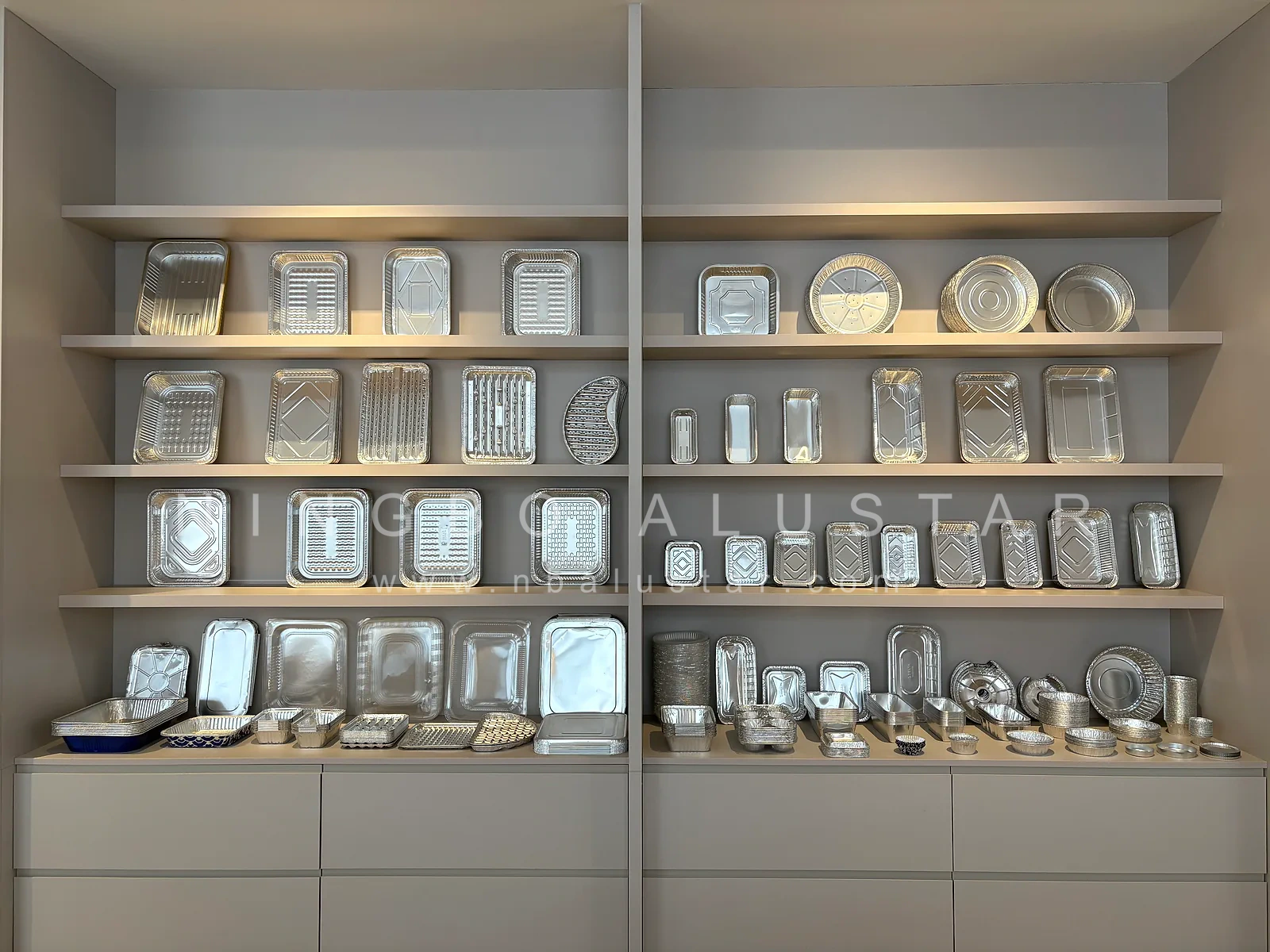
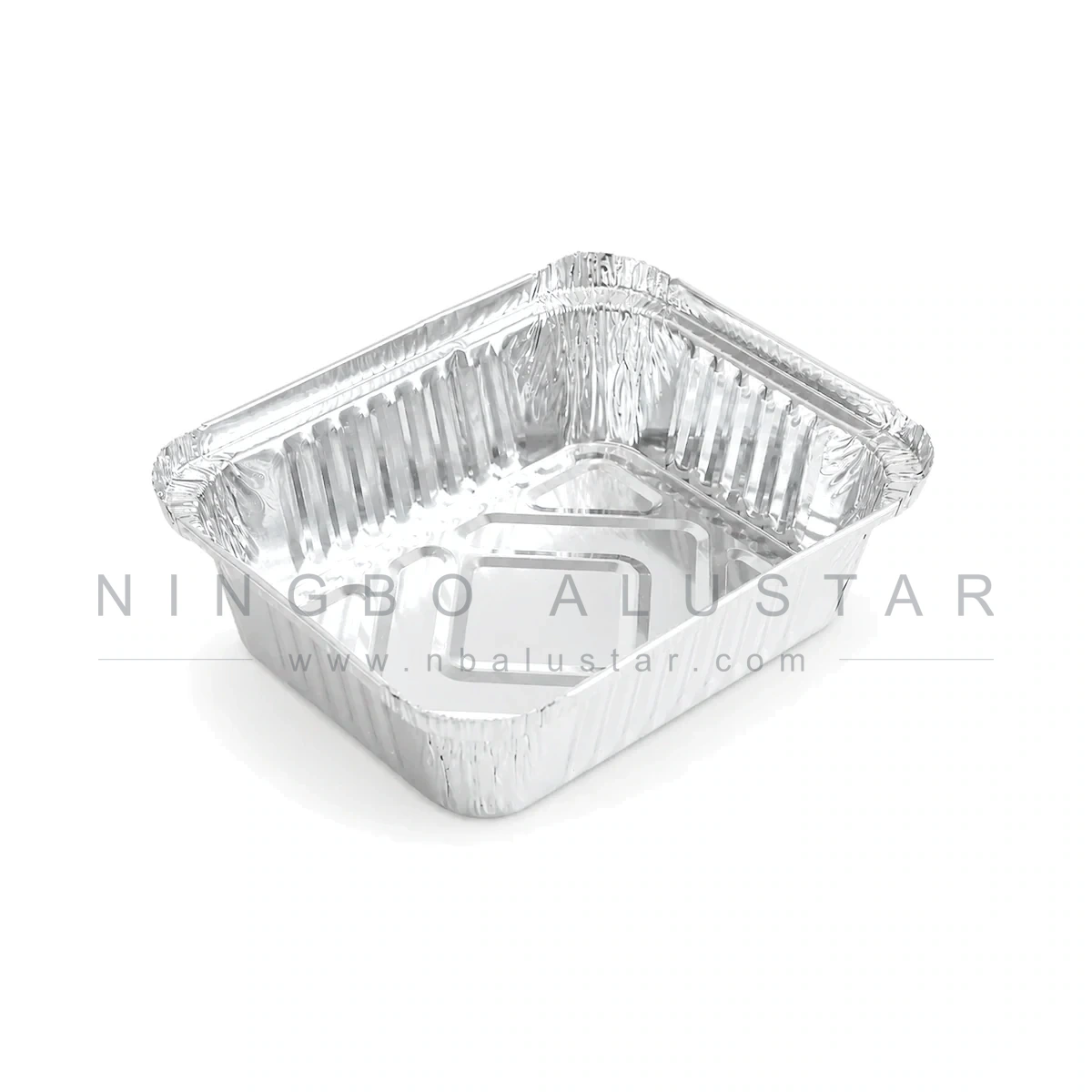
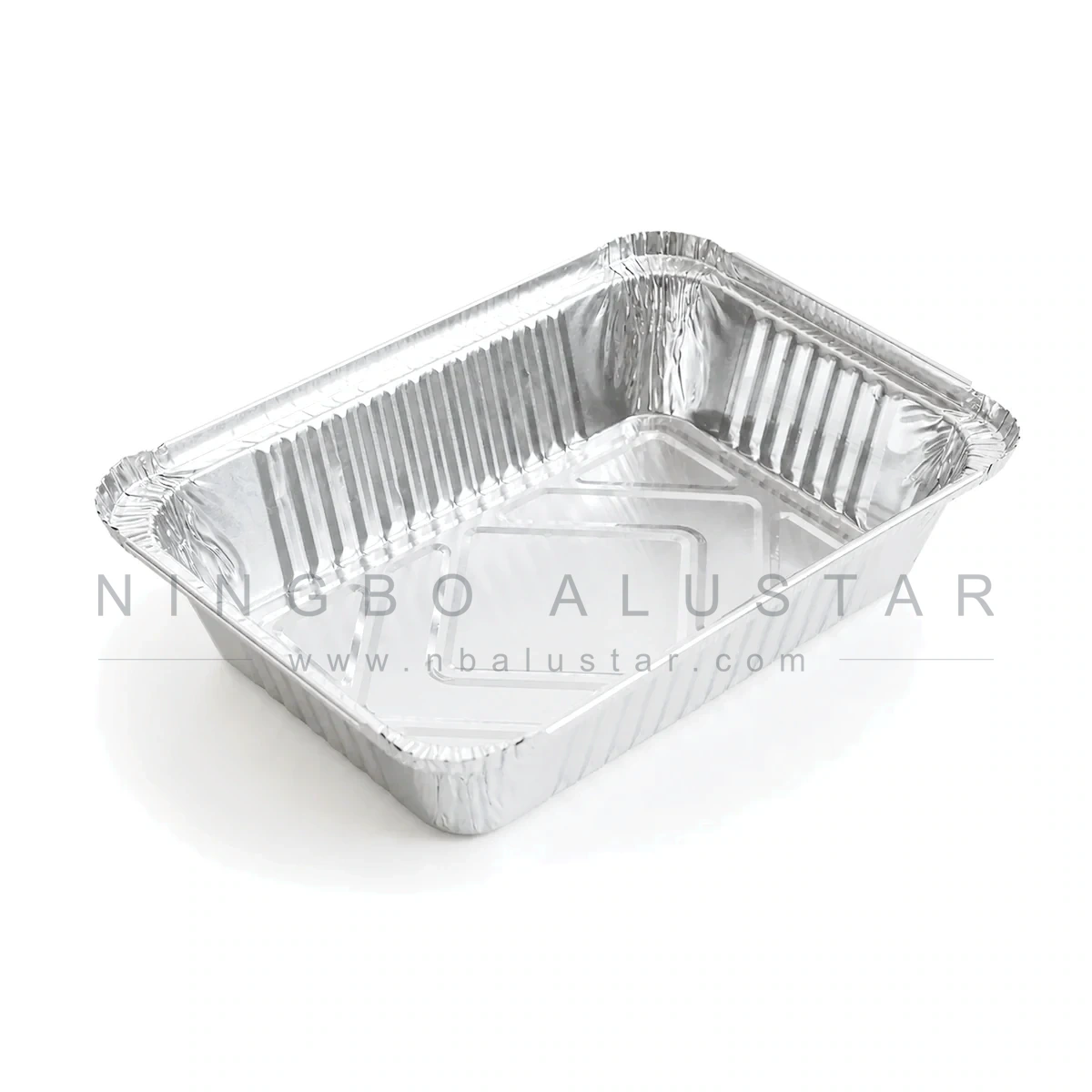
Existing Alustar sample routes include compact rectangular containers such as SV855N and SV765, a larger step such as SV865, and a deeper vertical-rim route such as SV889. These are candidate codes for trials, not promises that one shape suits every menu, machine, or closure.
| Operating route | Rectangular decision focus | Evidence before approval |
|---|---|---|
| Manual takeout | Scoop access, hand closing, bag orientation | Timed pack trial and warm carry test |
| Ready-meal line | Denester registration, fill zone, sealer window | Line-speed run with normal variation |
| Airline or institutional meal | Tray footprint, cart or rack fit, controlled opening | Full service-equipment mock-up |
| Catering or family pack | Filled weight, long-edge stiffness, supported lifting | Hot lift, hold, and serving trial |
| Retail chilled or frozen | Seal integrity, label panel, case stack | Storage-cycle and retail-case test |
Specify usable floor and corners, not only outer length and width
The rim consumes part of the outer footprint, wall angle narrows the base, and corner radii remove usable area from the four ends. A meal component that fits a drawn rectangle may curl, overlap, or bridge once it is placed in the real tapered tray. Build a food layout on the measured internal base and check utensil access at each corner.
Equipment creates a second footprint. Confirm the tray's leading edge, indexing point, carrier pocket, seal-head clearance, and turn radius on transfers. If the same code can enter a conveyor in two orientations, decide whether both are acceptable or add poka-yoke so a ninety-degree rotation cannot cause a jam or misaligned label.
- Capture outer, inner-top, usable-base, depth, rim, and corner geometry in the controlled drawing.
- Lay out the actual food components and utensils on the measured base.
- Name the leading edge for every machine and printed component.
- Check that a carrier supports the base without loading an unsupported corner.
Control long-edge deflection and corner closure
Long straight sections can bow under closing force, filled weight, or carton pressure while corners remain comparatively stiff. Inspect each long side at its midpoint and each corner after filling. A lid may appear aligned at the corners but leave a weak channel along the center of the long edge.
For film sealing, verify a clean, continuous flange with the production food and filling pattern; oil, sauce, grains, and product overhang can contaminate different parts of a rectangle. For board or foil lids, qualify corner folds and long-side retention. Record the closure sequence because pressing only the corners or only the center produces different results.
- Inspect four corners, two long-edge centers, and two short-edge centers separately.
- Challenge the closure with the messiest approved menu component.
- Measure opening force from the intended tab or corner.
- Tie seal settings and closure instructions to a tray-and-lid revision pair.
Validate in both machine and delivery orientations
A useful trial follows one marked tray through the complete route. Mark the leading edge and four corners, de-nest at production speed, fill at the approved distribution pattern, close, apply the thermal cycle, and pass the pack through every transfer. Record where food, tray, lid, or label moves relative to the marks.
After line validation, rotate the challenge into logistics. Lift the filled pack from the short sides and long sides, stack it in the planned orientation, place it in the delivery bag or case, apply braking and cornering motions, and open it after the maximum planned hold. The approved result should state which grips and orientations are allowed, not merely that the tray passed.
| Route checkpoint | Rectangular-specific challenge | Acceptance record |
|---|---|---|
| Denester | Leading-edge registration and corner release | Missed picks, doubles, corner damage |
| Filler | Uneven food distribution along length | Fill map and rim contamination |
| Closer or sealer | Corners versus long-edge centers | Continuous closure by inspection point |
| Transfer | Ninety-degree rotation and unsupported gaps | Jam, base mark, or orientation change |
| Delivery | Long-side and short-side lift plus braking | Allowed grip, stack, and leak result |
Build cartons around directional strength
Rectangular trays can be nested or cased in more than one orientation, but carton cube is not the only decision. Long edges, short edges, and corners respond differently to sleeve tension and case compression. Compare orientation options by post-shipment rim geometry, de-nesting, lid fit, and operator presentation before selecting the highest count.
For filled retail packs, align the tray, label, and case so the designed load path remains vertical. If a case is turned for pallet efficiency, confirm that lids do not become side-load members and that sauce or decoration does not migrate toward an unintended closure edge. State carton orientation and pallet pattern in the packing specification.
- Compare at least two carton orientations with the same transport challenge.
- Sample corners and edge centers after compression, not only tray dimensions before packing.
- Show tray direction, label face, and carton-up arrows on one packing diagram.
- Recheck lid fit and de-nesting after the final pack count is frozen.
Avoid common rectangular-pack mistakes that create corner failures
The common dimensional shortcut is to compare only outer length and width, which can hide a smaller usable base or a different corner radius. The common closure shortcut is to inspect only corners, which can hide an open long-edge center. The common equipment shortcut is to hand-feed perfect samples instead of testing nested production pieces at normal speed.
Another failure comes from treating a pass in one orientation as universal. A pack lifted across its short axis, turned on a conveyor, or cased on its side may load entirely different parts. Approval should therefore include an orientation drawing, inspection map, grip rule, and actual case configuration alongside the physical sample.
- Do not equate outer footprint with food-usable area.
- Do not inspect closure only at the visually neat corners.
- Do not prove machine fit with hand-separated trays.
- Do not change carton orientation without repeating filled-pack checks.
Sources and further reading
Continue this buying path
Use these related guides to move from initial selection to specifications, compliance, and supplier evaluation.
Product Guide
Compartment Aluminum Foil Containers: 2-Compartment and 3-Compartment Meal Tray Guide
Read guideProduct Guide
Aluminum Foil Roasting Pans: Deep Trays, Large Trays, and Oven Use
Read guideBuyer Resources
Takeout Aluminum Foil Containers: Buyer Guide for Restaurants and Distributors
Read guideIndian Food Packaging
Aluminum Foil Containers for Indian Biryani, Curry, Tandoori, and Takeaway
Read guideRelated aluminum foil products
Buyer next steps
FAQ
Why is usable base more important than outer size for a rectangular meal?
The rim, tapered walls, and corner radii reduce the area that actually supports food. Use the measured internal base to lay out meal components, utensils, and fill distribution before approving the footprint.
Which existing product codes can start a rectangular foil-container trial?
SV855N and SV765 provide compact starting routes, SV865 provides another rectangular step, and SV889 is a deeper vertical-rim route. Compare the actual food, closure, equipment, and filled handling before selecting one.
Where should closure be inspected on a rectangular tray?
Inspect all four corners, the centers of both long sides, and the centers of both short sides. Include contamination and deflection challenges because a lid can look aligned at the corners while remaining weak along a long edge.
Must a rectangular tray be tested in both orientations?
Test every orientation the pack can actually encounter in filling, sealing, transfer, lifting, delivery, casing, or palletizing. If only one orientation is approved, document it and add line and packing controls that prevent rotation.