Updated6 min readProduct Guide
Compartment Aluminum Foil Containers: 2-Compartment and 3-Compartment Meal Tray Guide
Choose 2-compartment and 3-compartment aluminum foil containers for meal sets, airline meals, school meals, bento-style packaging, and catering.
Quick Answer
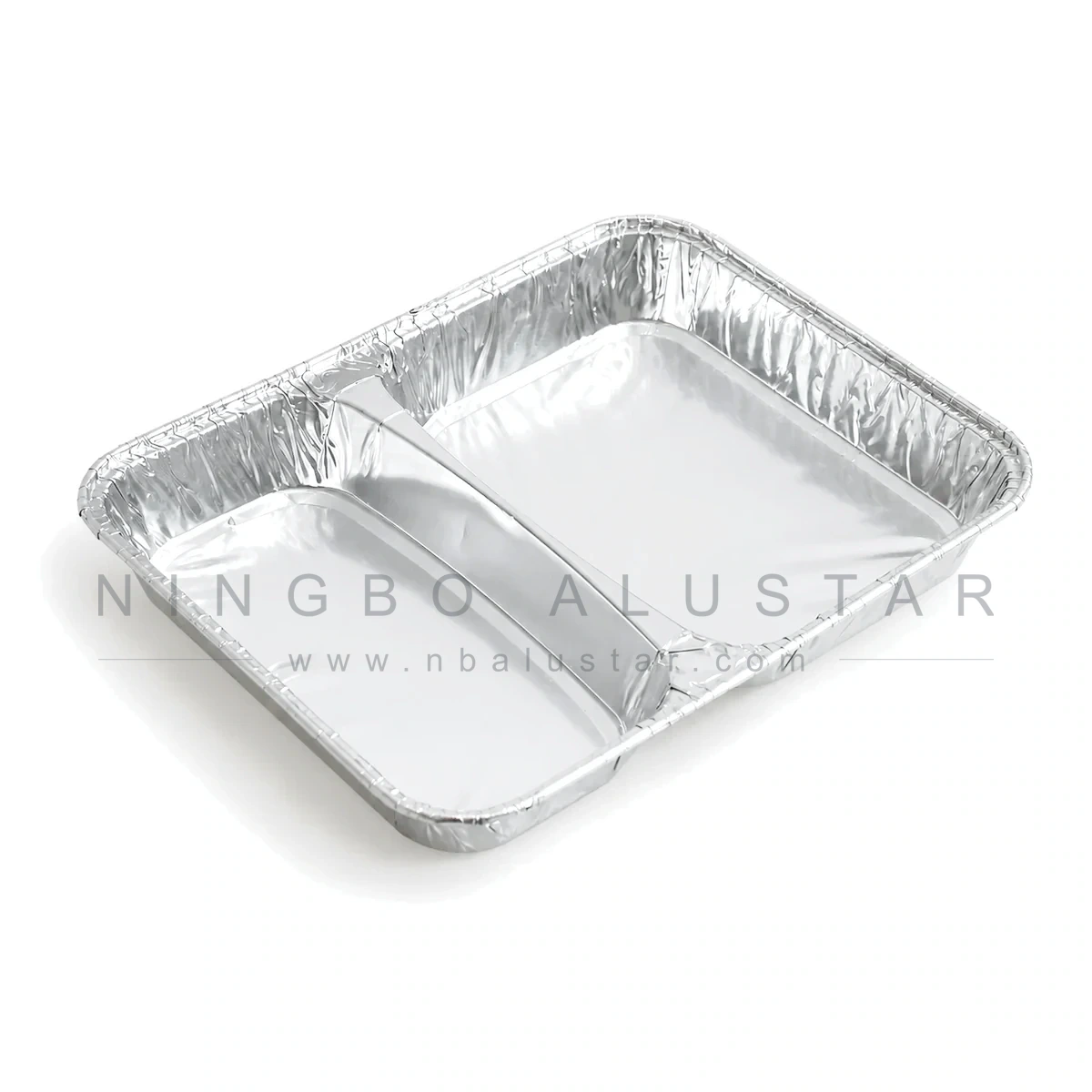
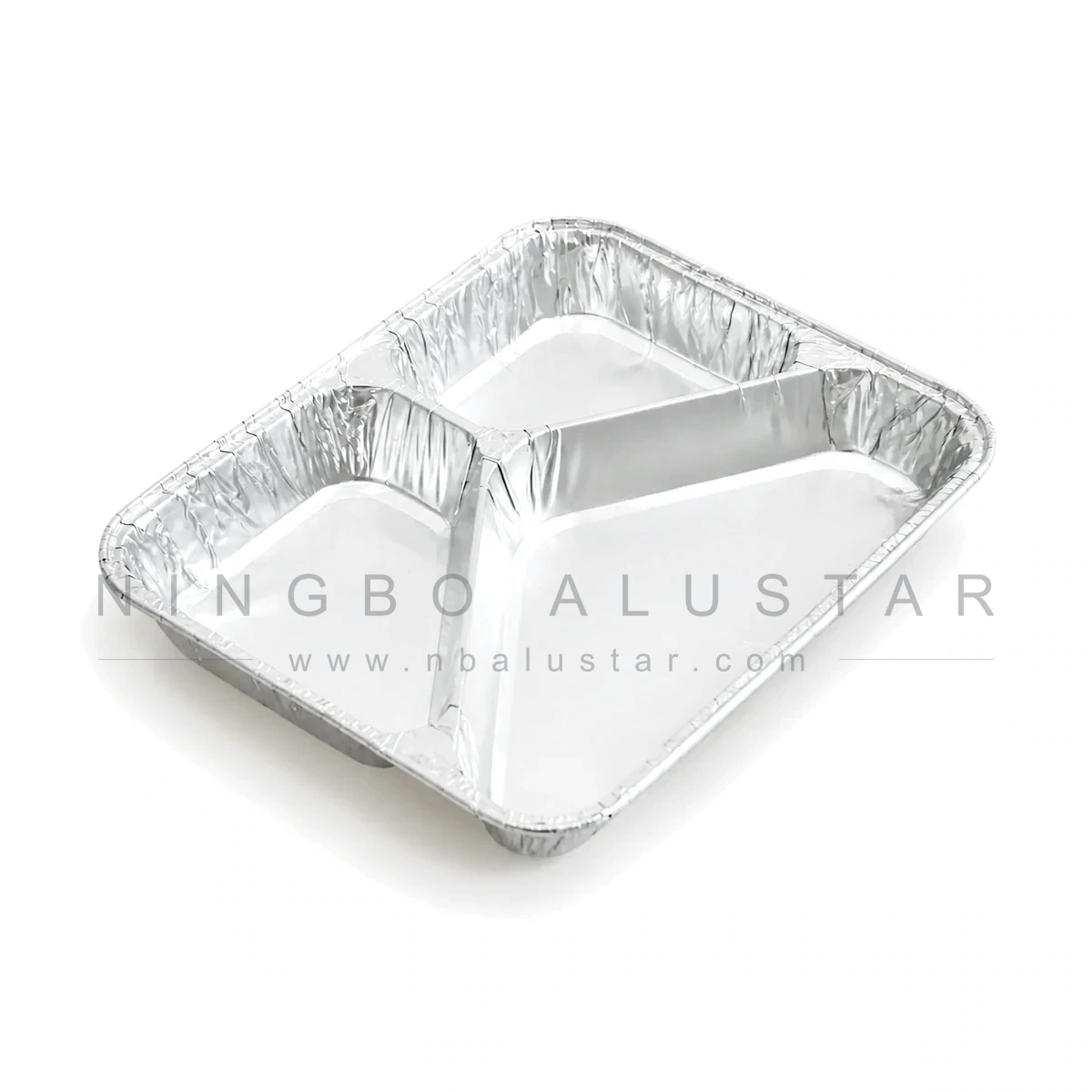
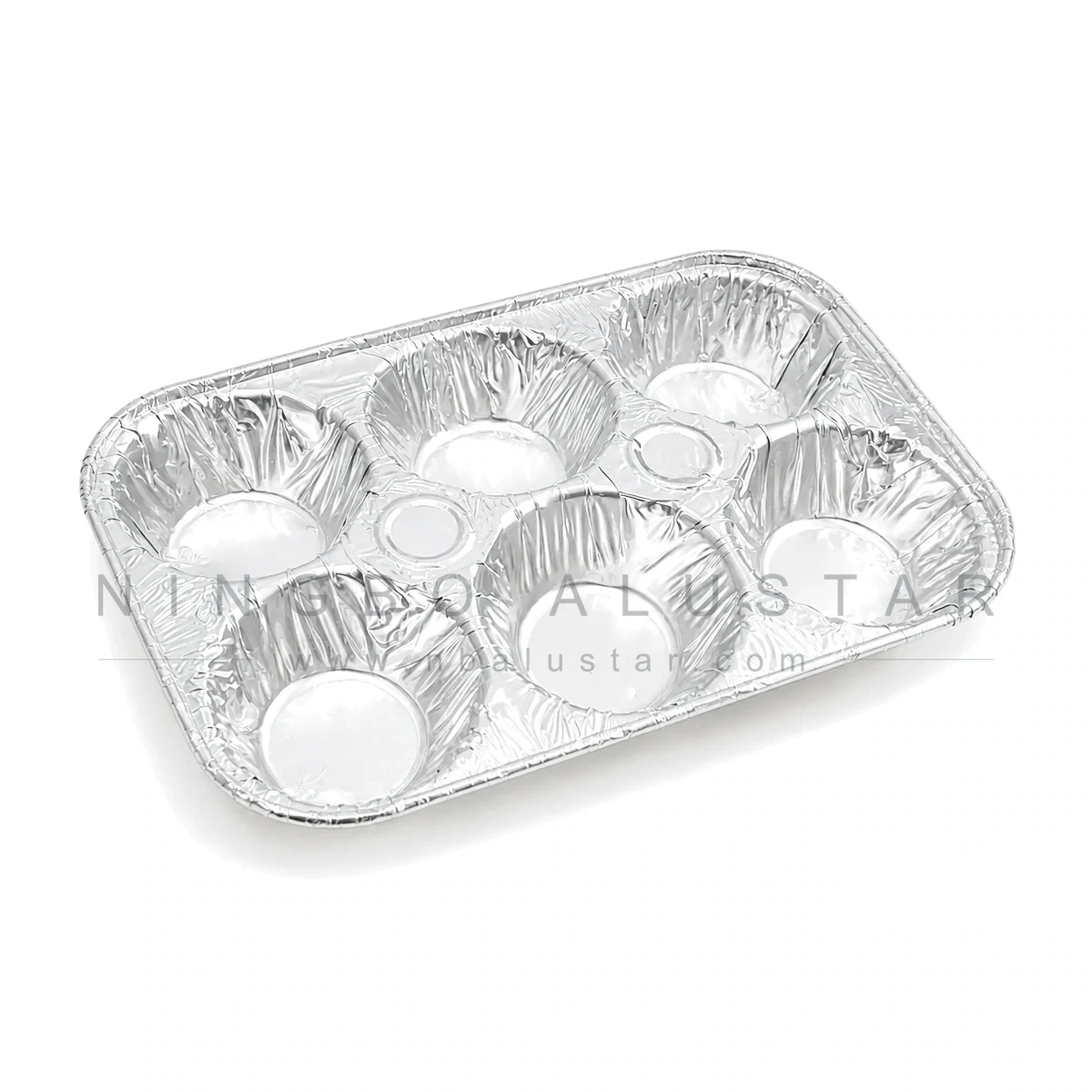
Choose a compartment foil tray by the meal architecture, not by the number printed in the product name. Define which component is wet, crisp, cold, aromatic, heavy, or small; assign a target fill range to each cell; and decide how much migration is acceptable during heating and delivery. A two-cell S822 and three-cell S823 provide different meal-separation routes, while a multi-cavity baking tray such as SP811 is not automatically a substitute for a divided meal tray. Approve the complete meal, lid, fill order, thermal route, tilt exposure, and service method together.
Design the meal before selecting the compartment count
A divider is useful only when it separates the components that need separation. Put the highest-volume or heaviest item in the cell that best supports it, then place sauces, crisp sides, garnishes, and small loose foods according to their migration risk. Avoid dividing a meal into equal-looking cells when the real portions are unequal.
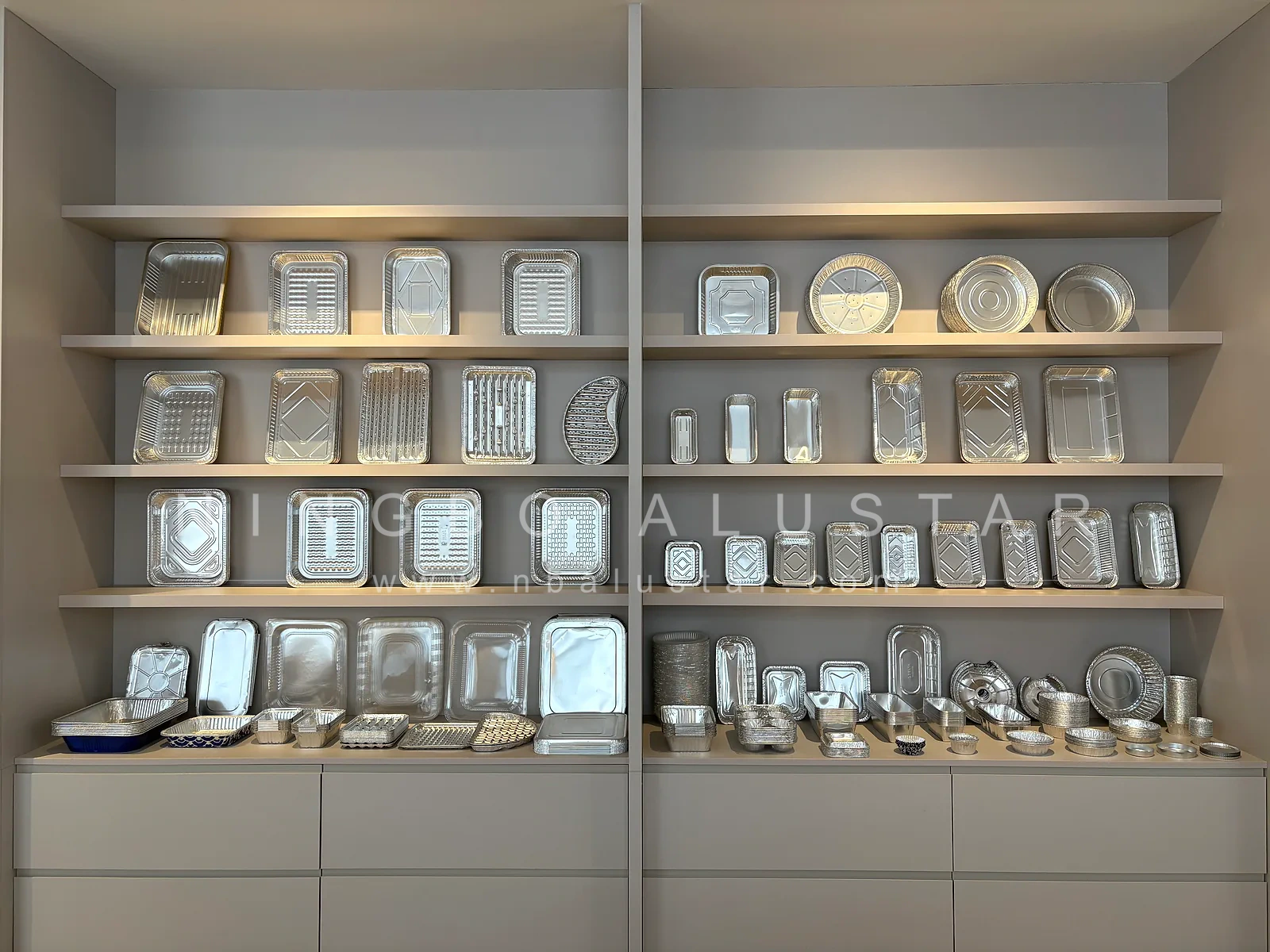
S822 is an existing two-compartment route and S823 an existing three-compartment route. SP811 has multiple baking cavities and belongs to a different process family; cavity count alone does not make it a plated-meal solution. Use physical samples to build the meal at both the low and high portion limits.
| Meal architecture | Format decision | Proof required |
|---|---|---|
| Main + one substantial side | Evaluate a two-cell route such as S822 | Both portions fit without loading the divider or rim |
| Main + two distinct sides | Evaluate a three-cell route such as S823 | Small cells remain usable at production portion tolerances |
| Saucy main + crisp side | Prioritize divider height and lid contact pattern | No unacceptable wetting after the full delivery route |
| Hot main + cold garnish | Reconsider one-pack thermal design | Food-safety and quality route supports co-packing |
| Repeated baked portions | Review a baking cavity tray separately | Cavity geometry and release suit the recipe; do not infer meal separation |
Set a fill map for every cell
Total tray capacity says nothing about whether one cell is overloaded. Define each component by weight, height, placement, and acceptable contact with the divider. A dense main can bend the base beside a partition while a light side appears underfilled; the combined tray may still match the target total weight.
Create a top-view fill map showing the intended cell, scoop direction, and no-food zones on the divider and rim. Use production utensils or fillers to test whether operators can hit the map at line speed. If a component routinely bridges the divider, the process or tray architecture is wrong even when a careful laboratory sample looks neat.
- Specify low, target, and high fill weight for each cell separately.
- Mark divider and rim exclusion zones in the work instruction.
- Measure placement accuracy at normal serving or filling speed.
- Record the order in which cells are filled when order affects contamination or balance.
Control migration across the divider and under the lid
Divider height alone does not define separation. Food can move over the partition during braking, wick through a lid contact gap, splash across an uncovered top, or migrate as steam condenses and runs. Observe the actual path and decide whether the requirement is visual separation, flavor separation, moisture protection, or leak containment.
A lid may bridge the divider, touch it, or leave headspace above it. Each design changes how the cells communicate and how stack load is transferred. Test the named lid on a filled tray; do not assume an outer-rim fit seals internal partitions. If strict internal sealing is required, make that a separate engineered closure requirement rather than a marketing claim about compartment count.
- Define acceptable migration separately for liquid, grease, aroma, and loose particles.
- Inspect divider-to-lid contact after heating and cooling.
- Use the worst approved orientation and braking motion in trials.
- State explicitly when compartments organize food but do not form liquid-tight cells.
Resolve incompatible temperature and texture routes
Compartments share one thermal environment even when foods occupy separate cells. A dense main may need more heating than a delicate side can tolerate; a crisp component may soften from steam released by another cell; a chilled garnish may be inappropriate in a pack reheated as one unit. Separation of space does not equal separation of temperature or vapor.
Run the full meal through the intended hold, reheat, or service sequence and measure each component at its own acceptance point. If no common process window protects safety and quality, use a separate cup, add the component after heating, change the menu architecture, or split the pack. Do not make the tray solve a recipe conflict it cannot physically isolate.
| Component conflict | Trial question | Possible redesign |
|---|---|---|
| Wet + crisp | Does steam or splash soften the side? | Separate cup, later addition, or different lid venting route |
| Dense + delicate | Can both reach acceptable quality in one heat cycle? | Pre-cook, change portion geometry, or split packs |
| Hot + chilled | Can safe and intended temperatures coexist? | Pack garnish separately and add at service |
| Strong aroma + neutral | Does the hold time cause flavor transfer? | Barrier cup or separate package |
| Sauce + loose grains | Does motion carry particles over the divider? | Change cell assignment, fill level, or viscosity route |
Run a migration-focused compartment validation
Use the real meal because water-only tests miss grease, starch, particles, and texture damage. Mark each cell, load the low and high approved portions at production speed, close with the intended lid, apply the thermal and hold route, then challenge the pack in its service and delivery orientations.
Inspect after each event rather than only at the end. Photograph the divider and underside of the lid after closing, heating, stacking, vibration, braking, side tilt, and opening. Record migration by component and path, plus rim condition, divider deformation, serving access, and whether a heavy cell makes the tray twist during one-handed handling.
- Test the normal meal and the worst approved combination of portions.
- Rotate the tray so each divider faces the direction of travel in at least one run.
- Inspect the lid underside to identify hidden splash and condensate paths.
- Keep acceptance photographs for every cell, not one overall top view.
Avoid compartment-tray mistakes that waste cells
The first mistake is choosing two or three cells before fixing the menu portions. The second is treating divider height as a liquid seal. The third is approving one carefully plated sample while the production scoop routinely soils the partition and rim. These errors create unused cells, wet sides, poor closure, and inconsistent presentation.
A subtler mistake is pairing foods with incompatible heat, moisture, or aroma behavior and expecting physical dividers to protect them. Another is substituting a multi-cavity baking tray because the cavity count looks attractive. Use the meal map, process window, lid-contact review, and migration test to prove the format's function rather than inferring it from appearance.
- Do not choose cell count before measuring each menu component.
- Do not claim internal leak resistance from divider height alone.
- Do not qualify separation with a static, carefully plated sample.
- Do not substitute baking cavities for meal compartments without a new validation.
Sources and further reading
Continue this buying path
Use these related guides to move from initial selection to specifications, compliance, and supplier evaluation.
Product Guide
Rectangular Aluminum Foil Containers: Takeout, Catering, and Ready Meal Buyer Guide
Read guideJapanese Meal Packaging
Aluminum Foil Containers for Japanese Bento, Deli Meals, and Meal Delivery
Read guideApplication Guide
Airline Meal Aluminum Foil Trays: What Catering Buyers Need to Check
Read guideBuyer Resources
Takeout Aluminum Foil Containers: Buyer Guide for Restaurants and Distributors
Read guideRelated aluminum foil products
Buyer next steps
FAQ
When should a buyer choose S822 instead of S823?
Evaluate S822 when the meal genuinely has two controlled portion zones and S823 when it needs three. Build the actual meal at portion limits; the useful area and migration result matter more than the nominal cell count.
Does a compartment divider make each cell leakproof?
Not automatically. Food can move over a divider, through a lid gap, or with condensate. Internal liquid separation requires a specifically engineered tray-and-lid interface and a filled motion test.
Can SP811 replace a two- or three-compartment meal tray?
Do not assume so. SP811 is a multi-cavity baking-tray route, while S822 and S823 are existing two- and three-compartment meal-tray routes. Any new use needs its own food, handling, and closure validation.
How is compartment migration tested realistically?
Use the complete meal at approved portion limits, close and apply the real temperature and hold route, then stack, vibrate, brake, tilt in relevant directions, and inspect each cell plus the lid underside after every stage.