Updated5 min readMaterial Guide
Aluminum Foil Container Thickness Guide: Gauge, Strength, Weight, and Cost
Learn how aluminum foil container thickness affects tray strength, weight, stacking, lid fit, deformation risk, price, and export packing.

Quick Answer
There is no universal best thickness for an aluminum foil container. The correct specification is the lightest validated finished structure that safely supports the food, lid, stack, heating or cooling route, and transport conditions. Control incoming foil thickness, finished-piece weight, measurement locations, geometry, and functional results together; a vague label such as standard or heavy duty is not an acceptance criterion.
Use four controls instead of one gauge number
Thickness is useful, but it answers only part of the buying question. Incoming foil, formed containers, and different measurement locations are not interchangeable data points. A stable specification connects the material entering the press to the weight, geometry, and performance leaving it.
Define why each measurement is being taken and how it will be sampled. This prevents two suppliers from reporting a similar nominal gauge while delivering trays with different material distribution, rims, and filled behavior.
| Control | What it tells the buyer | Method to define | What it cannot prove alone |
|---|---|---|---|
| Incoming foil thickness | Identifies and monitors the supplied material | Instrument, preparation, points, samples and tolerance | Finished wall distribution or tray strength |
| Finished-piece weight | Shows total material in one formed piece | Scale resolution, sample count, average and individual range | Where material sits or how the rim is formed |
| Critical geometry | Shows load paths and closure interface | Drawing, datums, rim profile and inspection fixtures | Performance with the real food and route |
| Functional result | Shows whether the pack works in use | Filled load, closure, stack, temperature, transport and acceptance limits | Incoming material identity without traceability |
Understand why a formed tray has no single representative point
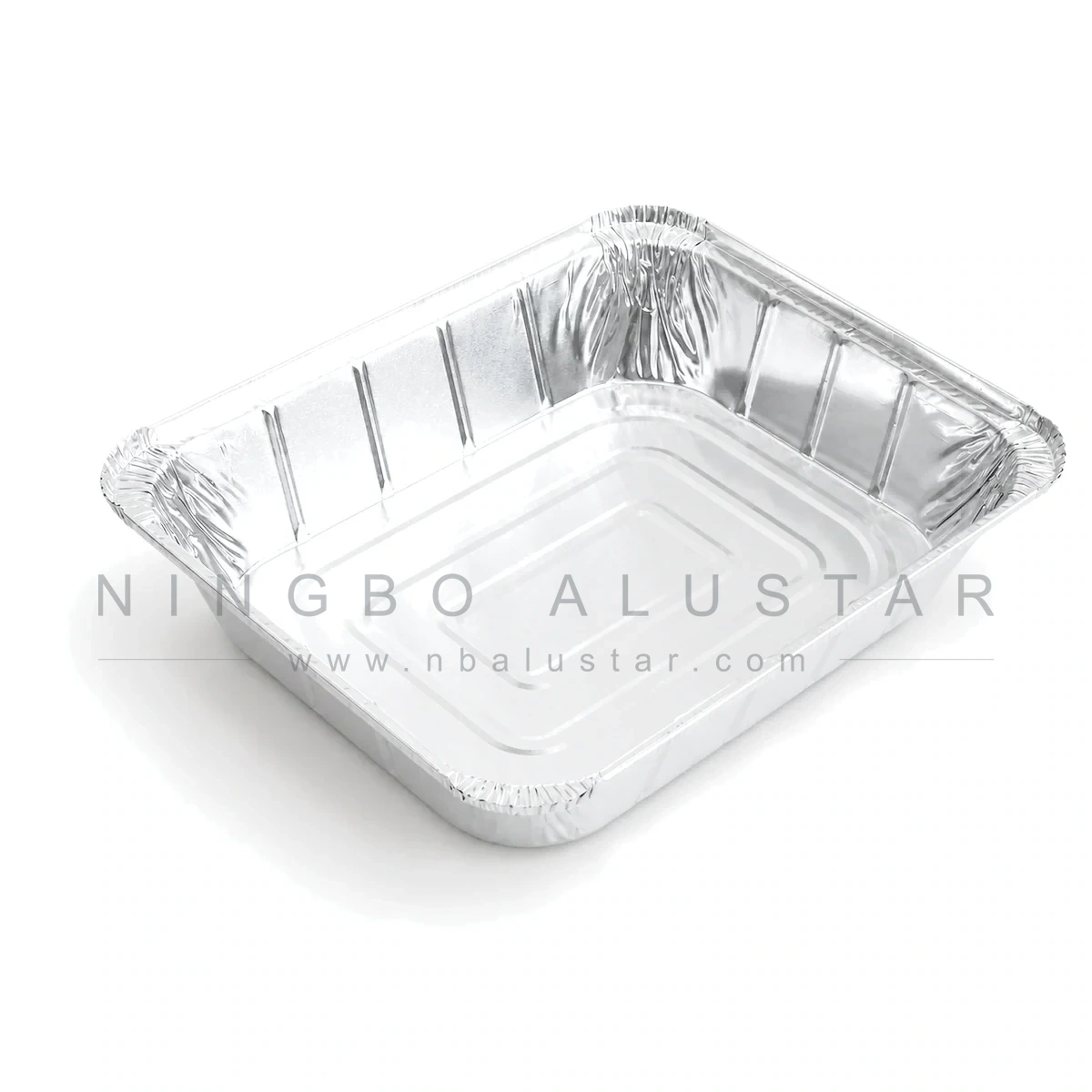
Drawing metal into a tray moves and work-hardens it. The base field, ribs, corners, walls, flange, and curl experience different deformation. A reading from the flat center may be repeatable but still miss a thinned corner or a rim condition that controls lid fit.
Agree a measurement map with named locations and sample preparation. Curved, embossed, doubled, or curled areas may require a different method from a flat sheet. If a location cannot be measured reliably, control it through weight, geometry, section review, or functional testing instead of recording false precision.
- Use calibrated equipment suitable for the surface and expected range.
- Keep individual readings as well as any reported average.
- Measure across multiple pieces and, where relevant, production positions or cavities.
- Mark the method and locations on the controlled inspection instruction.
Let structure carry part of the load
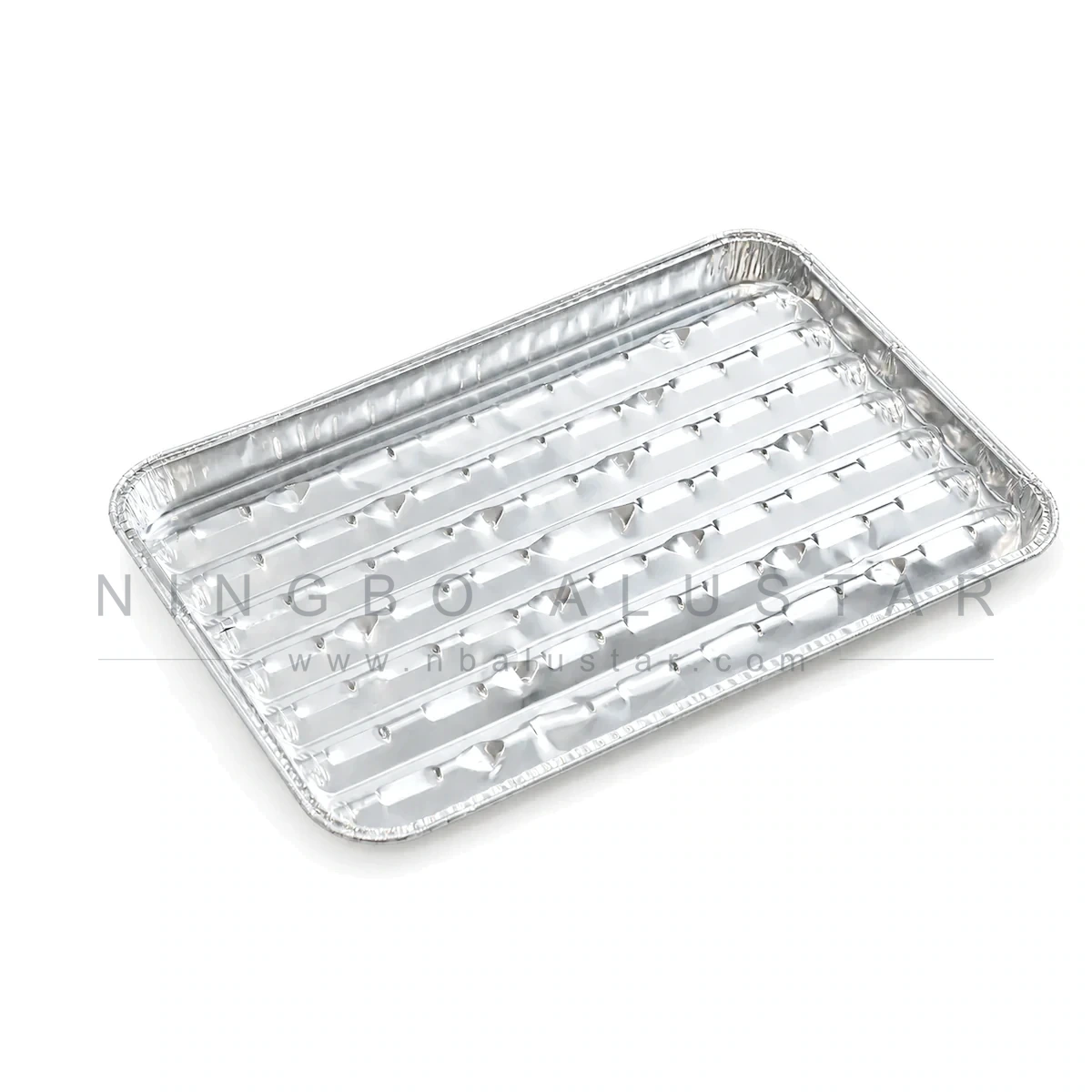
Material quantity matters, but stiffness also comes from depth, wall angle, corners, ribs, steps, base pattern, flange width, and curl. Two trays with similar weight can behave differently because one directs the load into a supported perimeter while the other leaves a broad unsupported base.
A cost-down or strength-up trial should change one controlled variable at a time. Compare the proposed tray against the approved control using the same food distribution, lid, handling points, temperature, stack, and observation method. This reveals whether a geometry change solved the problem or simply moved it elsewhere.
Validate thickness through the filled route
The acceptance test should represent how operators and customers actually use the pack. Set the failure definitions first: excessive permanent base deflection, rim collapse, lid release, leakage, unsafe handling, nesting damage, or carton compression, for example.
- Confirm incoming material identity, thickness method and finished-weight sample before the application test.
- Fill normal and worst-case portions with realistic weight distribution and temperature.
- Close, lift from the expected points, stack, condition, transport, heat or cool, and open in sequence.
- Measure or photograph permanent deformation at the base, walls, corners and rim after each critical stage.
- Repeat the approved route across production-representative pieces and record the final weight and geometry limits.
Remove vague thickness language from purchasing
Words such as thick, premium, extra strong, or heavy duty can support merchandising, but they cannot release a production lot. Translate them into an approved drawing, material description, piece-weight range, measurement plan, functional protocol, and defect limits.
- Do not convert one thickness reading directly into a claim about the entire formed container.
- Do not compare supplier samples if dimensions, alloy, temper, coating, lid, or piece weight also changed.
- Do not approve a lighter tray from empty appearance alone.
- Do not average away an individual result that exceeds an agreed limit.
- Do not reduce material without rechecking carton packing and de-nesting as well as filled strength.
Freeze a thickness and weight specification for repeat orders
The repeat-order file should identify the material and temper, incoming measurement method, finished piece-weight range, drawing revision, critical dimensions, rim and lid, application test, unit pack, carton, and approved references. The purchase order can then point to one controlled specification instead of repeating partial values.
Require written notification before changes to foil source, alloy or temper, target weight, tool, cavity, coating, lid, packing, or inspection method. A nominally unchanged thickness does not make those changes automatically equivalent.
Sources and further reading
Continue this buying path
Use these related guides to move from initial selection to specifications, compliance, and supplier evaluation.
Material Guide
Aluminum Foil Container Alloy and Material Guide: 8011, 3003, Temper, Thickness, and Food Use
Read guideSize Guide
Aluminum Foil Container Sizes: Capacity, Dimensions, Depth, and Lid Matching Guide
Read guideQuality Guide
Aluminum Foil Container Quality Inspection Checklist Before Shipment
Read guideProduct Guide
Aluminum Foil Roasting Pans: Deep Trays, Large Trays, and Oven Use
Read guideRelated aluminum foil products
Buyer next steps
FAQ
What is the best thickness for an aluminum foil food container?
There is no universal value. Required material depends on tray size, geometry, filled weight and distribution, closure, heating or cooling, handling, stacking, and transport. Approve the lightest production-representative construction that passes a defined real-use protocol.
Why can two trays with the same nominal gauge feel different?
They may differ in alloy, temper, finished weight, material distribution, depth, wall angle, ribs, corners, flange, curl, or measurement method. Hand feel is not a controlled strength test; compare measured construction and filled performance.
Is finished-piece weight a substitute for thickness measurement?
No. Weight controls total material, while thickness measurements identify material or local conditions. Use them together with geometry and functional tests, because neither metric alone describes how a formed tray carries load.
When should a thickness change trigger revalidation?
Revalidate whenever the change could affect forming, filled handling, closure, temperature performance, nesting, packing, or compliance evidence. Material-source, temper, tool, coating, lid, or packing changes may also require review even if the nominal gauge stays unchanged.