Updated5 min readMaterial Guide
Aluminum Foil Container Alloy and Material Guide: 8011, 3003, Temper, Thickness, and Food Use
A buyer-friendly guide to aluminum foil container alloys, material properties, temper, thickness, rigidity, heat performance, and food-contact use.
Quick Answer
Do not select an aluminum foil container from the alloy number alone. Buyers should approve the finished tray as a system: alloy and temper, incoming foil specification, formed-piece weight, wall and rim geometry, coating or lacquer, lid, food type, temperature route, and handling load. 8011 and 3003 can both be relevant in food-packaging projects, but neither name proves that a particular tray is strong enough or suitable for the intended food-contact conditions.
Choose material from the finished application
The useful first question is what the filled tray must survive. A small bakery cup, a lidded takeaway meal, a large roasting pan, and a heat-sealed ready-meal tray impose different forming, stiffness, corrosion, closure, and transport demands even when their catalogues use similar material language.
Treat alloy selection as one engineering input. Ask the converter to explain how the proposed alloy, temper, gauge or weight, tool geometry, reinforcement, and surface system work together, then verify the explanation on production-representative finished pieces.
| Decision input | What 8011 may offer | What 3003 may offer | What the buyer must still verify |
|---|---|---|---|
| Forming route | Commonly discussed for regular foil-container forming and broad standard ranges | Often evaluated when deeper drawing or additional structural demand is involved | Actual tool, temper, wall distribution, wrinkles, splits and repeatability |
| Filled handling | Can perform well when piece weight and geometry fit the load | May be considered where higher finished stiffness is required | Hot and cold lifting, base sag, rim deformation and stack behavior |
| Food route | Bare or coated construction must be stated | Bare or coated construction must be stated | Food type, contact surface, temperature, duration and destination requirements |
| Commercial comparison | Availability and forming efficiency may influence cost | Material and conversion assumptions may differ | Finished weight range, yield, defects, packing and landed cost on the same specification |
Read alloy, temper, thickness, and geometry together
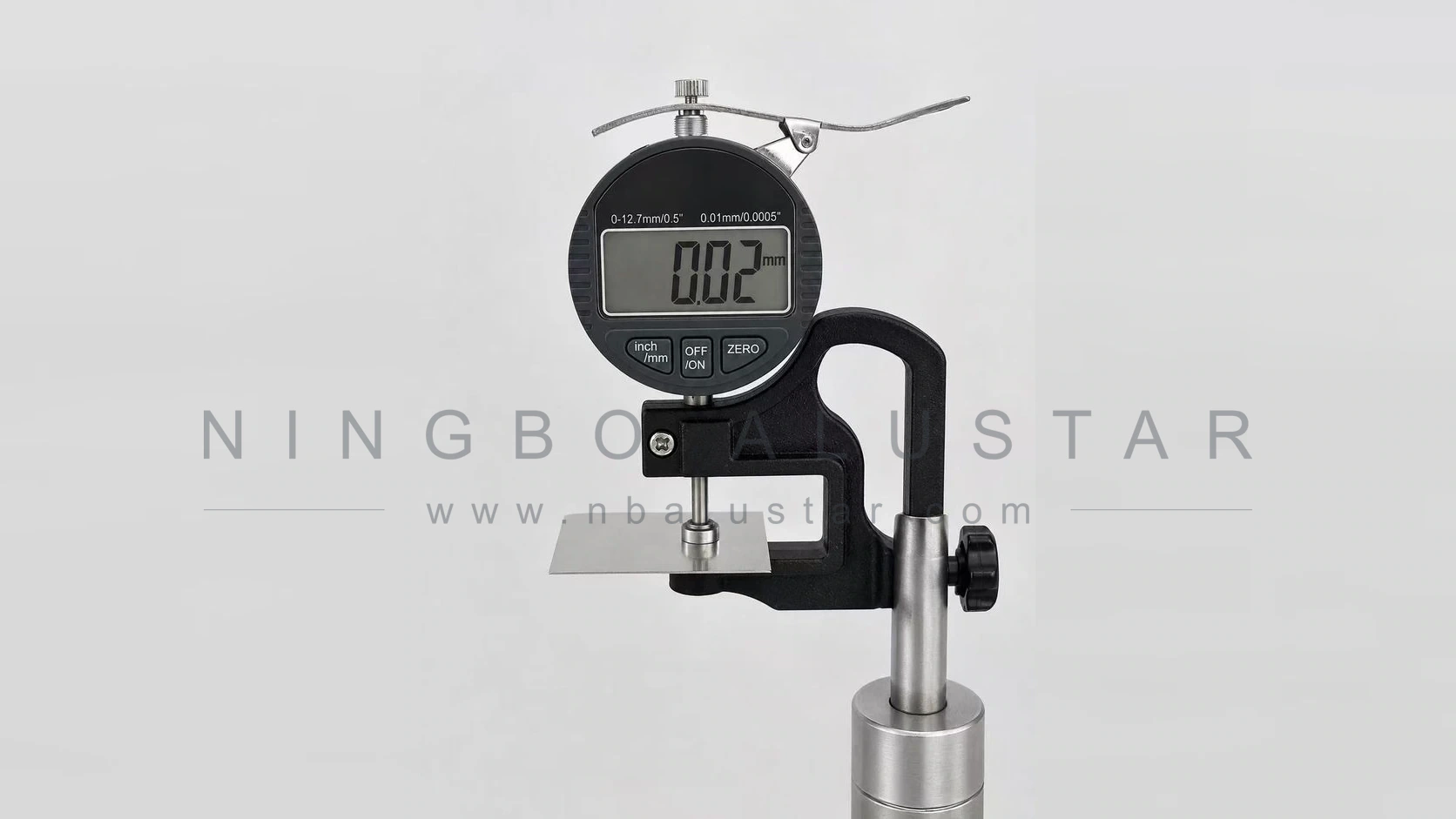
Temper affects how foil flows and work-hardens during forming. A specification that names an alloy but omits temper, finished-piece weight, critical dimensions, and the measurement method leaves the supplier free to deliver materially different trays under the same product name.
Forming redistributes material. The base, sidewall, corners, ribs, flange, and curl do not necessarily retain one uniform thickness, so a single reading from an easy flat area cannot describe the whole container. Structural ribs and a well-supported rim can improve usable stiffness without changing the alloy name.
- Record the supplier's alloy and temper designation for the incoming foil.
- Control finished-piece weight with an agreed range and sampling method.
- Define critical dimensions, rim profile and the points used for thickness checks.
- Keep the approved drawing and formed sample with the material record.
Separate the metal from coatings, lids, and food-contact claims
An alloy designation describes the metal composition; it is not a universal food-grade certificate. A finished pack may also include lacquer, color coating, printing, a board or polymer lid, adhesive, and sealing layer. Each food-contact component needs evidence appropriate to its construction and intended use.
State whether food touches bare aluminum or a coated surface, and describe acidic, salty, fatty, dry, or aqueous foods as relevant. The supplier's evidence should identify the tested material or formulation and the use conditions it supports; a report for one coating or lid should not be silently extended to another.
Validate a proposed material on finished containers
Material approval should move from documents to measurements and then to the real application. Use samples made with the proposed production material and tool; hand-picked pieces from a different run cannot establish repeatability.
- Match the coil or material certificate to the sample and production lot.
- Measure finished weight, critical dimensions, rim condition, wrinkles, pinholes and splits across several pieces.
- Fill with the normal and worst-case food load; close, stack, condition, move and heat or cool in the intended sequence.
- Inspect permanent base, wall and rim deformation plus lid engagement after the route.
- Freeze the approved alloy, temper, coating, drawing, weight range, lid and packing as one revision-controlled specification.
Avoid material-selection shortcuts
Material disputes usually begin with an incomplete noun such as 8011 tray, heavy-duty pan, or food-grade aluminum. Replace those labels with measurable inputs and an approved application result.
- Do not assume every 3003 tray is stronger than every 8011 tray; finished geometry and weight may reverse the result.
- Do not approve a material from an empty hand-flex demonstration.
- Do not compare nominal foil thickness when suppliers use different measurement locations or finished weights.
- Do not transfer food-contact evidence between bare, coated, printed, or differently lidded constructions.
- Do not accept an alloy substitution without written review and repeat validation.
Write a material RFQ that can be audited
Send the food, fill weight, temperature and time route, tray drawing or target dimensions, closure, handling load, packing, destination, and required evidence. Ask the supplier to propose alloy, temper, finished weight range, surface construction, and any use limits rather than prescribing a familiar alloy without context.
The quotation should state what will be controlled at incoming material, forming, final inspection, and change notification. Alustar can compare an existing mold and material route first, but final approval should come from the buyer's filled validation and controlled sample.
Sources and further reading
Continue this buying path
Use these related guides to move from initial selection to specifications, compliance, and supplier evaluation.
Material Guide
Aluminum Foil Container Thickness Guide: Gauge, Strength, Weight, and Cost
Read guideSize Guide
Aluminum Foil Container Sizes: Capacity, Dimensions, Depth, and Lid Matching Guide
Read guideCompliance
Food-Grade Aluminum Foil Containers: What Buyers Should Check Before Importing
Read guideQuality Guide
Aluminum Foil Container Quality Inspection Checklist Before Shipment
Read guideRelated aluminum foil products
Buyer next steps
FAQ
Is 3003 always stronger than 8011 in a foil container?
No universal finished-product ranking can be made from the alloy name alone. Temper, piece weight, material distribution after forming, ribs, rim geometry, dimensions, and the filled route all affect usable strength. Compare production-representative finished trays under the same load and test method.
What does temper change in aluminum foil container production?
Temper influences forming behavior and the way the material hardens as it is drawn. It must be reviewed with the tool, depth, corner radii, finished weight, wrinkle or split limits, and required stiffness rather than treated as an isolated label.
Should buyers control foil thickness or finished-piece weight?
Usually both serve different purposes. Incoming thickness helps identify the material, while finished-piece weight and agreed measurement points help control the formed product. Functional approval still requires filled handling, closure, stack, and route testing.
Does an alloy certificate prove that the complete pack is food-contact compliant?
No. It may identify the metal, but the complete pack can also include coatings, inks, lids, adhesives, or seal layers. Evidence must match each relevant component, the intended food and use conditions, and the destination requirements.