Updated6 min readCompliance
Food-Grade Aluminum Foil Containers: What Buyers Should Check Before Importing
Use this food-grade aluminum foil container checklist to verify material, surface, food-contact evidence, packing, lids, and destination requirements.
Quick Answer
Food-grade is not a universal sticker attached to an alloy or factory. For an aluminum foil container, the defensible question is whether the exact tray, coating, print, lid, adhesive, or sealing layer has suitable evidence for the intended food, contact side, temperature, duration, processing route, and destination market. Buyers should connect those conditions to the purchased specification and lot instead of accepting a generic certificate title.
Define the complete food-contact construction
Begin with a bill of materials for the pack. Bare aluminum, protective or colored coatings, inks, board lids, polymer lids, films, sealants, and adhesives have different compositions and may follow different evidence routes. Identify which side can contact food directly, indirectly, or through set-off during stacking.
A document is useful only when its sample identity can be mapped to the purchased component. Marketing names such as safe, FDA approved, LFGB certified, or eco coating are not substitutes for a formulation reference, material declaration, test report, supplier statement, and stated conditions of use where those are applicable.
| Pack component | Identity to record | Evidence question | Boundary to preserve |
|---|---|---|---|
| Aluminum tray | Alloy/temper, supplier material reference, bare or coated contact side | Does the evidence identify this metal and finished construction? | An alloy record alone does not cover a coating or lid |
| Coating or lacquer | Supplier and formulation or controlled product reference | Is the intended food and time/temperature route within scope? | A test on one formulation cannot be transferred to another |
| Printed surface | Ink system, print location, cured construction and artwork control | Can printing contact food directly or by transfer? | Non-food-contact positioning must be maintained in production |
| Board or polymer lid | Exact material, coating, ink, adhesive and lid code | Which parts contact food, steam, oil or condensation? | The tray's evidence does not approve the lid |
| Sealing film | Film structure, food-contact layer, sealant and machine route | Are food, temperature, duration and sealing conditions supported? | Film limits may differ from the aluminum tray |
Write intended use before requesting documents
Food-contact conclusions are use-specific. Describe the food category and relevant characteristics, whether contact is direct, the maximum fill and holding conditions, storage, transport, heating or reheating, total contact duration, and whether the closure touches the food or only vapor and condensation.
Destination matters because regulatory frameworks and customer specifications differ. The importer or responsible business should determine which legal and customer requirements apply; the supplier can provide evidence and declarations, but a generic report cannot decide the buyer's market obligations on its own.
- Name the normal and worst-case food rather than using food use alone.
- List hot fill, ambient hold, chilled or frozen storage, cooking, reheating, and service in their real order.
- State the longest intended contact and whether repeated use is claimed.
- Identify destination countries and any retailer or brand standard separately.
Read the scope of each compliance document
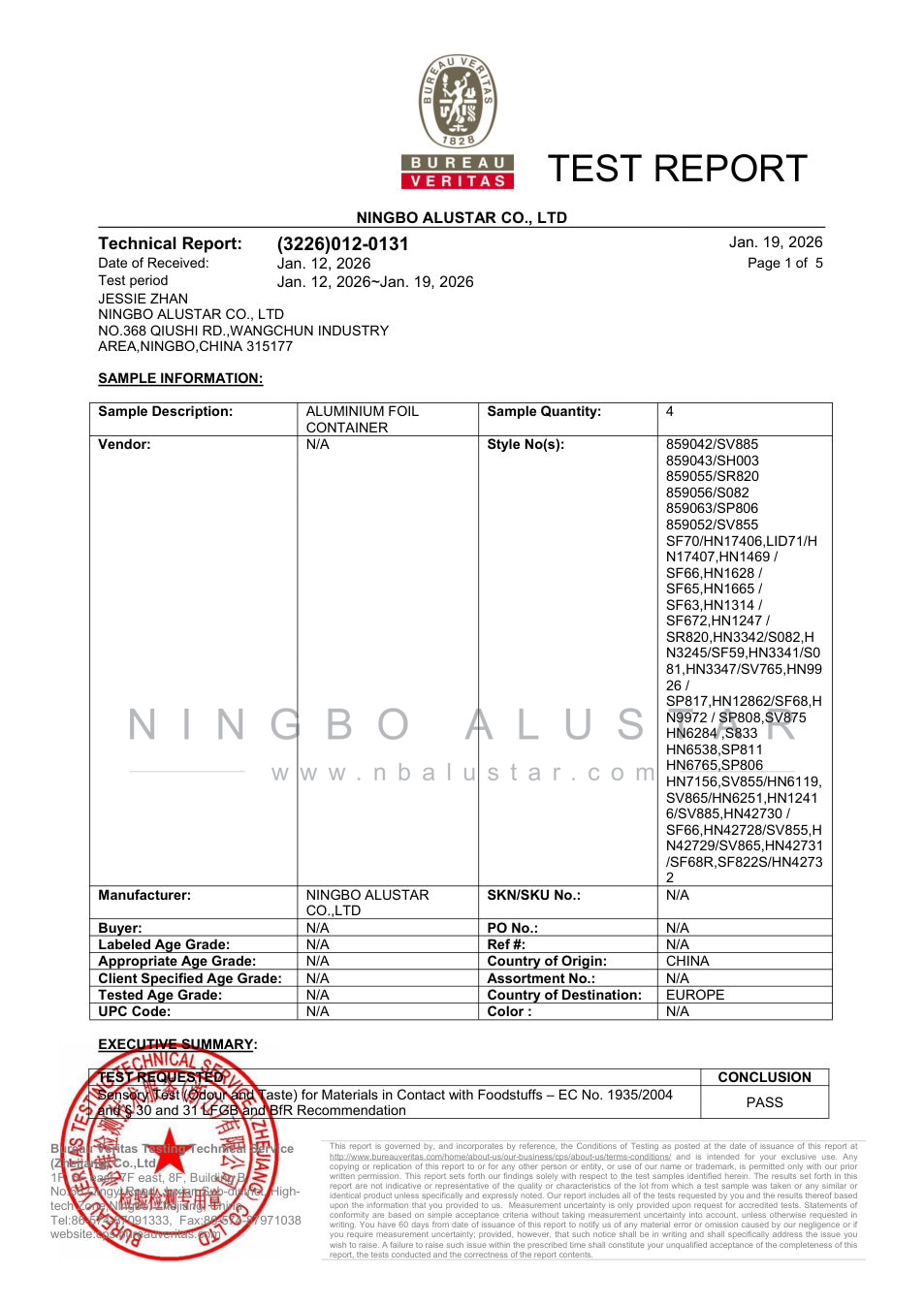
Check the issuer, applicant, manufacturing site where relevant, sample description, material or formulation reference, test method, simulant or food, time, temperature, result, issue date, report status, and page completeness. A pass statement without those links is difficult to apply to an order.
In the United States, ask for the regulatory basis or supplier compliance support for the relevant food-contact substances and construction rather than expecting a universal FDA product certificate. For European projects, identify the applicable EU and national requirements and any declaration or supporting testing required for that material; do not treat a German LFGB reference as a stand-alone global certification mark.
- Verify report numbers and certificate status through the issuer when a verification route exists.
- Confirm that the legal entity on the document is connected to the seller and actual manufacturer.
- Keep complete reports, not cropped cover pages or screenshots without scope.
- Ask for written explanation of any gap between the tested sample and ordered construction.
Validate the complete pack and evidence trail
Document review and functional validation answer different questions. Compliance evidence addresses the tested or declared construction and conditions; filled trials show whether the chosen pack remains intact and is used as instructed. Both must point to the same product revision.
- Create a component list with supplier references and food-contact sides.
- Map every document to one component, construction, food type, condition of use, and destination requirement.
- Use production-representative trays, lids, film, print, labels, and food in the filled route.
- Check visible coating damage, unexpected food contact, odor, transfer, closure failure, and instruction compliance after the route.
- Release the pack only when the specification, evidence map, approved samples, instructions, and lot traceability agree.
Avoid food-grade shortcuts
A trustworthy approval records what is covered and what remains outside scope. Removing those boundaries may make a claim sound simpler, but it also makes the purchasing decision less defensible.
- Do not accept food grade as a material specification, test result, or market approval by itself.
- Do not use a BRCGS or other site-management certificate as proof that a specific tray passed migration testing.
- Do not use REACH information as a substitute for food-contact assessment.
- Do not extend a bare-aluminum report to a coated, colored, printed, or differently lidded pack.
- Do not assume a report remains applicable after a supplier, formulation, tool, process, or use-condition change.
Maintain food-contact approval through repeat orders
Freeze the approved bill of materials, supplier references, drawings, contact sides, reports, declarations, conditions of use, artwork, instructions, and sample codes in one compliance file. Receiving and pre-shipment checks should confirm that the delivered lot still matches it.
Require notification and documented review before changes to metal source, coating, ink, lid, adhesive, film, formulation reference, manufacturing site, or intended use. Alustar can assemble project documents and samples, while the buyer remains responsible for confirming that the evidence set meets its destination and customer obligations.
Sources and further reading
Continue this buying path
Use these related guides to move from initial selection to specifications, compliance, and supplier evaluation.
Compliance Guide
Global Food-Contact Requirements Guide: FDA, EU, SABER, Japan, Halal, and Kosher
Read guideCompliance
Aluminum Foil Container Certificates: Food Contact, BRCGS, REACH, and Migration Testing Explained
Read guideSustainability
Aluminum Foil Containers vs Plastic Containers: Heat, Recycling, Cost, and Food Service Use
Read guideMaterial Guide
Aluminum Foil Container Alloy and Material Guide: 8011, 3003, Temper, Thickness, and Food Use
Read guideRelated aluminum foil products
Buyer next steps
FAQ
What does food-grade aluminum foil container mean?
It should mean that the exact finished construction is suitable for stated food-contact conditions and applicable destination requirements, supported by traceable evidence. The phrase alone does not identify the material, coating, lid, food, temperature, duration, or market.
Does the FDA issue a universal certificate for a foil food container?
Buyers should not expect one universal FDA product certificate. US compliance work typically requires identifying the construction and the regulatory basis or supplier support for relevant food-contact substances under the intended conditions. Ask what each document actually demonstrates.
Can one migration report cover every tray and lid?
Only when the report scope and a defensible product-family rationale cover the actual materials, formulations, contact sides, conditions, and variants. Otherwise test or assess the uncovered construction separately; do not extend by visual similarity.
Do coatings and lids need separate food-contact review?
They need evidence that clearly covers their own construction and contact route. The review may be assembled as one pack-level file, but the aluminum tray's identity or test does not automatically cover coating, polymer, board, ink, adhesive, or seal layers.