Updated8 min readCompliance Guide
Global Food-Contact Requirements Guide: FDA, EU, SABER, Japan, Halal, and Kosher
A market-by-market guide to the regulatory evidence, test reports, declarations, and buyer-specific approvals used for food-contact packaging.
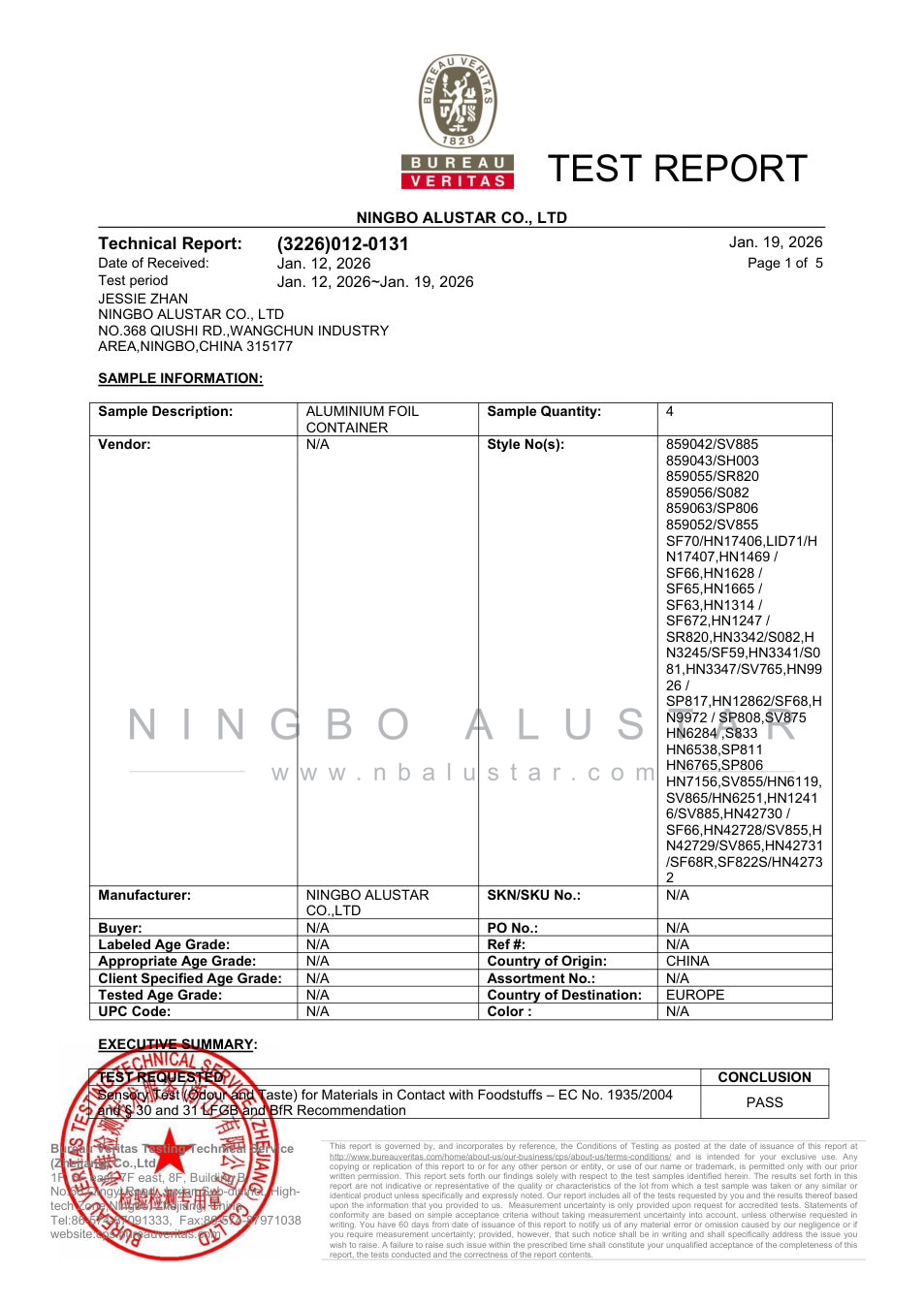
Quick Answer
There is no single worldwide ‘FDA certificate’ or ‘LFGB certificate’ that makes every food-contact package compliant. Start with the destination market and intended conditions of use, then verify every material layer, coating, lid, test method, applicant, and production site. A laboratory report, a supplier declaration, a quality-system audit, and an import-platform certificate answer different questions; one should not be used as a substitute for another.
Why market-specific food-contact evidence matters
Food-contact evidence can affect importer due diligence, customer approval, and—in markets with regulated conformity systems—the release of a shipment. It applies to the complete article: aluminum tray, lacquer, print, adhesive, film, lid, and any other layer that can transfer substances to food.
A report is useful only when its tested sample and use conditions match the purchased article. Buyers should compare food type, contact time, temperature, repeated or single use, material composition, and the side that contacts food. A generic report for bare foil does not automatically cover a coated or printed tray.
Halal or Kosher review is normally a buyer, brand, or destination-channel requirement rather than a universal food-contact law. When requested, its scope can include processing aids, release agents, lubricants, and cross-contact controls, so the required certifier and product scope should be agreed before production.
| Market or system | Core regulation/system | Buyer focus |
|---|---|---|
| United States | Federal Food, Drug, and Cosmetic Act; applicable FDA regulations and authorizations | Regulatory status of every component plus food type, time, and temperature conditions of use. |
| EU / Germany | Regulation (EC) No 1935/2004, GMP rules, relevant EU and national measures | Material-specific restrictions, migration evidence where applicable, traceability, and supporting declarations. |
| Saudi Arabia / Middle East | SASO, SABER, SALEEM | PCoC, SCoC, authorized conformity bodies, Arabic or bilingual labels. |
| Japan | Food Sanitation Act, Positive List | Whether synthetic-resin layers and additives are within the Positive List scope, plus downstream information transfer. |
| Islamic markets | Halal certification | Ingredient traceability, lubricants, alcohol-solvent risk, and cross-contamination control. |
| Jewish markets | Kosher certification | Rabbinical review, kosher ingredients, equipment cleaning, release agents, and lubricants. |
United States: regulatory status and conditions of use
The United States does not issue a generic FDA approval certificate for a finished tray. The compliance question is whether each food-contact substance has an appropriate regulatory basis for its intended use—for example, an applicable regulation, effective Food Contact Notification, prior sanction, or other lawful status.
Conditions of use are part of that assessment. FDA distinguishes food types and processing or storage conditions, so evidence prepared for refrigerated dry food may not support hot, fatty, or oven-use contact. Supplier statements should identify the covered materials and conditions instead of saying only ‘FDA compliant.’
For an aluminum container, review more than the base metal. Lacquers, printed layers, adhesives, plastic lids, sealing films, and surface treatments may each have their own composition and migration considerations.
- Confirm whether the item is bare aluminum, coated foil, printed foil, or a composite structure.
- Ask whether the test report covers the actual material, coating, and food-contact side.
- Prefer reports from ISO 17025/CNAS or otherwise recognized laboratories.
- Record the regulatory basis and intended conditions of use for each relevant component before customer approval.
European Union: framework rules, migration evidence, and declarations
Regulation (EC) No 1935/2004 sets the EU framework for food-contact materials, supported by good-manufacturing-practice rules and material-specific EU or national measures. Germany's LFGB is national legislation, not an EU-wide product certificate or a single universal test protocol.
Migration and composition work should be selected for the actual material and foreseeable use. A lab plan may address overall migration, specific restrictions, metals, coating constituents, or other hazards, but the analytes and simulants must be justified rather than copied from an unrelated product.
Documentation duties vary by material and applicable measure. Buyers commonly request a declaration or compliance statement linking the article, specifications, restrictions, test evidence, traceability, and intended use; the responsible party should confirm the exact legal form required for the product and destination country.
| Document or test | What buyers should check |
|---|---|
| Overall migration | Food simulant, temperature, time, and whether it matches real use. |
| Specific migration | Heavy metals, BPA, monomers, and restricted substances. |
| Declaration or compliance statement | Issuer, article identity, applicable rules, restrictions, supporting evidence, intended use, and date. |
| GMP records | Contamination control, batch traceability, and document discipline. |
Saudi Arabia and Middle East: SASO and SABER
For Saudi Arabia and some Middle East routes, SASO, SALEEM, and the SABER electronic platform may shape the import process. A single laboratory report may not be enough when the product is subject to platform-based conformity assessment.
PCoC is the product certificate of conformity, usually registered by the importer in SABER and reviewed by an authorized conformity body. SCoC is the shipment certificate issued for a specific shipment after invoice and batch information are verified.
Buyers should also confirm label language, product name, origin, importer information, and packaging marks before shipment. Arabic or Arabic-English labels should be handled before goods arrive at port.
- Check whether the product and HS Code are controlled in SABER.
- Separate the annual PCoC from the shipment-level SCoC.
- Prepare test reports, invoices, packing lists, product images, and label artwork early.
- Do not wait until arrival at port to solve label and platform-document issues.
Halal and Kosher: confirm the buyer's required scope
Some customers or certification schemes include packaging in a wider Halal or Kosher assurance program. This is not automatic for every market or every package, so buyers should first identify the recognized certifier, whether direct-contact packaging is in scope, and whether a certificate or only an ingredient statement is required.
If a Halal review includes the package, the certifier may ask about ingredient origin, processing aids, lubricants, alcohol-containing formulations, and cross-contact controls. Exact acceptance criteria depend on the certifier and customer.
A Kosher program may similarly review ingredients, release agents, equipment, and cleaning. Obtain the customer's written requirement before commissioning an audit because recognition and scope can differ by market and supply chain.
| Certification | Packaging focus | Common risk |
|---|---|---|
| Halal | Ingredient origin, additives, lubricants, alcohol solvents, and cross-contamination control. | Porcine derivatives, unauthorized animal origin, or mixed production lines. |
| Kosher | Rabbinical review, equipment cleaning, release agents, plasticizers, and lubricant origin. | Non-kosher animal fats, incomplete ingredient records, or unverified cleaning. |
Japan: Positive List system
Japan's food packaging market places strong emphasis on documentation, stability, and supply-chain discipline. Under the Food Sanitation Act, synthetic resin food-contact materials are managed through a Positive List approach.
For importers, the key question is not whether a supplier has a generic ‘Japan certificate.’ Determine which synthetic-resin layers are within the system, then verify the status and applicable restrictions of their base polymers and additives. Metal, coatings, adhesives, and composite layers should be mapped separately to the rules that apply to them.
If the customer is a Japanese convenience-store, ready-meal, frozen-food, or retail channel, the supplier should be ready to provide downstream information explaining composition, use conditions, and regulatory conformity.
- Check whether base polymers and additives are within the Positive List scope.
- Confirm whether coatings, films, lid materials, and sealing materials are separately covered.
- Keep supplier conformity statements for downstream buyer communication.
- For Japan projects, complete material and document review before sampling where possible.
How to verify whether evidence is valid for the order
After receiving certificates from a factory, importers should not only read the title. The important details are applicant name, issue date, product description, material scope, sample description, test standard, and issuing-body qualification.
Alustar provides a certificate page with available audit and food-contact documents. Use it as a due-diligence starting point—not as proof that every listed report covers every SKU, coating, condition of use, customer program, or destination market. Confirm the order-specific evidence in writing.
- Check whether the applicant name matches the trading or manufacturing entity.
- Review the issue date and whether the document is still accepted by your customer.
- Confirm that the report covers the actual purchased material, coating, lid, or composite structure.
- Check whether the laboratory has CNAS, ISO 17025, or destination-market recognition.
- For religious certificates, confirm issuing-body recognition and validity period.
How Alustar supports compliant purchasing
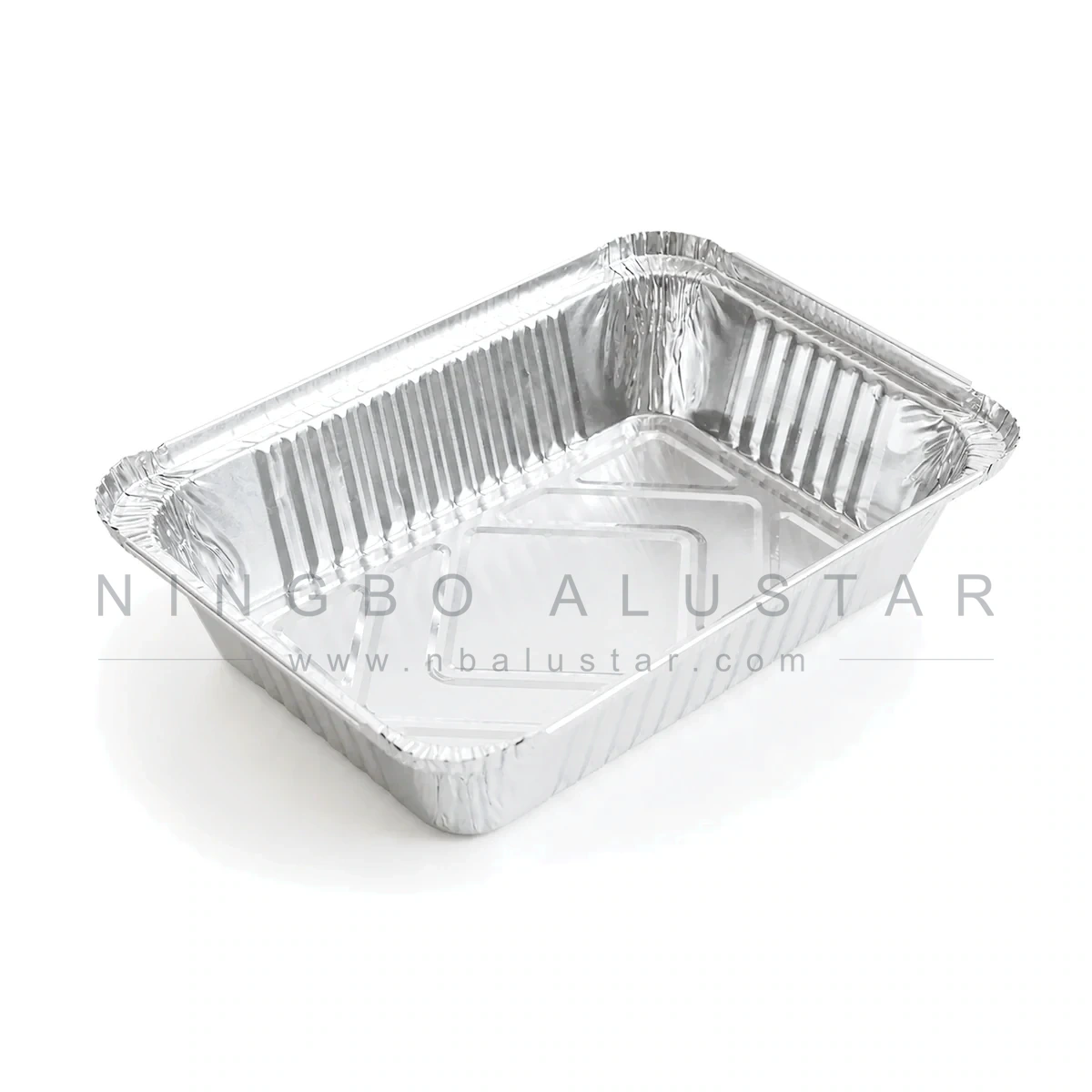
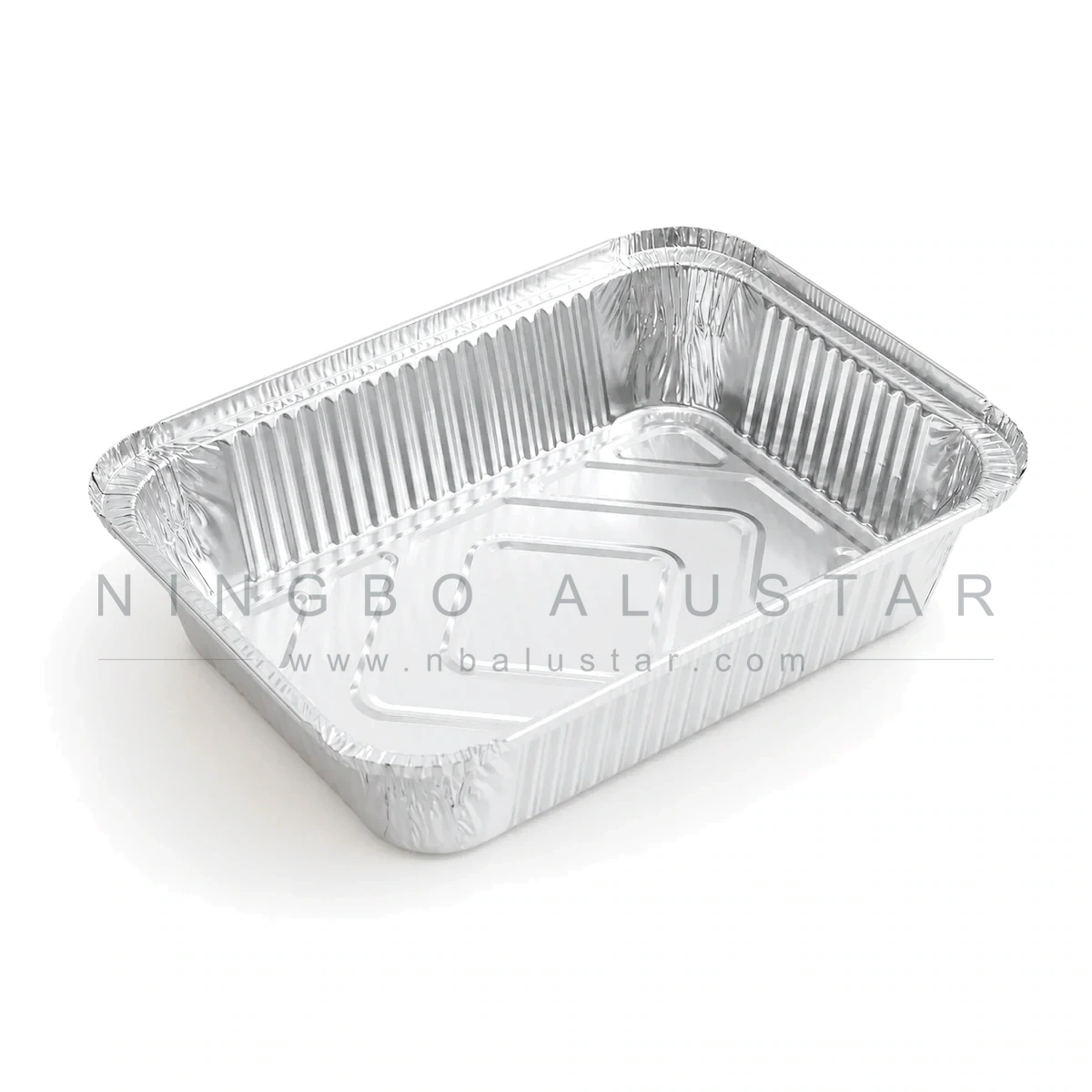
For aluminum foil containers, ready-meal trays, takeaway boxes, and OEM packaging projects, Alustar helps buyers clarify application, material, coating, lid system, destination market, and certificate scope before recommending a size or quotation.
Compliance documents should be discussed at quotation and sample stage. This prevents a project from reaching bulk production before discovering that the buyer needs a different simulant, temperature condition, coating declaration, or religious-market certification.
Sources and further reading
Continue this buying path
Use these related guides to move from initial selection to specifications, compliance, and supplier evaluation.
Compliance
Aluminum Foil Container Certificates: Food Contact, BRCGS, REACH, and Migration Testing Explained
Read guideCompliance
Food-Grade Aluminum Foil Containers: What Buyers Should Check Before Importing
Read guideSustainability
Aluminum Foil Containers vs Plastic Containers: Heat, Recycling, Cost, and Food Service Use
Read guideImport Guide
How to Import Aluminum Foil Containers from China: MOQ, Samples, Certificates, and Shipping
Read guideRelated aluminum foil products
Buyer next steps
FAQ
How is FCM certification different from a normal quality certificate?
There is no single global FCM certificate. Quality-system audits address how a site controls production; food-contact compliance evidence addresses the regulatory status, composition, restrictions, and migration behavior of the article under intended use conditions.
Do aluminum foil containers always need FDA or LFGB reports?
Not as universal certificates. Required evidence depends on the destination, customer, materials, coating, lid, and use conditions. A US project needs a defensible FDA regulatory basis; an EU project needs evidence matched to the applicable EU and national rules. Customer-requested reports may add to those legal duties.
Why can Halal and Kosher affect food packaging?
Because slip agents, mold-release agents, lubricants, coating aids, and plastic additives may involve animal-derived substances or alcohol solvents, and religious markets may review both materials and production processes.
Where can buyers view Alustar certificates?
Buyers can use the certificate card in this article to review available Alustar audit and food-contact documents. The exact documents needed for an order should still be confirmed by material, coating, and destination market.