Updated4 min readIndustry Knowledge
How to Choose Aluminum Foil Containers for Takeaway Food
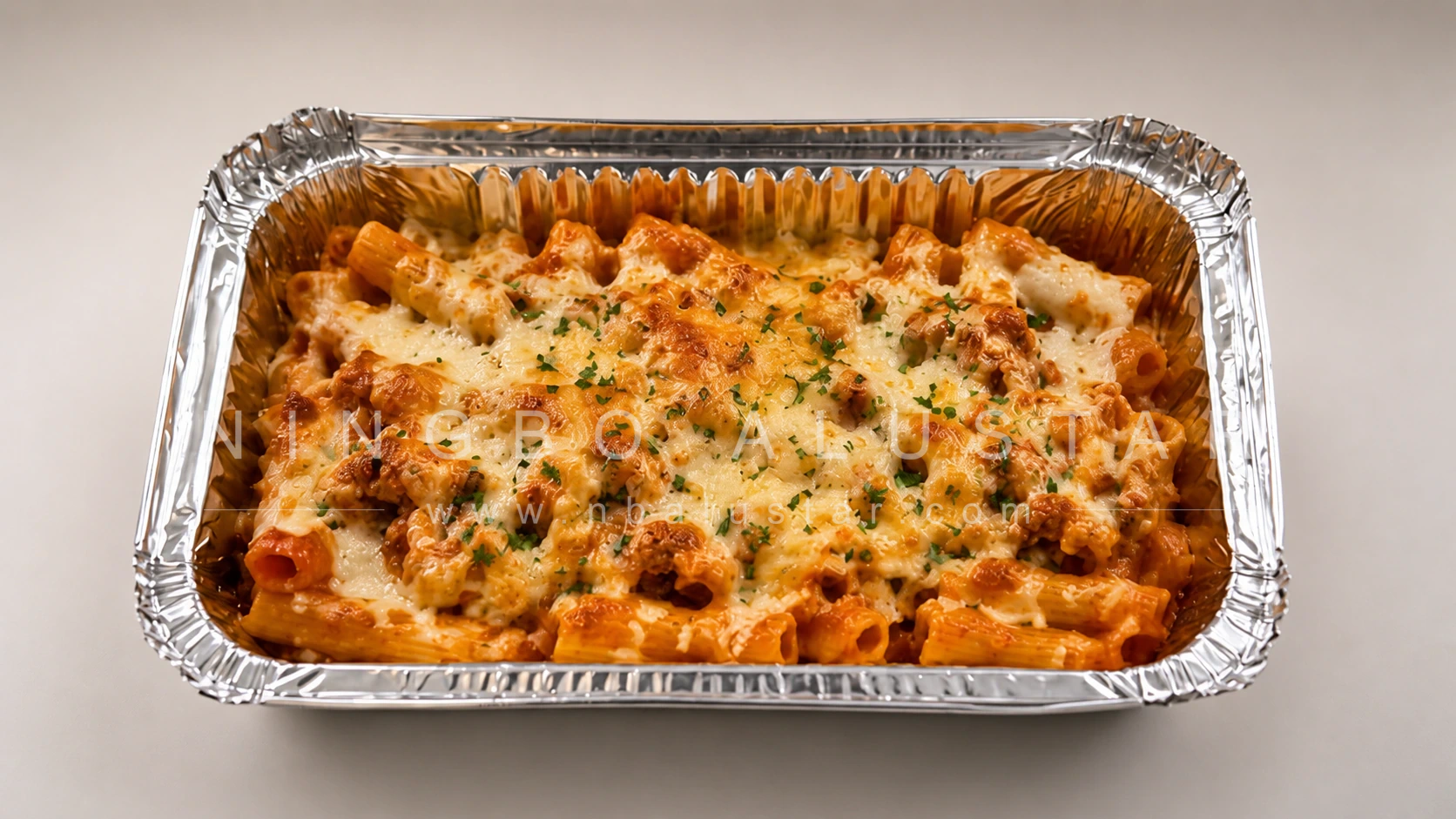
Capacity, lid fit, wall structure, and packing method all affect the right aluminum foil container choice.
Quick Answer
The right container is selected by food type, portion size, sauce level, heating method, lid style, delivery stack, and export carton requirements.
Match the tray to the food
Start from the real menu item. Rice dishes, pasta, roast chicken, baked fish, curries, desserts, and salads each need different container depth and lid clearance.
If the food is hot, oily, or saucy, rim strength and lid fit become more important than catalog capacity alone.
- Use deeper trays for soups and sauces.
- Use wide shallow trays for display and roasting.
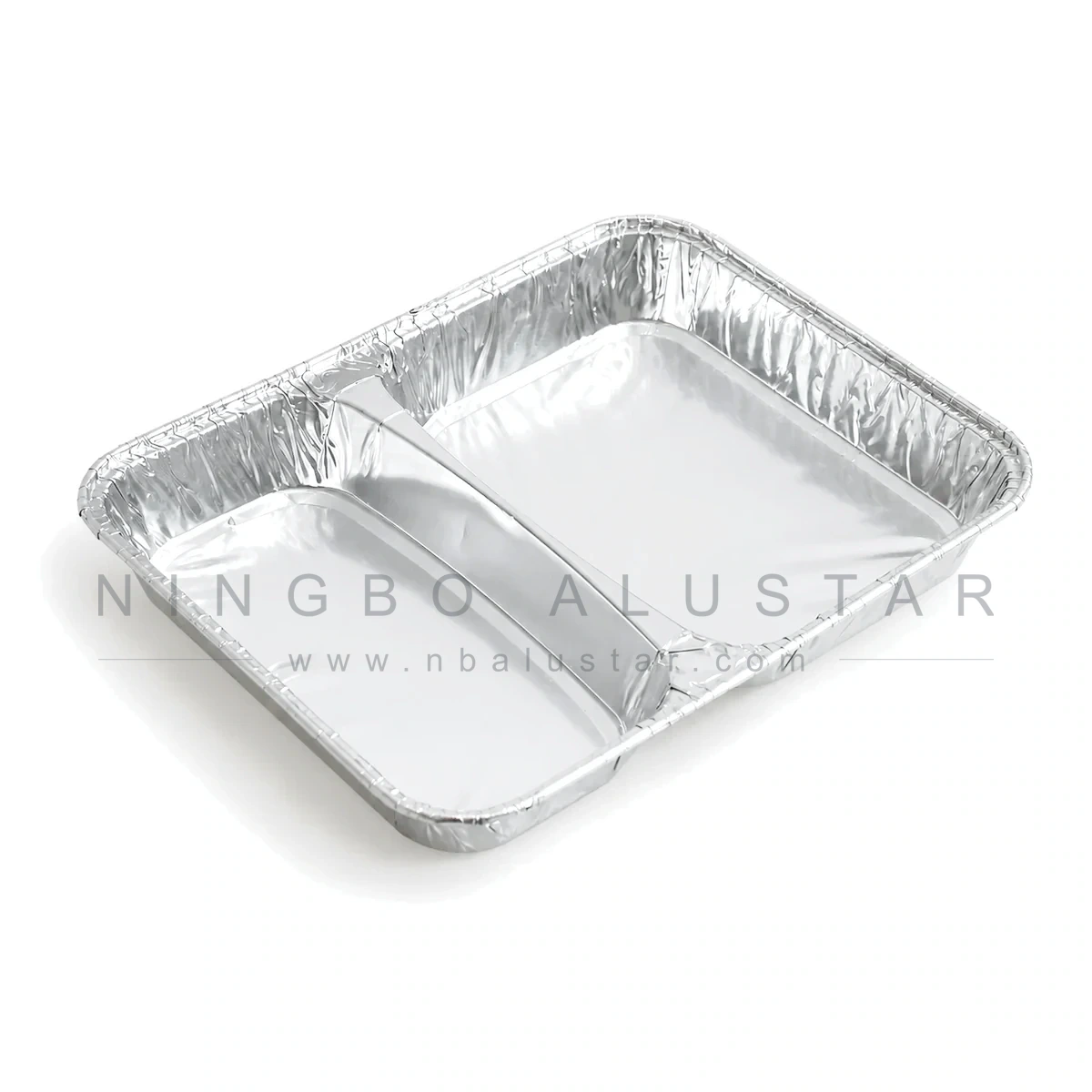
- Use compartment trays for separated meals.
- Use stronger rims for stacked delivery.
Check size, alloy, and thickness
Common food-service aluminum foil containers use food-contact aluminum material with thickness selected by tray size and use. Larger trays and roasting pans usually need stronger wall structure than small single-portion cups.
Buyers should compare actual weight and tolerance, not just outer dimensions.
Do a simple performance test
Fill the container with the real food portion, close the lid, stack several pieces, move them as a delivery driver would, then check leakage, deformation, and customer opening experience.
For export orders, also test carton compression and nesting separation after transport.
Use a five-question selection tree
Begin with five decisions: what food, how much, which process, which closure, and which distribution route. These questions narrow shape and depth before alloy, weight, artwork, or carton optimization begins.
Write the answers for the normal case and the worst case. The highest fill, longest delivery, hottest handling, deepest chill, or heaviest stack often reveals the true requirement.
- Food: dry, moist, oily, acidic, sauced, or sharp-edged?
- Portion: filled weight, volume, height, and serving count?
- Process: fill, chill, freeze, heat, hold, and serve?
- Closure and route: lid, seal, stack, transport, display, and disposal?
Understand capacity versus usable fill
A catalogue capacity does not equal a safe operating fill. Usable fill depends on headspace, food shape, sauce movement, lid intrusion, expansion, garnish, and the angle experienced during transport.
Compare outer, inner, bottom, and height dimensions. A larger top opening can improve presentation while a smaller bottom changes stability and how evenly a portion sits.
- Test the recipe by weight, not water capacity alone.
- Mark maximum fill and lid-clearance lines during trials.
- Check base support on racks, belts, tables, and hands.
- Confirm carton and equipment fit from outer dimensions.
Balance material, finished weight, geometry, and cost
Performance comes from a formed structure, not thickness alone. Alloy, temper, foil input, draw depth, ribs, corners, base pattern, wall angle, and rim all contribute to stiffness and handling.
Ask for a finished-piece weight range and approved sample. Compare lighter and heavier options with the same filled test instead of relying on labels such as standard, heavy duty, or premium.
- Measure several pieces from a production-representative sample.
- Check stiffness in the direction operators actually lift the tray.
- Assess deformation after heating, cooling, and stacking.
- Compare material reduction only after performance is protected.
Choose the lid before freezing the tray specification
The lid changes rim design, headspace, stacking, visibility, labelling, heat limits, opening force, and pack count. Treat tray and lid as one SKU pair during development and purchasing.
Board, foil, polymer, and film closures serve different routes. Validate the complete material construction and use condition, including any coating, ink, adhesive, or seal layer.
- Assign exact tray and lid codes.
- Test closure with normal and worst-case fill.
- Check condensation, grease, cold, heat, and vibration.
- Specify the lid-to-tray packing ratio and replacement policy.
Run a sample scorecard before price comparison
Score each candidate on food fit, lid fit, lifting, leakage, heating or cooling, stack, nesting, appearance, pack, carton, documents, and landed cost. Set weights from the application instead of giving every item equal importance.
Alustar can help compare standard products and prepare samples. Once one option passes, convert the result into a controlled specification and use the same scorecard for pre-shipment and receiving checks.
- Blind-code samples when brand bias may affect judgement.
- Record measured results and photographs, not pass/fail alone.
- Investigate failures before changing several variables at once.
- Keep the approved sample and revision with repeat orders.
Sources and further reading
Continue this buying path
Use these related guides to move from initial selection to specifications, compliance, and supplier evaluation.
Size Guide
Aluminum Foil Container Sizes: Capacity, Dimensions, Depth, and Lid Matching Guide
Read guideLid Guide
How to Choose Aluminum Foil Containers with Lids: Foil-Board Lids, PET/PP Plastic Lids, and Heat-Seal Film Compared
Read guideApplication Guide
Aluminum Foil Tray Uses: Takeout, Catering, Bakery, BBQ, Airline, Ready Meals, and Retail Food
Read guideBuyer Resources
Takeout Aluminum Foil Containers: Buyer Guide for Restaurants and Distributors
Read guideRelated aluminum foil products
Buyer next steps
FAQ
What size foil container is best for takeaway meals?
It depends on portion size and food type; 500 ml to 1000 ml trays are common for individual meals.
Can aluminum foil containers go from freezer to oven?
Many can, but lid material, food depth, and heating instructions must be confirmed.