Updated4 min readApplication Guide
Aluminum Foil Containers for Supermarket Prepared Food and Deli Counters
A supermarket prepared food guide to aluminum foil containers for deli counters, hot food, chilled meals, retail display, labels, and lids.
Quick Answer
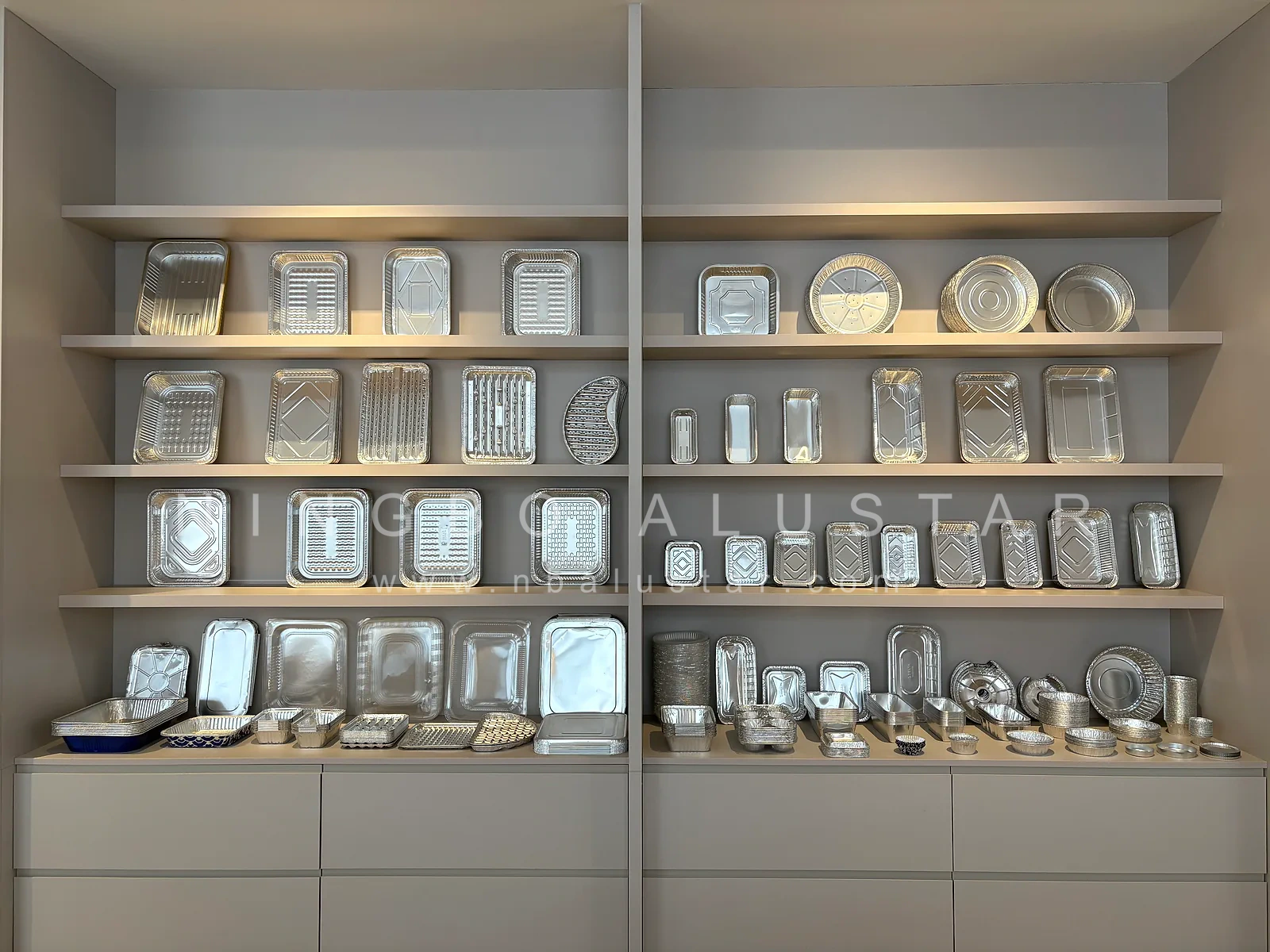
A supermarket should not force hot counter food, chilled ready meals, bakery items and back-of-house catering into one untested foil pack. Build a small format system by temperature and merchandising route, then validate lid fogging, label and barcode adhesion, tamper approach, shelf footprint, stacking, replenishment and consumer handling with the real product.
Split the assortment by retail route
Map preparation area, fill temperature, lidding, display cabinet, hold time, markdown, consumer transport, storage and reheating for each food family. Hot roast chicken and a chilled pasta bake may look similar on shelf but create different steam, closure, label and instruction requirements.
Use the fewest formats that pass each route without making one SKU perform incompatible jobs. Shared lid families and label panels can simplify replenishment, but only after fit and use conditions are controlled.
| Retail zone | Pack priority | Store trial |
|---|---|---|
| Hot counter | Steam, grease, safe handling and rapid closing | Hold, fog, lid retention and carry |
| Chilled ready meal | Seal, label, stack and reheating instruction | Cold case, condensation, scan and opening |
| Bakery/dessert | Shape, display and top clearance | Cooling, clear lid, shelf presentation |
| Back-of-house catering | Large-load support and carton handling | Kitchen fill, trolley, two-hand lift |
Design the lid, label and barcode as one retail face
Choose a closure from temperature and merchandising need. A clear lid can improve visibility but may fog or have a lower temperature limit; a board lid offers print area but hides the food; film can support controlled ready-meal lines but needs validated sealing equipment.
Reserve a flat, clean label location that remains readable after cooling, hot holding or condensation. Check date code, ingredients, instructions, barcode quiet zones and tamper evidence on the packed product, not a digital artwork alone.
- Scan barcodes after the complete temperature route.
- Check labels at carton and shelf contact points.
- Measure fogging and visibility at the planned display time.
- Separate remove-before-heating components in the instruction.
Run a store pilot that captures operations and waste
Pilot at representative stores and shifts. Record de-nesting, filling, closing, labeling, cabinet fit, replenishment, damage, markdown, leakage, customer carry, returns and waste; a packaging choice that adds seconds at every pack can outweigh a small unit saving.
Include normal and peak counter conditions. High steam, hurried closing, overfill, mixed staff experience and crowded cold cases often reveal problems that a quiet supplier sample room cannot reproduce.
- Time pack-out and label application by food family.
- Count closure failures and damaged rims by shift.
- Photograph presentation at start and end of hold.
- Record the reason for markdown, return or disposal.
Control replenishment, cartons and substitute SKUs
Store teams need unmistakable tray and lid codes, visible carton labels, reliable pack counts and a defined shelf location. Similar-looking rims are a common source of mismatched lids, so use controlled pair codes and avoid approving substitutions by outer size alone.
Set reorder points from sales, case quantity, lead time and seasonal peaks. Test export or distribution cartons after compression and handling, then confirm the trays still de-nest and the labels or lids have not shifted.
- Print tray and lid pair references on warehouse labels.
- Define who may approve an emergency substitute.
- Check carton gross weight for store handling.
- Review slow-moving packaging before artwork or menu changes.
Give Alustar a retail assortment brief
Send the food families, hot or cold routes, portion and fill height, display cabinet and shelf dimensions, target lid or visibility, labeling area, reheating instruction, case quantity, store count, forecast, destination and evidence requirements.
Alustar can shortlist existing formats and lid families for a controlled store pilot, then support packing and private-label discussions. Freeze the smallest assortment that passes operations, food quality, merchandising and distribution rather than expanding codes before evidence exists.
- Separate hot-counter and chilled-retail approval routes.
- Include store staff in sample scoring.
- Approve label and barcode on the final closure.
- Link repeat orders to the pilot specification and photos.
Sources and further reading
Continue this buying path
Use these related guides to move from initial selection to specifications, compliance, and supplier evaluation.
Application Guide
Aluminum Foil Containers for Ready Meals: Freezer, Oven, and Retail Shelf Requirements
Read guideBuyer Resources
Takeout Aluminum Foil Containers: Buyer Guide for Restaurants and Distributors
Read guideApplication Guide
Aluminum Foil Tray Uses: Takeout, Catering, Bakery, BBQ, Airline, Ready Meals, and Retail Food
Read guideLid Guide
How to Choose Aluminum Foil Containers with Lids: Foil-Board Lids, PET/PP Plastic Lids, and Heat-Seal Film Compared
Read guideRelated aluminum foil products
Buyer next steps
FAQ
Can supermarkets use one clear lid for hot and chilled food?
Only if the exact lid and tray pair is approved for both food-contact and temperature routes and passes fogging, fit, carry and display trials. Do not infer the lid's limits from the aluminum tray.
How can a deli pack reduce lid fogging?
Control fill and closing temperature, steam load, headspace, cooling and ventilation with the real food and approved lid. The solution may change visibility, hold time or food quality, so validate the complete route rather than promising a fog-free material alone.
What makes a foil tray suitable for retail labeling?
It needs a stable, clean label plane on the closure or sleeve, enough space for required copy and barcode quiet zones, and proven adhesion and readability after the actual hot, chilled or frozen route plus carton and shelf contact.
How should a supermarket pilot a new foil container?
Use representative foods, stores and peak shifts; measure packing time, closure, cabinet fit, scan, presentation, damage, markdown, carry, returns and waste. Approve the exact tray, lid, label, case and instructions together.