Updated5 min readBuyer Resources
Aluminum Foil Container Price Guide: What Affects Factory Cost and Export Quotation?
Understand aluminum foil container price factors including material weight, alloy, thickness, lid, carton packing, MOQ, tooling, freight, and OEM requirements.
Quick Answer
An aluminum foil container price is meaningful only when every supplier quotes the same finished-piece weight, dimensions, alloy or temper, lid, pack count, artwork, Incoterm, and order volume. Compare cost per usable packed unit and landed cost—not a bare price per piece—because a lighter tray, weaker carton, omitted lid, or different freight basis can make the lowest quotation the most expensive program.
Put every quotation on one commercial basis
A supplier can quote per piece, per thousand, per carton, or per metric ton, and each basis can hide a different assumption. Build one comparison sheet that converts all offers to the same currency, quantity, tray-and-lid combination, carton configuration, and delivery point.
Record every deviation beside the number. If one offer uses a lower piece weight, a plain carton, fewer lids, a different payment term, or EXW while another is FOB, the prices are not competing specifications yet.
| Cost block | Quotation input | Comparison risk |
|---|---|---|
| Tray | Dimensions, alloy/temper, target piece weight and tolerance | A lighter sample is compared with a stronger approved tray |
| Closure | Lid code, material, print, quantity ratio and packing | The lid is omitted or quoted separately |
| Packing | Pieces per sleeve/carton, carton grade, pallet or floor load | A weak export carton lowers price but raises damage |
| Tooling and artwork | One-time fees, trial rounds, plates, ownership and revisions | Setup charges appear after award |
| Logistics | Incoterm, port, volume, gross weight and validity | EXW, FOB and CIF totals are mixed |
Understand what moves the tray conversion cost
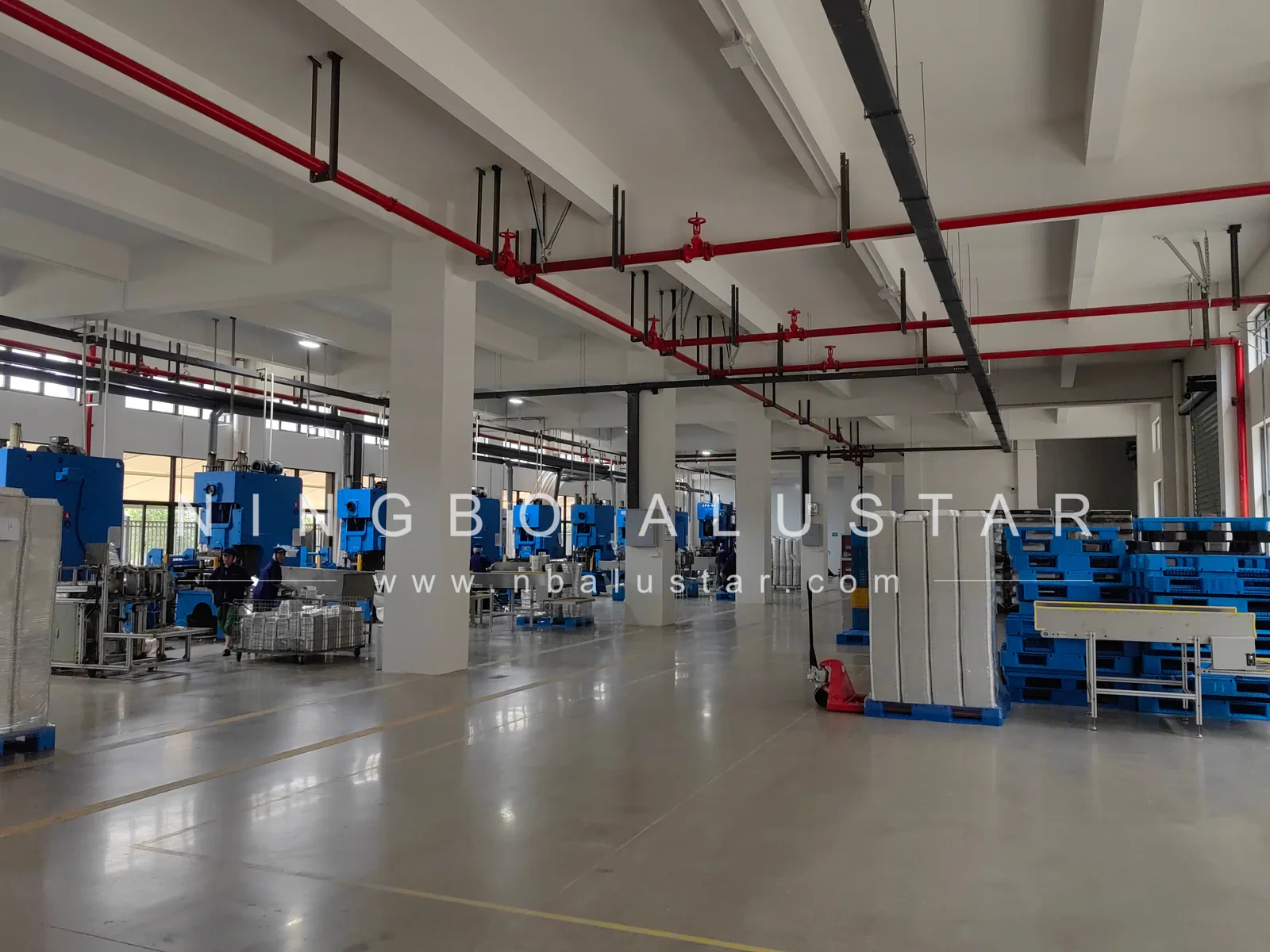
Finished-piece weight is usually a more useful buying control than a vague label such as standard or heavy duty. Dimensions, draw depth, wall angle, reinforcement, flange geometry, scrap pattern, run speed, and quality tolerance determine how much material and press time a stable piece needs.
Metal-market changes may move the raw-material portion, while color coating, embossing, special surface requirements, short runs, or difficult de-nesting add conversion cost. Ask the supplier to separate recurring unit cost from one-time development cost so later repeat orders remain auditable.
- Compare measured piece-weight ranges, not an unverified nominal thickness.
- Ask whether quoted scrap, setup loss, inspection and normal production yield are included.
- Keep tooling, printing plates and artwork changes outside the recurring tray price.
- Set a quotation validity period when metal or freight inputs are volatile.
Calculate packed and landed cost
A carton that holds more trays can lower freight per piece, but excessive compression can deform rims and make de-nesting difficult. Use the approved unit pack and export carton to calculate cubic meters, gross weight, container utilization, destination handling, duty, local delivery, and expected damage allowance.
The useful landed-cost denominator is the quantity received in saleable condition. Include lid shortages, crushed rims, mixed codes, relabeling, slow opening on a packing line, and rejected lots when comparing an incumbent pack with a lower quote.
- Convert every offer to cost per 1,000 usable tray-and-lid sets.
- Show ocean or road freight as a separate, updateable line.
- Model both trial quantity and normal repeat-order quantity.
- Record currency, tax treatment, duty assumption and payment cost.
Reduce cost without silently changing performance
Cost engineering should change one controlled variable at a time. A buyer might compare a slightly lower piece weight, a different nesting count, a standard lid, or a plain master carton, but each option must pass the same filled-load, closure, stack, transport, and receiving checks as the approved pack.
The safest savings often come from SKU consolidation, existing molds, better carton utilization, realistic tolerances, combined production forecasts, or separating retail artwork from the protective master carton—not from removing material without validation.
- Keep the current pack as the control in every cost-down trial.
- Measure failure rate and packing-line time as well as unit price.
- Approve revised drawings, samples and carton data before purchase-order release.
- Require change notification after the optimized specification is frozen.
Send an RFQ that produces comparable prices
A price request should contain a drawing or complete dimensions, target piece-weight range, food and temperature route, lid code, pack count, carton requirement, annual forecast, first order, destination, requested Incoterm, documentation scope, sample plan, and quotation deadline.
Ask each factory to confirm compliance with the base specification and list every alternative separately. Alustar can compare existing molds first, prepare a tray-and-lid sample set, and show unit, carton and shipment assumptions on the same quotation basis.
- Request a price-break table instead of one unexplained MOQ price.
- Separate sample, tooling, artwork and recurring production charges.
- State whether pallets, fumigation, inspection or third-party testing are required.
- Define the exchange-rate or metal-price adjustment method for long programs.
Request an Aluminum Food Container Wholesale Quote
An Aluminum Food Container Wholesale quote is meaningful only when the tray, lid, pack count, carton, quantity break, and shipping term are aligned. Tell Alustar whether the program is for distribution, restaurant supply, cash-and-carry, supermarket retail, or a private-label range so the quotation can use the right SKU and carton assumptions.
Wholesale buyers are welcome to source from Alustar for trial orders and repeat supply programs. We can compare available molds, mixed-SKU loading options, lid bundles, neutral or printed cartons, and container utilization before confirming the order.
- List each SKU, lid option, pieces per inner pack, and requested carton quantity.
- Request price breaks for the realistic trial, reorder, and container quantities.
- Separate tray price, lid price, printing, tooling, inspection, and freight.
- Confirm carton dimensions and loading quantity before comparing landed cost.
Direct B2B procurement
Aluminum Foil Containers Wholesale
Plan bulk supply for importers and distributors with product selection, quantity breaks, mixed-SKU loading, lids, cartons, forecasts, and repeat orders.
View solutionSources and further reading
Continue this buying path
Use these related guides to move from initial selection to specifications, compliance, and supplier evaluation.
Buyer Resources
Aluminum Foil Container MOQ Guide: What Affects Minimum Order Quantity?
Read guideImport Guide
How to Import Aluminum Foil Containers from China: MOQ, Samples, Certificates, and Shipping
Read guideSupplier Selection Guide
How to Choose an Aluminum Foil Container Manufacturer in China
Read guideMaterial Guide
Aluminum Foil Container Thickness Guide: Gauge, Strength, Weight, and Cost
Read guideRelated aluminum foil products
Buyer next steps
FAQ
How should buyers compare aluminum foil container prices?
Normalize every quote to the same drawing, finished-piece weight range, lid, packing, quantity, Incoterm and currency. Then compare cost per 1,000 usable sets and landed cost, with deviations and one-time charges shown separately.
Does a thicker foil tray always provide better value?
No. Value depends on the finished structure and failure risk. Compare piece weight and performance with the real food, lid, stack and delivery route; unnecessary material raises cost, while under-specification raises damage and complaints.
Why can the lowest unit quotation cost more after import?
A low unit price may exclude lids, stronger cartons, tooling, inspection, pallets or freight, or use a lighter tray. Landed cost also changes with carton cube, damage, relabeling and the share of units received in saleable condition.
What should Alustar receive before preparing a quotation?
Send dimensions or a sample, intended food and temperature route, target weight or strength, lid choice, packing, first order and annual forecast, destination, Incoterm and required documents. This lets the team compare a relevant existing mold before discussing custom tooling.