Updated6 min readProduct Guide
Round Aluminum Foil Containers: Uses, Lid Options, and Size Selection
Choose round aluminum foil containers for soups, rice, bakery, desserts, deli food, and retail packs by capacity, rim style, lid fit, and packing.
Quick Answer
A round foil container is the right choice when the food, closure, and handling route benefit from an even perimeter—not simply because the portion is described as a bowl or pie. Select by usable base, depth, wall angle, rim system, filled center of gravity, and whether the pack will hold liquid, set food, baked food, or a shallow grilled item. Test the candidate with its exact lid and filled product through closing, lifting, tilting, heating, stacking, delivery, and opening; nominal capacity does not prove rim stability or liquid control.
Choose a round family by load behavior
Start with what moves inside the pack. Free liquid pushes against the full circumference during a tilt, a baked cake becomes a relatively stable disc after setting, and a shallow grill item may need drainage and broad exposure rather than depth. Those loads call for different wall, rim, and closure priorities.
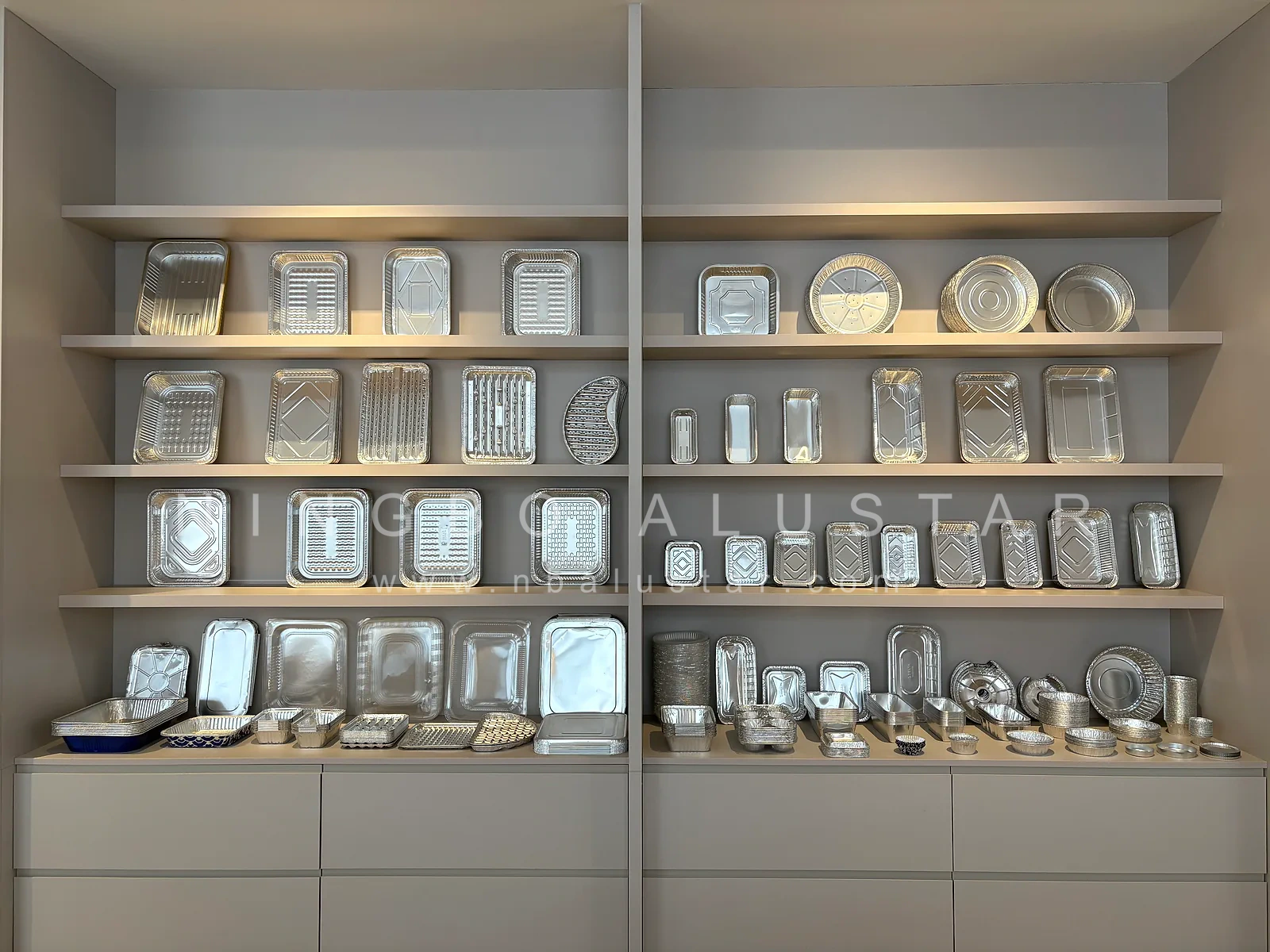
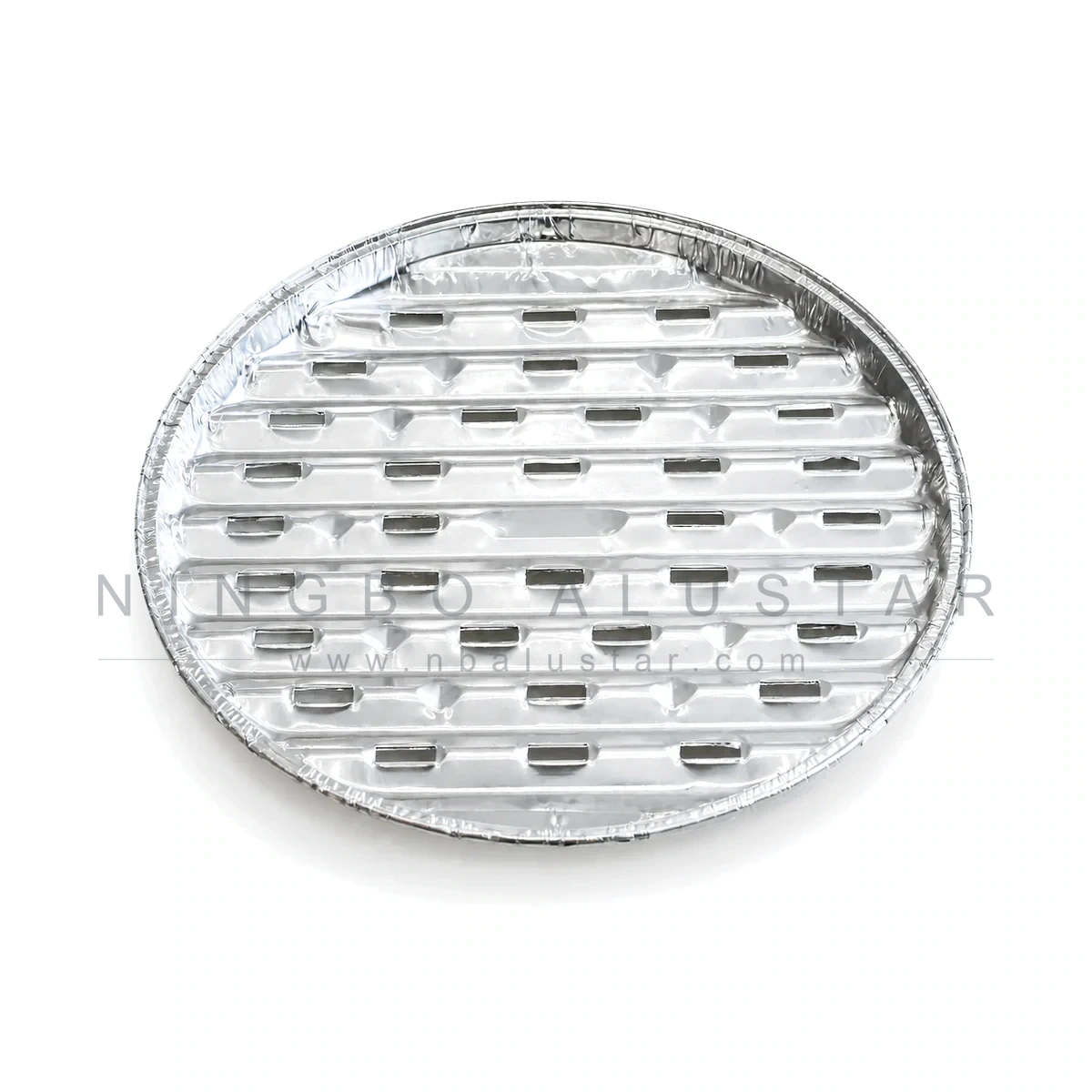
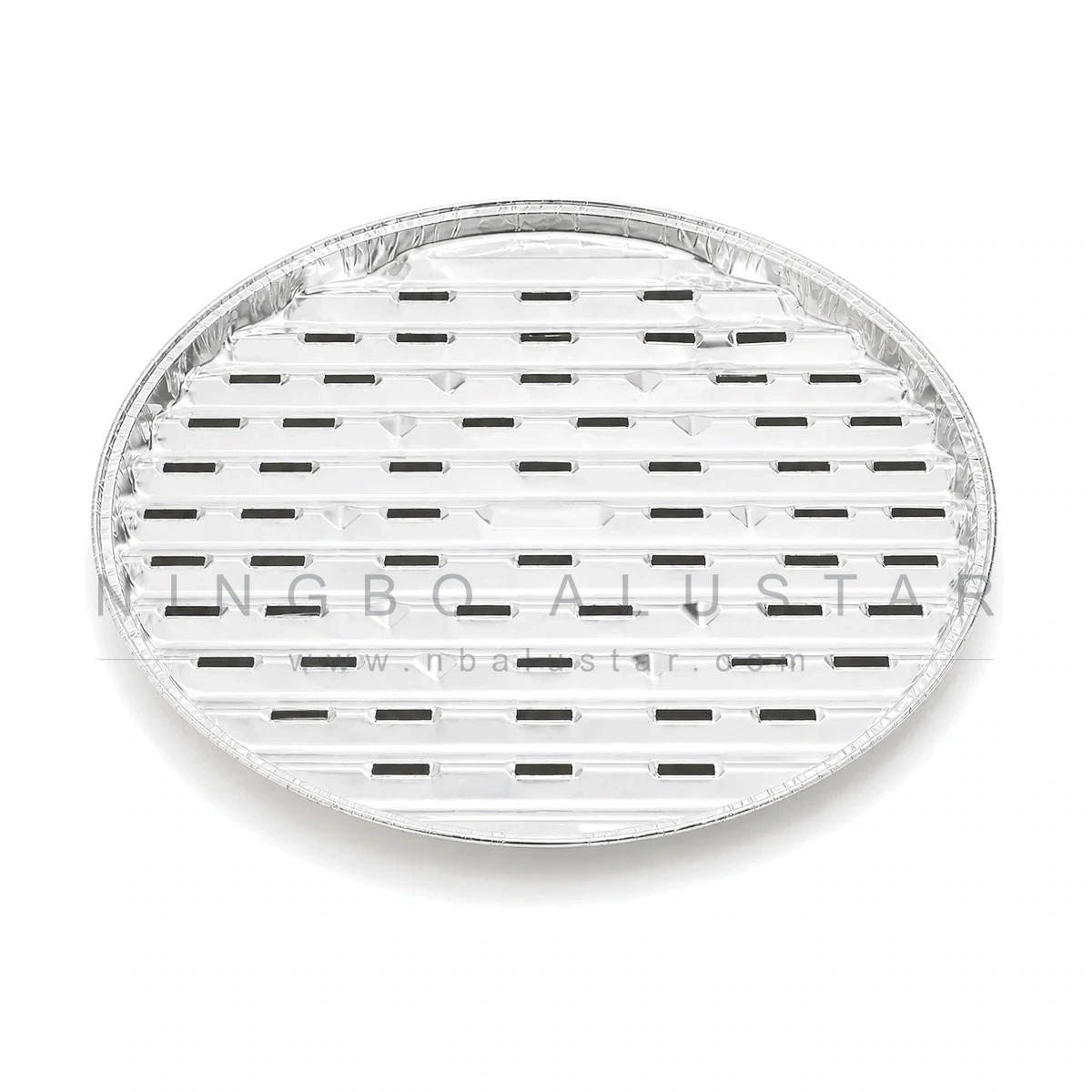
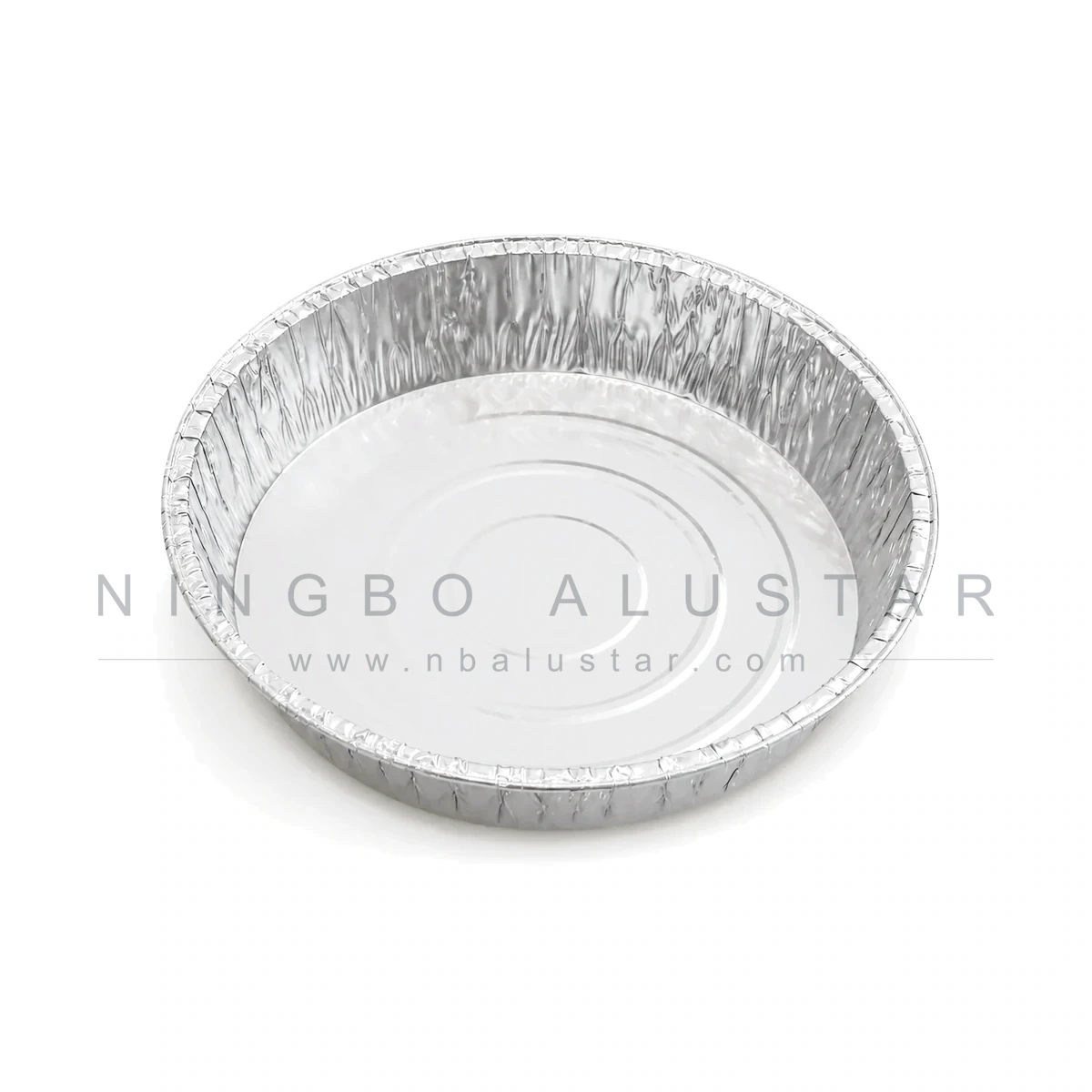
Existing sample paths include deeper round formats such as SP816 or SP817, a smaller round format such as SP818, and shallow round grill trays such as SR830 or SR850. A grill-tray code should not be treated as a soup bowl, and a deep food cup should not be assumed to vent or drain like a perforated grilling format.
| Filled route | Round-format priority | Reject the sample if |
|---|---|---|
| Soup, sauce, or braise | Continuous rim, lid engagement, sidewall and lift stability | The lid walks off, liquid reaches the rim channel, or the warm pack buckles |
| Rice, pasta, or deli portion | Usable base, scoop access, stack behavior | Food crowds the closure or the base rocks after filling |
| Cake, pie, or set dessert | Shape retention, heat path, release and presentation | The center remains under-set or the rim marks the product |
| Shallow grilling | Exposure, drainage design, support method | Grease pools unexpectedly or the tray sags between grill supports |
| Chilled retail pack | Condensation path, lid visibility, shelf footprint | Condensate reaches the seal or stacked packs become unstable |
Read round geometry beyond the diameter
Top diameter describes the opening, not the food-supporting base. Wall angle determines how quickly the usable floor narrows, while depth changes both portion height and the leverage applied to the rim when a filled pack is lifted. Compare a section drawing or measured sample rather than using one diameter as the complete specification.
Roundness also matters to closure. Check the rim at several clock positions and after normal nesting, filling, heating, and handling. A small oval distortion may be hard to see but can create one loose sector in a snap-on or crimped lid and one tight sector that operators overwork.
- Record top, usable-base, and closure-interface dimensions separately.
- Measure rim shape at more than one clock position.
- Check the filled center of gravity at the approved portion range.
- Keep the approved lid code tied to the tray revision, not just a diameter label.
Engineer the lid around a complete circular seal
A round lid must remain engaged through the weakest point on the circumference. Test closure force at multiple positions and define whether the operator presses continuously around the rim, uses a tool, crimps the edge, or applies film. A lid that clicks at one point is not proof that the full circle is secure.
For wet food, establish a safe fill line below the closure interface and include food particles, oil, and steam in the trial. For a chilled clear lid, inspect condensation and visibility; for a board or foil lid, inspect curl, puncture, and opening. Closure material, coating, adhesive, and temperature route need their own evidence rather than inheriting the aluminum body's heat tolerance.
- Mark and inspect at least four clock positions during closure trials.
- Challenge the highest approved fill without contaminating the rim channel.
- Test opening after the longest planned storage condition.
- Verify lid-to-tray packing ratios and code segregation before shipment.
Validate the filled round pack through motion and temperature
Build the trial in the same order as the real process: de-nest, fill at the lower and upper portion limits, clean the rim as production would, close, heat or chill, stack, and hold for the planned time. Measure the pack before filling and after the thermal step so ovality, rim lift, or base distortion is visible.
Then challenge circular load transfer. Lift from the operator's normal grip, rotate the pack, tilt it in several directions, place it in the delivery carrier, and open it as the consumer will. For liquid routes, inspect every clock position for wetting; for set foods, inspect sliding, edge breakage, and whether the product pulls the sidewall inward.
| Trial action | Round-pack observation | Record |
|---|---|---|
| Close | Continuous engagement and force around the rim | Loose or over-tight clock positions |
| Thermal step | Roundness, base seating, headspace | Before/after measurements and photos |
| Lift and rotate | Rim flex, grip security, food movement | Approved grip and maximum filled load |
| Multi-direction tilt | Leak path or product shift | Direction, duration, and failure location |
| Open and serve | Opening force, exposed edge, scoop access | Consumer-use acceptance result |
Prevent nesting and carton pressure from changing roundness
Round containers pack efficiently, but efficiency can conceal radial compression. A tight sleeve or overfilled carton may arrive with an oval rim even when no piece looks crushed. Sample the top, middle, and bottom of stacks, measure de-nesting force, and close the approved lid on pieces from each location.
Filled packs need a different stacking limit. The upper pack may load the lid, the rim, a shoulder, or the food itself depending on the geometry. Identify the designed load path and test the planned column count inside the actual bag, crate, delivery box, or retail case rather than extrapolating from empty-container carton strength.
- Inspect stack positions separately instead of averaging the sleeve.
- Close lids on post-shipment samples, not only factory loose pieces.
- Define empty-container and filled-pack stacking limits independently.
- Keep round formats separated from visually similar lid families.
Avoid common round-container selection errors
Diameter-only purchasing is the first recurring error: it ignores usable base, depth, wall angle, rim profile, and lid revision. Capacity-only purchasing is the second: it ignores headspace and the force of a moving liquid. A third error is calling every round foil item a bowl even when it was designed as a shallow grilling or baking tray.
Teams also test leakage in only one direction, approve a hand-fitted lid that production cannot close consistently, or qualify an empty stack without checking post-shipment roundness. Replace each shortcut with a controlled artifact: section drawing, approved tray-and-lid pair, marked clock positions, production closure method, and samples recovered from the final carton configuration.
- Never substitute a lid because its nominal diameter sounds equivalent.
- Never use a perforated or shallow grill format for wet food without a separate design review.
- Never approve leakage from a single tilt direction.
- Never set filled stacking from an empty-carton compression result.
Sources and further reading
Continue this buying path
Use these related guides to move from initial selection to specifications, compliance, and supplier evaluation.
Product Guide
Aluminum Foil Cups for Bakery, Sauce, Samples, and Small Portions
Read guideProduct Guide
Rectangular Aluminum Foil Containers: Takeout, Catering, and Ready Meal Buyer Guide
Read guideApplication Guide
Aluminum Foil Trays for Bakery and Desserts: Cups, Loaf Pans, Tart Trays, and Cake Cups
Read guideLid Guide
How to Choose Aluminum Foil Containers with Lids: Foil-Board Lids, PET/PP Plastic Lids, and Heat-Seal Film Compared
Read guideRelated aluminum foil products
Buyer next steps
FAQ
Is top diameter enough to match a round foil container and lid?
No. The closure depends on the complete rim profile, roundness, material construction, and tray and lid revisions. Approve a named tray-and-lid pair with closure testing at several clock positions.
Which existing Alustar formats can start a round-container sample review?
SP816, SP817, and SP818 provide different round food-format starting points, while SR830 and SR850 are shallow round grill-tray routes. The intended food and filled test must determine the final choice.
How should a round container for liquid food be tested?
Fill at the approved upper limit, close with the production method, apply the intended thermal and storage route, then lift, rotate, tilt in multiple directions, stack, transport, and inspect the full circumference for wetting or lid release.
Why can a round lid fit at the factory but fail after shipping?
Sleeve and carton pressure can make a rim slightly oval, especially at particular stack positions. Test de-nesting and closure on samples from the top, middle, and bottom of a production-packed carton after transport simulation.