Updated7 min readProduct Guide
Aluminum Foil Cups for Bakery, Sauce, Samples, and Small Portions
A buyer guide to aluminum foil cups for bakery, sauces, tasting samples, desserts, portion control, retail packs, and OEM packaging.
Quick Answer
Choose an aluminum foil cup by portion behavior, not by a generic small-container label. A tart shell needs shallow support and release, a cake cup needs rise clearance, a set dessert needs stable presentation, and a sauce or tasting portion needs food-contact, tipping, closure, and hold-time evidence. Existing SP805, SP806, SP816, and SP818 formats offer different sample starting points, while SP811 is a multi-cavity baking route. Approve the actual fill with the dosing tool, thermal or chilled process, rim and closure, tray or carrier, consumer opening, and final carton; small volume does not make a use low risk.
Start with the fill behavior of one portion
Small foilware spans several product families that should not be collapsed into one cup category. A shallow tart support, rising batter cup, deep round portion, set dessert dish, and free-flowing condiment load the wall and rim differently. Define whether the food is deposited before heating, filled hot, filled cold, frozen, released, or served in the foil.
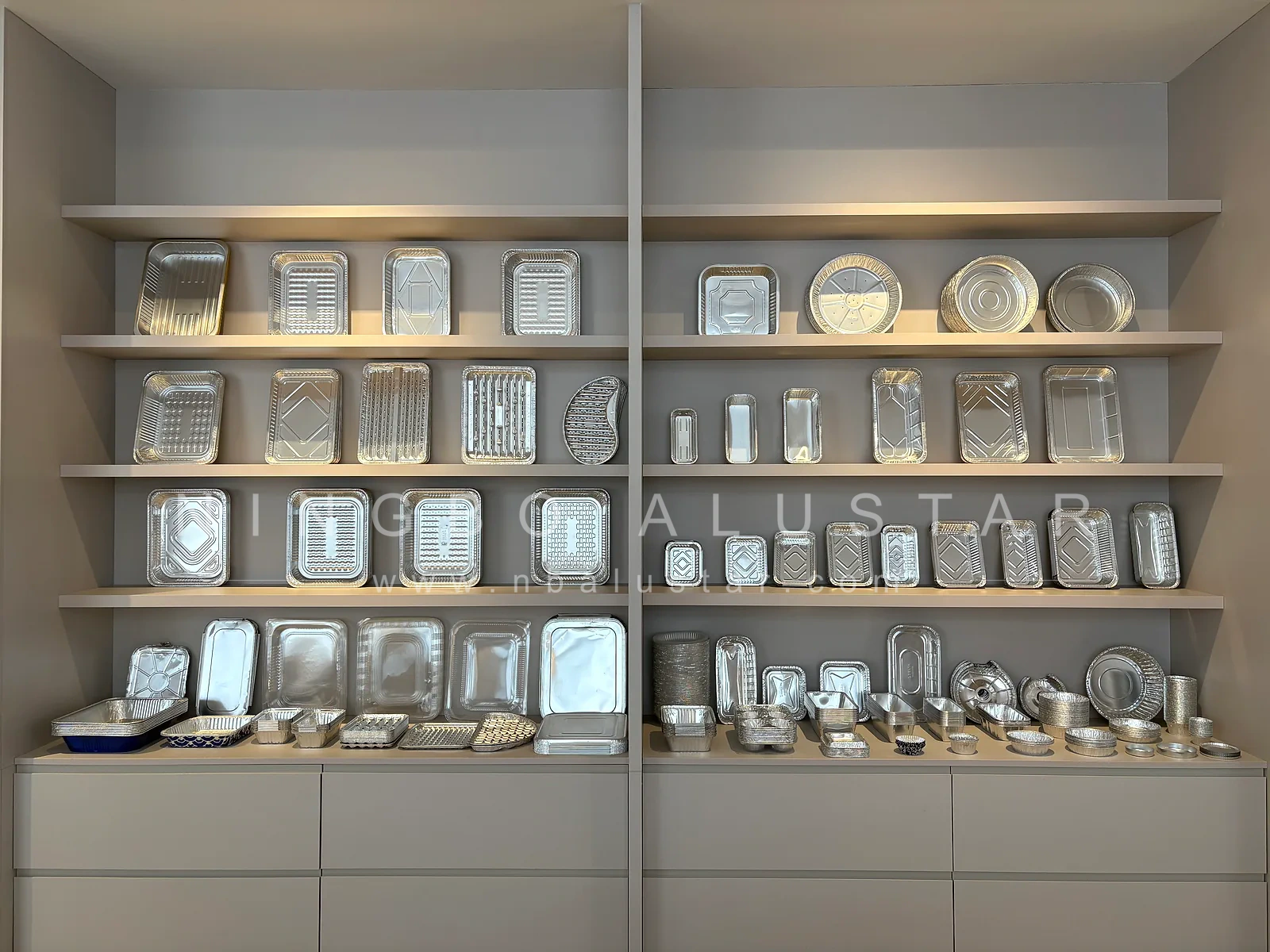
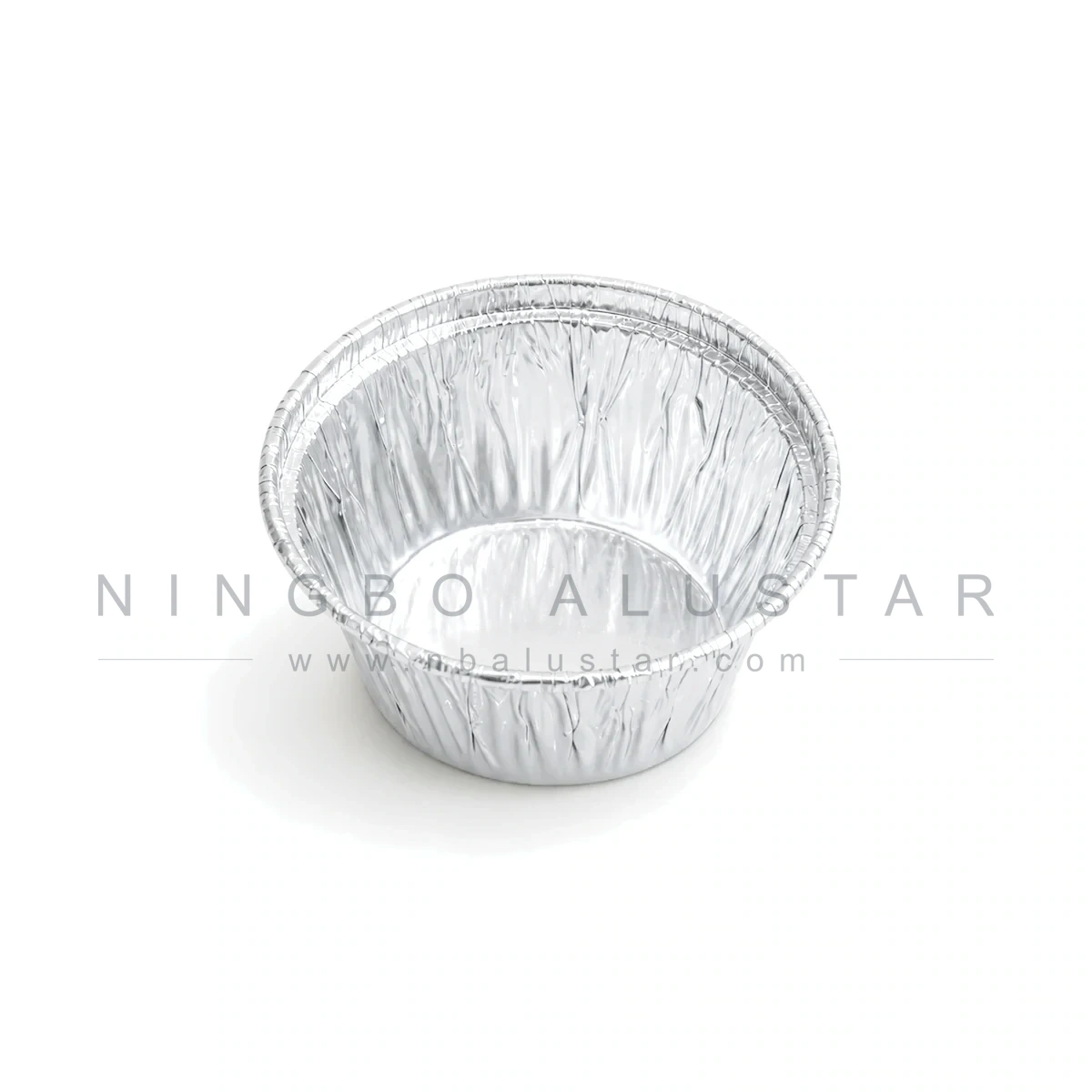
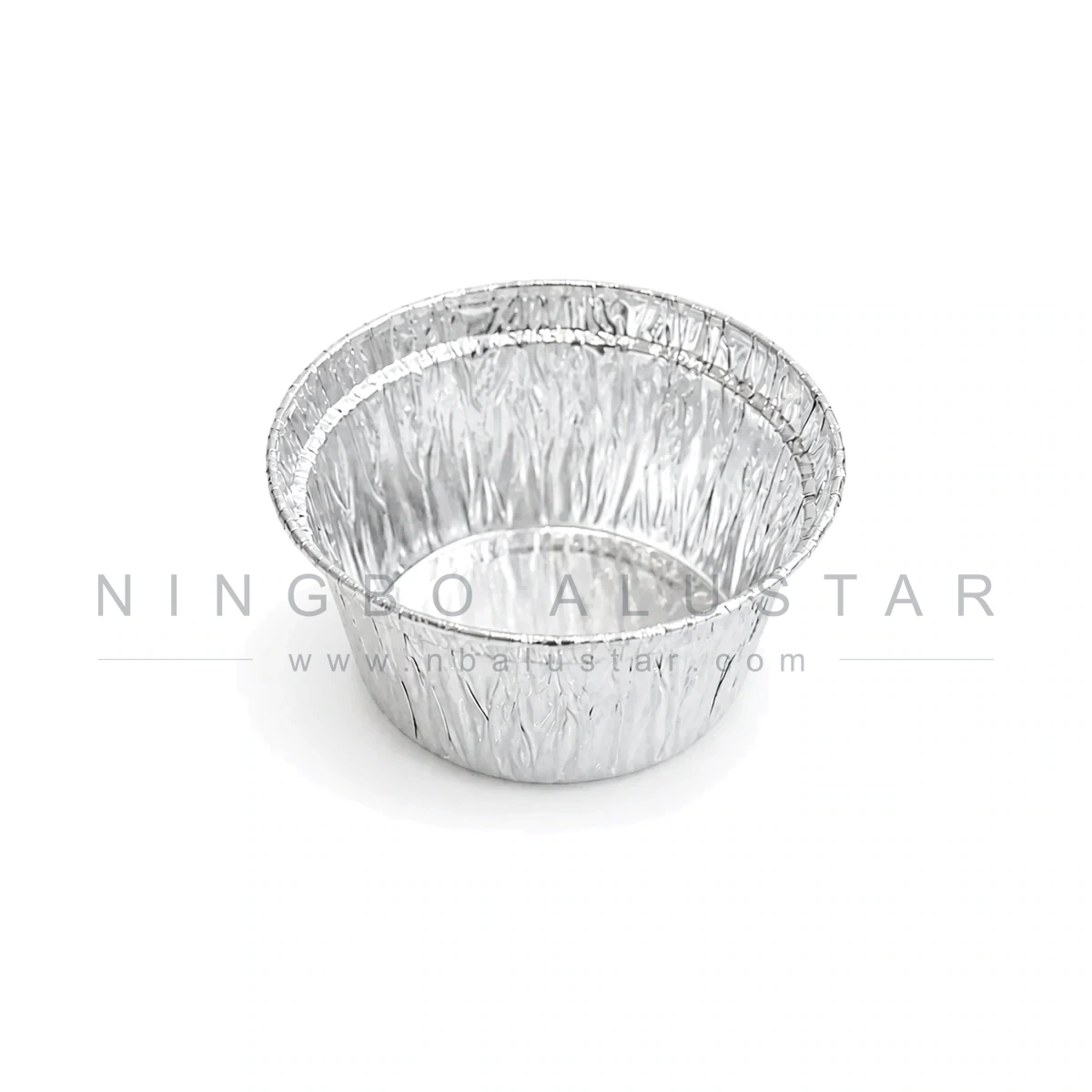
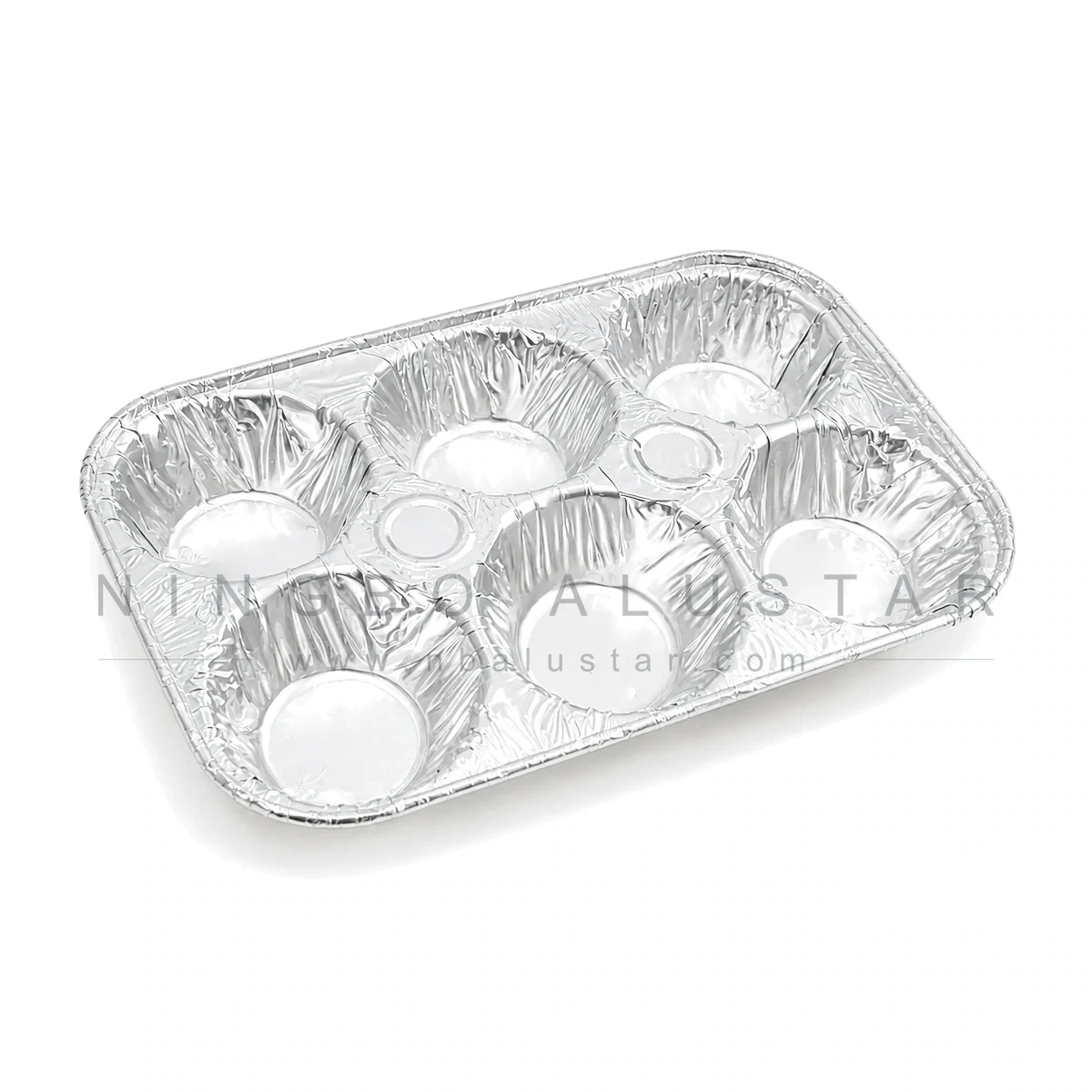
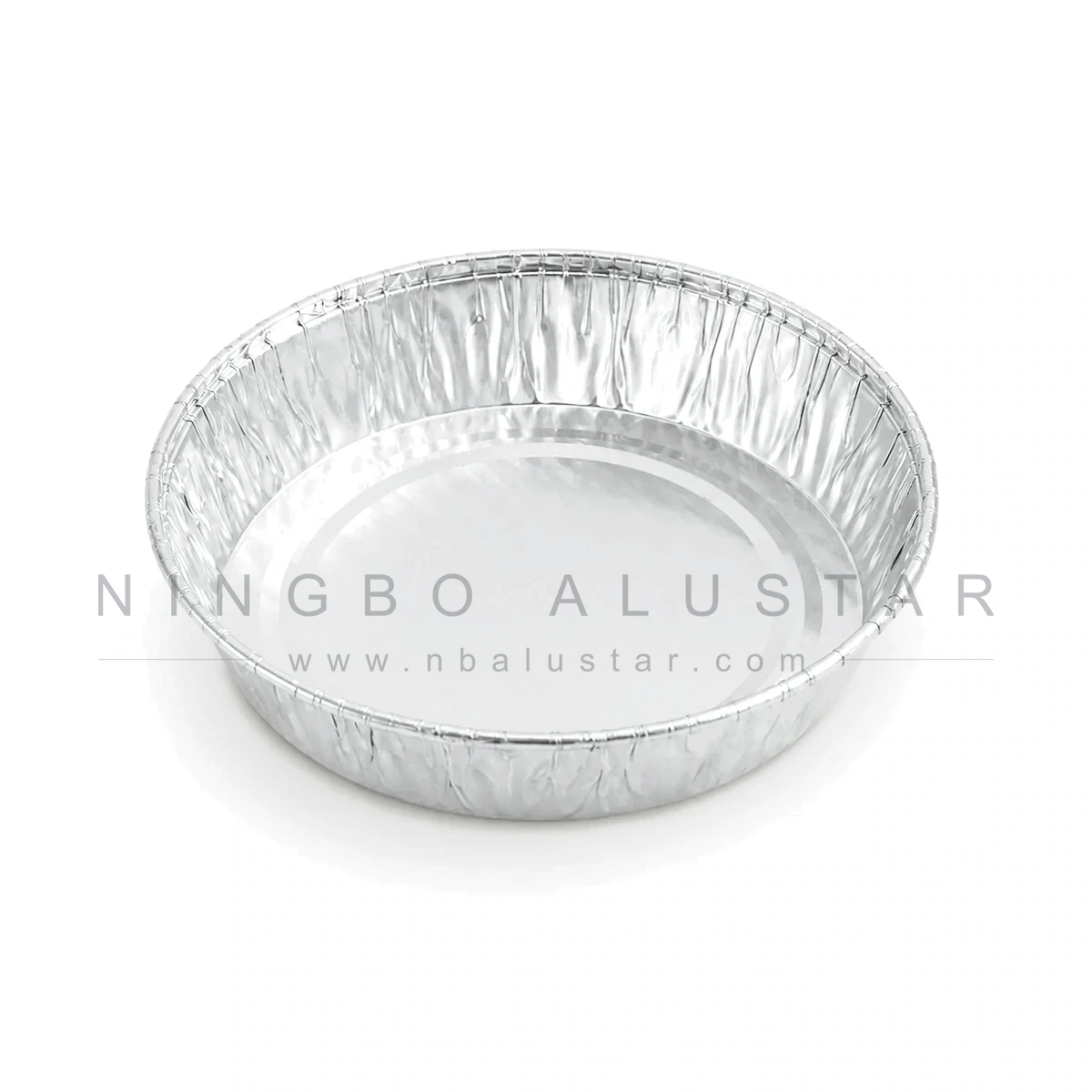
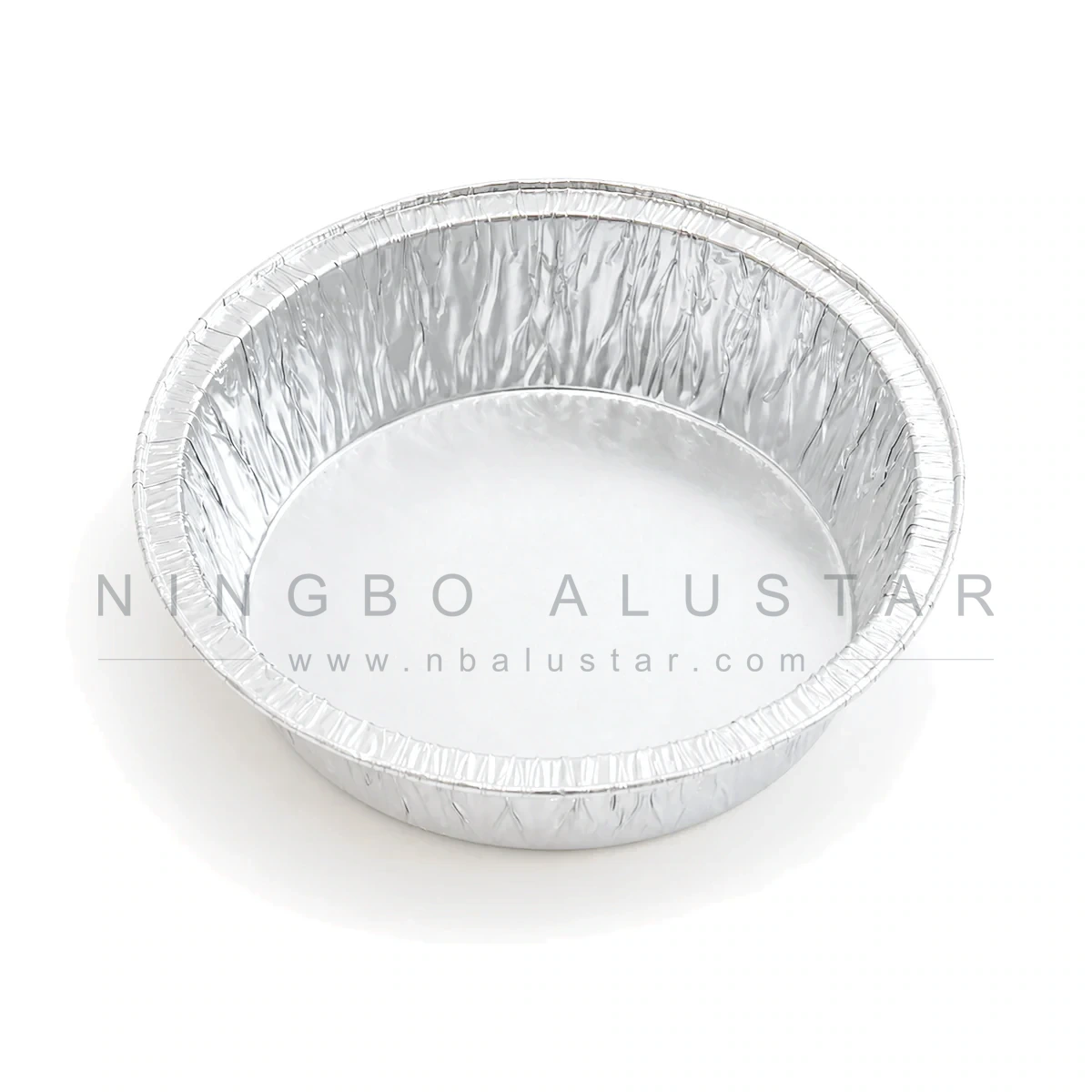
SP805 is an existing tart-cup route, SP806 a cake-cup route, SP816 a higher round format, and SP818 a smaller round format. SP811 holds repeated baking cavities as one tray. These codes can organize samples, but a new sauce, tasting, or dessert use requires its own evidence rather than inheriting the catalogue name.
| Portion route | Cup characteristic to evaluate | Approval evidence |
|---|---|---|
| Tart or pastry shell | Shallow base support and release, such as SP805 route | Shell shape, base bake, clean lift |
| Rising cake batter | Depth, wall support, headspace, such as SP806 route | Rise, center set, warm handling |
| Deep individual portion | Stable base and higher wall, such as SP816 route | Filled balance, utensil access, closure clearance |
| Small round dessert | Presentation and controlled portion, such as SP818 route | Fill repeatability, chill or bake result, opening |
| Repeated baked units | Integrated multi-cavity handling, such as SP811 route | Cavity consistency and whole-tray transfer |
| Sauce or tasting sample | Tip resistance, contact compatibility, secure cover | Real formula, hold, motion, and consumer-use trial |
Control dose, fill height, and top-heavy behavior
In a small cup, a few grams or a small placement error can materially change fill height and center of gravity. Set low, target, and high doses with the actual nozzle, scoop, or depositor. Observe whether the stream strikes and folds a wall, splashes the rim, traps air, or leaves one side heavier.
The highest dose must preserve working headspace for rise, stirring, decoration, transport, or closure. A cup that stands securely when half full may become easy to tip near the rim. Test it alone and in the planned carrier because a paperboard cell, multi-pack, or serving tray can be part of the stability design.
- Measure individual doses across the start, middle, and end of the run.
- Define a no-fill zone on the rim and any cover-contact area.
- Check cup stability at the highest approved fill and decoration state.
- Qualify the carrier whenever it is needed to prevent tipping or wall damage.
Qualify the exact food-contact and storage route
Bakery batter, oily sauce, acidic condiment, salty sample, dairy dessert, and frozen portion are not one contact condition. Identify the formula, contact time, filling temperature, later heating or chilling, and whether a coating, lid, adhesive, or label also contacts food. Request evidence that covers the actual construction and use rather than a general statement about aluminum.
Product quality also needs a formula-specific hold test. Look for color or flavor change, surface marking, pinhole or seam leakage, oil migration, drying, condensation, and residue at the rim. If the cup is used for tasting, include the time it sits exposed and the utensils, carrier, and disposal conditions used at the sampling station.
| Contact variable | Question for the evidence set | Filled check |
|---|---|---|
| Formula | Which food types and ingredients are covered? | Color, flavor, surface, leakage |
| Time | Does evidence cover the longest contact? | Start-versus-end hold comparison |
| Temperature | Are fill, bake, chill, freeze, or reheat steps covered? | Cup, closure, and food after the cycle |
| Other materials | Are coating, lid, adhesive, ink, and label addressed? | Every food-contact component inspected |
| Consumer use | Is opening, stirring, dipping, or eating-in-cup intended? | Rim, utensil access, and stability trial |
Treat rim, cover, and carrier as one small-pack system
Small cups have little mass when empty and can distort during de-nesting or closing. Verify that the rim stays clean and circular or otherwise within its controlled shape after filling. Test the named cover, film, or overwrap with the production method; a generic cap that seems close can release when the cup is squeezed or when the carrier flexes.
Opening deserves equal attention. Consumers may hold a small cup close to the rim, pull a tab while the product is warm, or place it on an uneven tray. Measure opening behavior, inspect the exposed foil edge, and check whether force tips the cup or splashes the contents. If a carrier is required for safe opening, keep it in the serving instruction.
- Test closure after the cup has passed through normal de-nesting and filling forces.
- Apply side squeeze and carrier flex before checking cover retention.
- Open at the highest approved fill and relevant serving temperature.
- Inspect the full exposed rim after cover removal.
Run a small-format validation at production speed
Sample cups from several stack positions and sleeves, then run the normal de-nester or manual separation method. Dose the real product at low and high limits, observe splash and placement, apply the thermal or chilled route, close or decorate, and place the cup in its carrier or multi-pack without hand-correcting the rim.
Challenge the finished unit in the way its small size makes most vulnerable: tip on the service tray, vibration in a multi-pack, squeeze during removal, opening force, utensil contact, and the longest planned hold. For multi-cavity baking, also compare cavity-to-cavity fill and thermal results while handling the whole tray, not isolated cups.
| Trial step | Small-cup measure | Release requirement |
|---|---|---|
| De-nest | Force, doubles, rim damage by stack position | Repeatable separation without shape loss |
| Dose | Weight, landing point, splash, headspace | Process holds low-to-high fill window |
| Process | Bake, hot-fill, chill, freeze, or hold result | Food and every component remain acceptable |
| Pack | Cover retention, carrier fit, count | No squeeze release, tipping, or missing units |
| Use | Open, stir, dip, eat, or release | Stable handling and acceptable exposed rim |
Avoid small-cup mistakes in counting, nesting, and reuse of assumptions
Small units make counting and nesting errors expensive. Deeply compressed stacks may contain the right count but separate poorly, while light cups can double-feed without immediate detection. Specify counting method, stack count, separator or inner-pack design, sampling by stack position, and a production de-nesting acceptance rather than relying on carton total alone.
The content shortcut is equally risky: approving a cup for sauce because it worked for cake, or for chilled dessert because it passed a short ambient sample. Formula, time, temperature, closure, carrier, and use must be requalified when the route changes. Do not use the word food-grade as a substitute for the exact contact and performance evidence.
- Do not approve a cup category; approve one named construction and use route.
- Do not maximize nesting pressure before line-speed separation is proven.
- Do not infer sauce compatibility from a bakery trial.
- Do not omit carrier and opening behavior because the portion is small.
Sources and further reading
Continue this buying path
Use these related guides to move from initial selection to specifications, compliance, and supplier evaluation.
Product Guide
Round Aluminum Foil Containers: Uses, Lid Options, and Size Selection
Read guideProduct Guide
Aluminum Foil Roasting Pans: Deep Trays, Large Trays, and Oven Use
Read guideApplication Guide
Aluminum Foil Trays for Bakery and Desserts: Cups, Loaf Pans, Tart Trays, and Cake Cups
Read guideProduct Guide
Compartment Aluminum Foil Containers: 2-Compartment and 3-Compartment Meal Tray Guide
Read guideRelated aluminum foil products
Buyer next steps
FAQ
Which Alustar products can start an aluminum foil cup review?
SP805 is an existing tart-cup route, SP806 a cake-cup route, SP816 a higher round format, and SP818 a smaller round format; SP811 is a multi-cavity baking tray. Select by the actual fill and validate the complete route.
Can a foil baking cup also hold sauce?
Only after a separate sauce-route review. The formula, salt or acidity, oil, contact time, temperature, tip stability, closure, leakage, and consumer use may differ completely from the baking application.
Why must small foil cups be tested in their carrier?
The carrier may prevent tipping, protect walls, control spacing, and support opening. It can also squeeze a cup or release a cover when flexed, so the cup and carrier need a combined filled test.
What should a foil-cup de-nesting specification include?
Include cups per stack, inner-pack method, allowed compression, sampling positions, separation force or line result, double-feed and rim-damage limits, and the test after final carton packing and transport simulation.