Updated6 min readApplication Guide
Aluminum Foil Trays for Bakery and Desserts: Cups, Loaf Pans, Tart Trays, and Cake Cups
A bakery buyer guide to aluminum foil cups, loaf pans, tart trays, cake cups, oven performance, retail display, lids, and private-label packing.
Quick Answer
Choose bakery foilware from the baked product backward: batter or dough expansion, target crust, release method, portion presentation, and the way the finished item is cooled, lidded, frozen, or sold. A tart cup, deep cake cup, loaf pan, round pan, and multi-cavity tray solve different process problems even when their nominal capacity looks similar. Shortlist an existing format, then run the actual recipe through filling, baking, cooling, release, decoration, display, and transport before approving the tray and its retail pack.
Match the foil format to the bakery process
The product name is only a starting point. Two cakes can need different wall angles and fill depths because one rises sharply and releases from the cup while the other stays in its foil pack for retail display. Record whether the foil is a baking mold, a shipping pack, a serving dish, or all three.
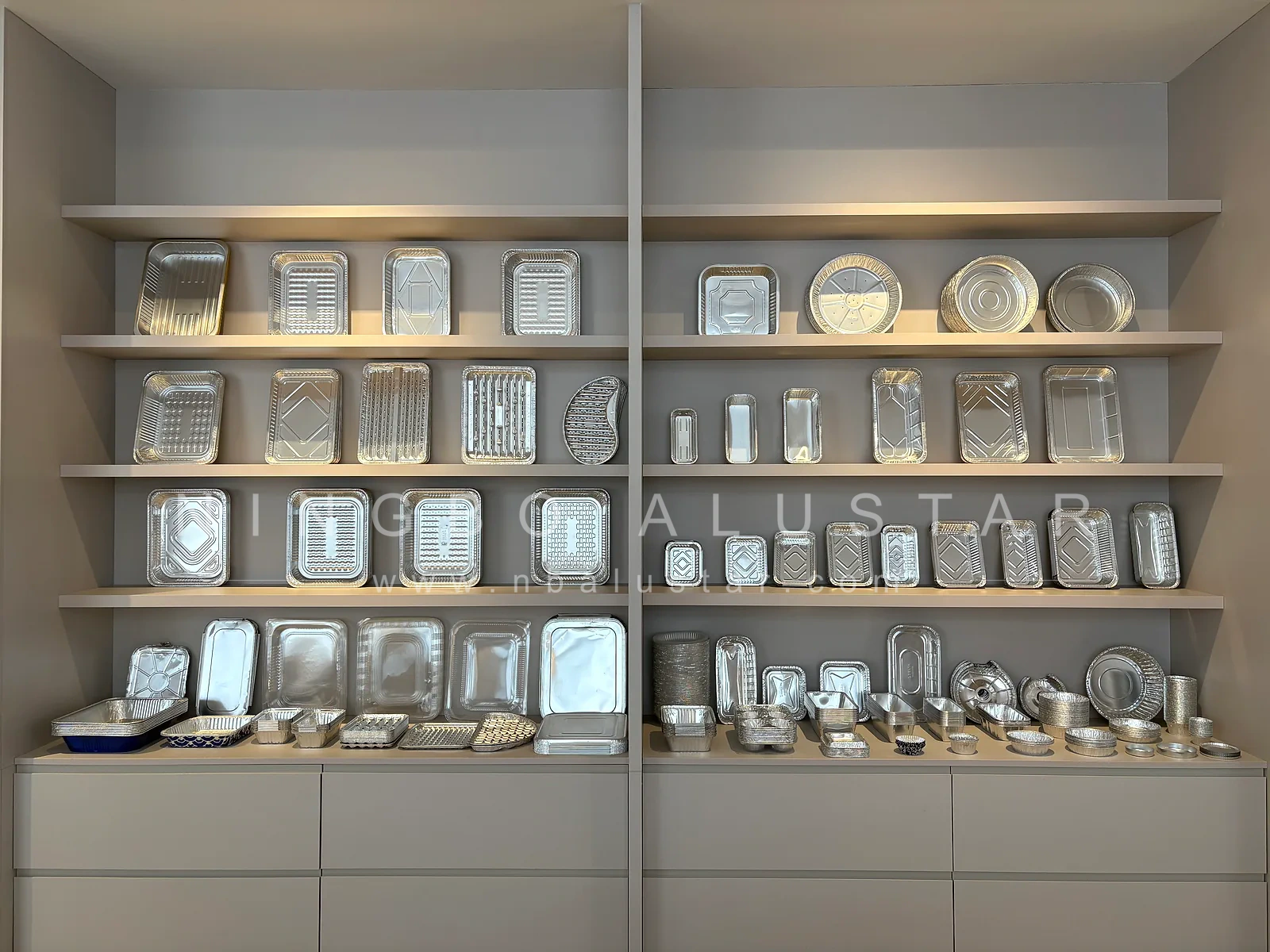
Alustar's existing range includes SP805 tart cups, SP806 cake cups, SF390 loaf pans, SP811 multi-cavity baking trays, and SP817 or SP818 round formats. These codes are useful sample routes, not automatic recipe approvals; the filled test decides whether the shape supports the product and the line.
| Bakery route | Format to evaluate | Decision evidence |
|---|---|---|
| Tart or custard shell | Shallow individual cup such as SP805 | Shell coverage, base browning, filling set, clean lift |
| Individual cake or pudding | Deeper cup such as SP806 | Rise clearance, side support, release or in-pack appearance |
| Loaf or bar product | Long pan such as SF390 | Center bake, sidewall spread, slicing and cooling behavior |
| Repeated small portions | Multi-cavity tray such as SP811 | Dose accuracy, cavity-to-cavity bake variation, handling speed |
| Round cake or dessert | Round formats such as SP817 or SP818 | Finished diameter, decoration space, board or lid compatibility |
Control fill line, heat path, and product expansion
Define fill weight and fill height together. A wide shallow pool exposes more surface while a deep narrow fill changes the distance to the center, so equal weights can produce different crust color, moisture loss, and bake time. Mark the approved fill line on the work instruction rather than relying on an operator's visual estimate.
Run the foilware on the real tray, rack, belt, or mold carrier. Contact with a dark sheet, an open wire rack, or a close-fitting support changes the heat reaching the base. Compare edge and center positions in the oven, and record the recipe setting used for the approved foil format instead of assuming the previous paper or steel mold setting transfers unchanged.
- Measure deposit weight at the start, middle, and end of a production run.
- Check the highest rise point against the rim, lid, and stacking clearance.
- Photograph top, side, and cut-section color under the same lighting.
- Record whether the foil sits freely, in a support ring, or on a baking sheet.
Design the rim and release route around the finished product
A rim that feels adequate when empty may distort when an operator lifts a warm, soft product. Test the intended grip points after baking and after cooling. If the consumer eats from the foil, inspect the rim after lid removal; if the product is released, inspect sidewall taper, base pattern, grease treatment, and the point at which release occurs.
Decoration can create a second geometry requirement. Frosting, fruit, glaze, or a raised loaf top may need clear space above the rim and away from a lid. Confirm the product's final height after cooling, not only its maximum oven rise, and check whether the lid or film can be applied without marking the surface.
- Approve a lift method for warm product and a separate consumer handling method.
- Check sharpness, wrinkles, and exposed foil after the lid is removed.
- Use the actual release agent and cooling time in trials.
- Test decoration and closure as one finished-pack step.
Run a recipe-specific bakery validation
Begin with dimensional and de-nesting checks on samples from more than one sleeve. Then run a small controlled bake with the normal depositor, oven load, rack position, and cooling method. Record fill weight, release, color, internal set, rim condition, finished height, and any leakage or oil staining.
The second round should challenge normal variation: the upper and lower fill limits, edge and center oven positions, warm handling, chilled or frozen storage if used, decoration, closure, and the planned distribution route. Freeze the recipe, foil code, support method, lid or film, pack count, and acceptance photos together so a future material or tool change can be compared with the same baseline.
| Validation stage | What to hold constant | Release criterion |
|---|---|---|
| Empty sample | Foil code, sleeve source, de-nesting method | No blocking, damaged rim, or unstable seating |
| Controlled bake | Recipe, fill weight, oven load, support | Color, set, shape, and release meet the control |
| Process window | Approved high/low fill and oven positions | Variation remains inside agreed limits |
| Finished pack | Decoration, lid or film, cooling state | Surface is protected and closure stays usable |
| Distribution | Retail pack, master carton, storage route | No unacceptable crushing, scuffing, or product damage |
Protect fragile bakery finishes in retail and export packing
Empty foilware and filled bakery packs fail differently. Empty cups need controlled nesting pressure and clean de-nesting; finished goods need headspace, lateral restraint, and protection from carton compression. Define which pack is shipped empty to a bakery and which is shipped with food, because the carton test and count basis are not interchangeable.
For private-label programs, approve artwork only after the final unit pack is stable. A window, sleeve, label, insert, or lid can hide the product, rub decoration, or slow packing. Trial barcode position, date coding, ingredient label space, and shelf-facing orientation on a production-representative pack before ordering printed material.
- Specify cups per stack, stacks per inner pack, and inner packs per carton.
- Set maximum nesting pressure from a de-nesting trial, not carton capacity alone.
- Check finished-product headspace after decoration and cold storage.
- Confirm barcode scanning on the intended shelf and case orientation.
Avoid bakery foilware mistakes that samples can conceal
The most common error is approving an empty cup because it looks premium, then discovering that the recipe rises into the lid, the base colors too quickly, or the warm rim cannot support handling. A second error is using one successful center-oven bake as evidence for every rack position and fill-weight variation.
Buyers also confuse cavity count with serving count, assume every foil surface releases the same recipe, or compress stacks until the line cannot separate them. Each of these errors has a direct test: use the actual depositor and oven map, inspect the food-contact and release route, and measure de-nesting with production-packed sleeves rather than hand-selected samples.
- Do not approve capacity without an approved fill weight and rise clearance.
- Do not transfer oven settings from paper, silicone, or steel without a comparison bake.
- Do not order printed packs before decoration and closure trials are complete.
- Do not accept a hand-separated sample as proof of production de-nesting.
Sources and further reading
Continue this buying path
Use these related guides to move from initial selection to specifications, compliance, and supplier evaluation.
Application Guide
Aluminum Foil Tray Uses: Takeout, Catering, Bakery, BBQ, Airline, Ready Meals, and Retail Food
Read guideFrench Bakery Packaging
Aluminum Foil Containers for French Bakery, Patisserie, Quiche, and Gratin
Read guideProduct Guide
Aluminum Foil Cups for Bakery, Sauce, Samples, and Small Portions
Read guideProduct Guide
Round Aluminum Foil Containers: Uses, Lid Options, and Size Selection
Read guideRelated aluminum foil products
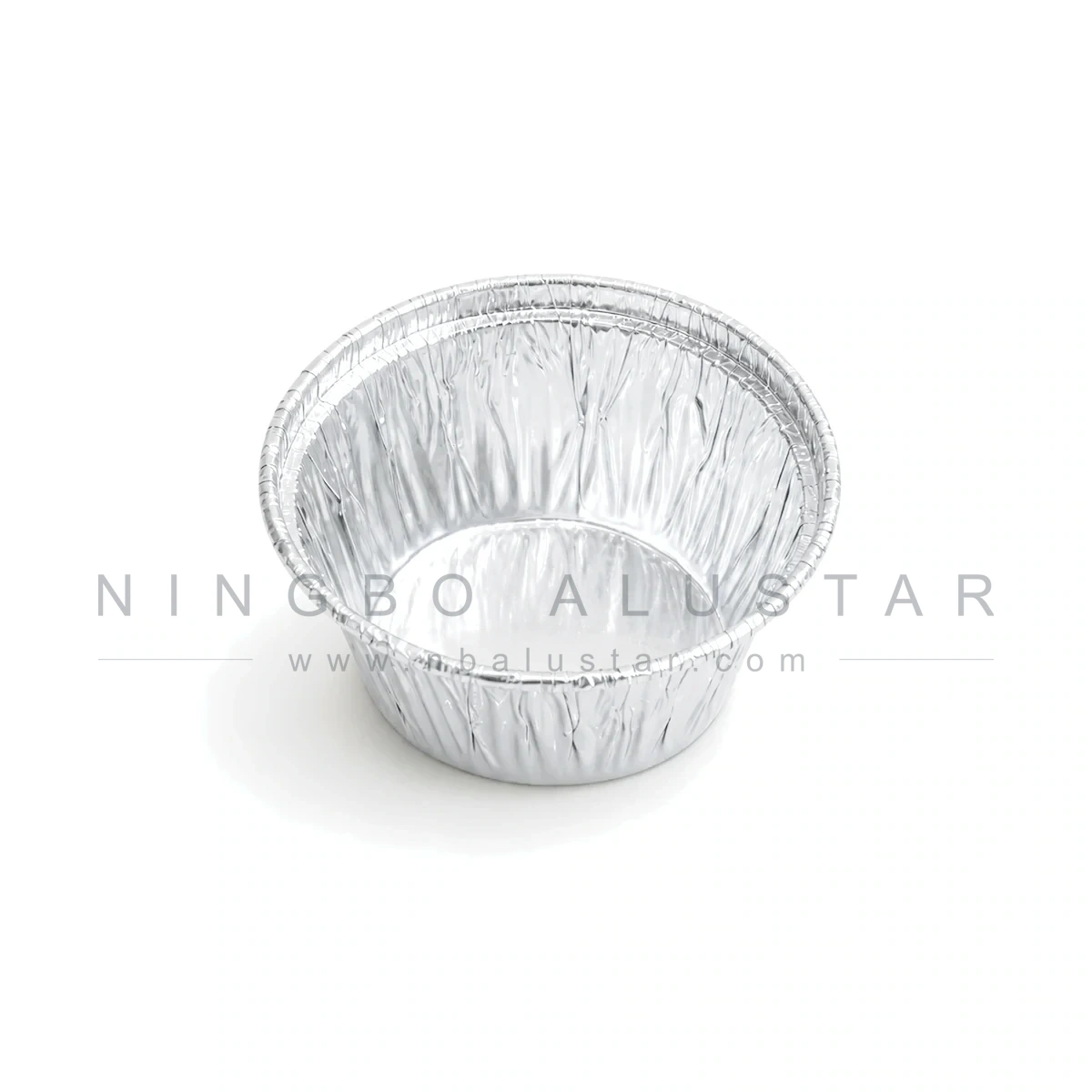
SP805
SP805 Foil Egg Tart Cup
Φ70 outer / 20 high
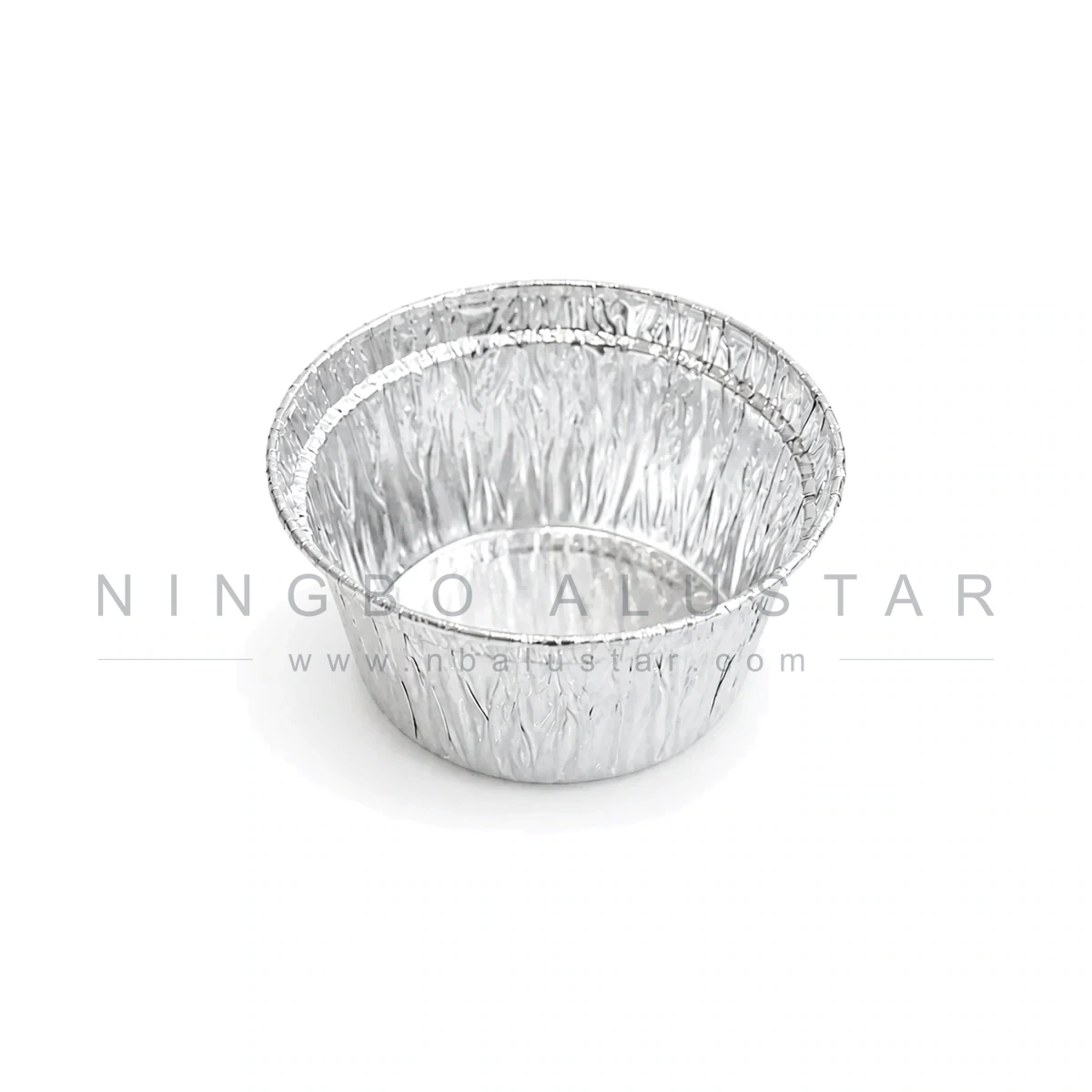
SP806
SP806 Foil Cake Cup
Φ85 outer / 40 high
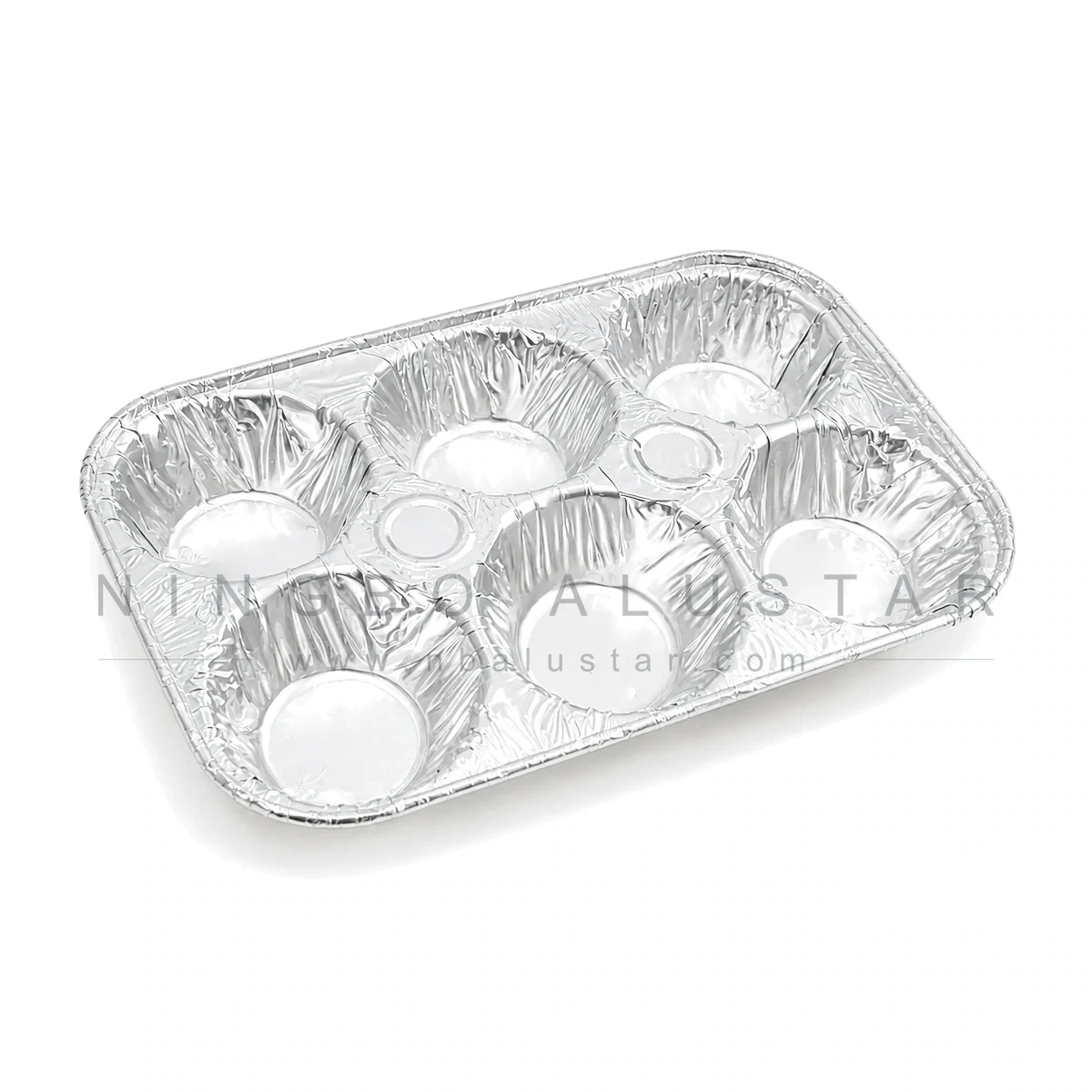
SP811
SP811 Six-Cup Foil Baking Tray
253x168 outer / 38 high
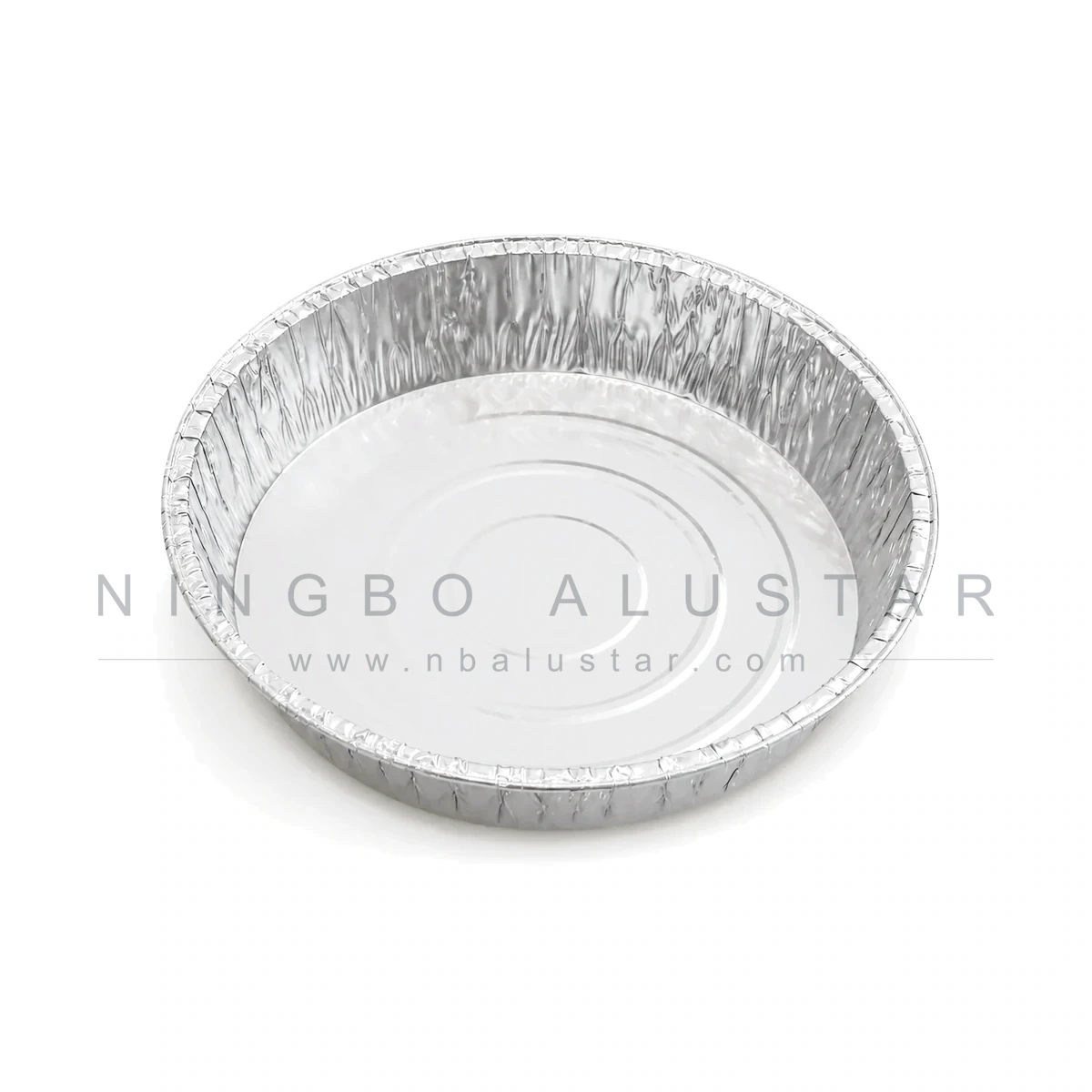
SP817
SP817 200 mm Round Foil Pan
Φ200 outer / 40 high
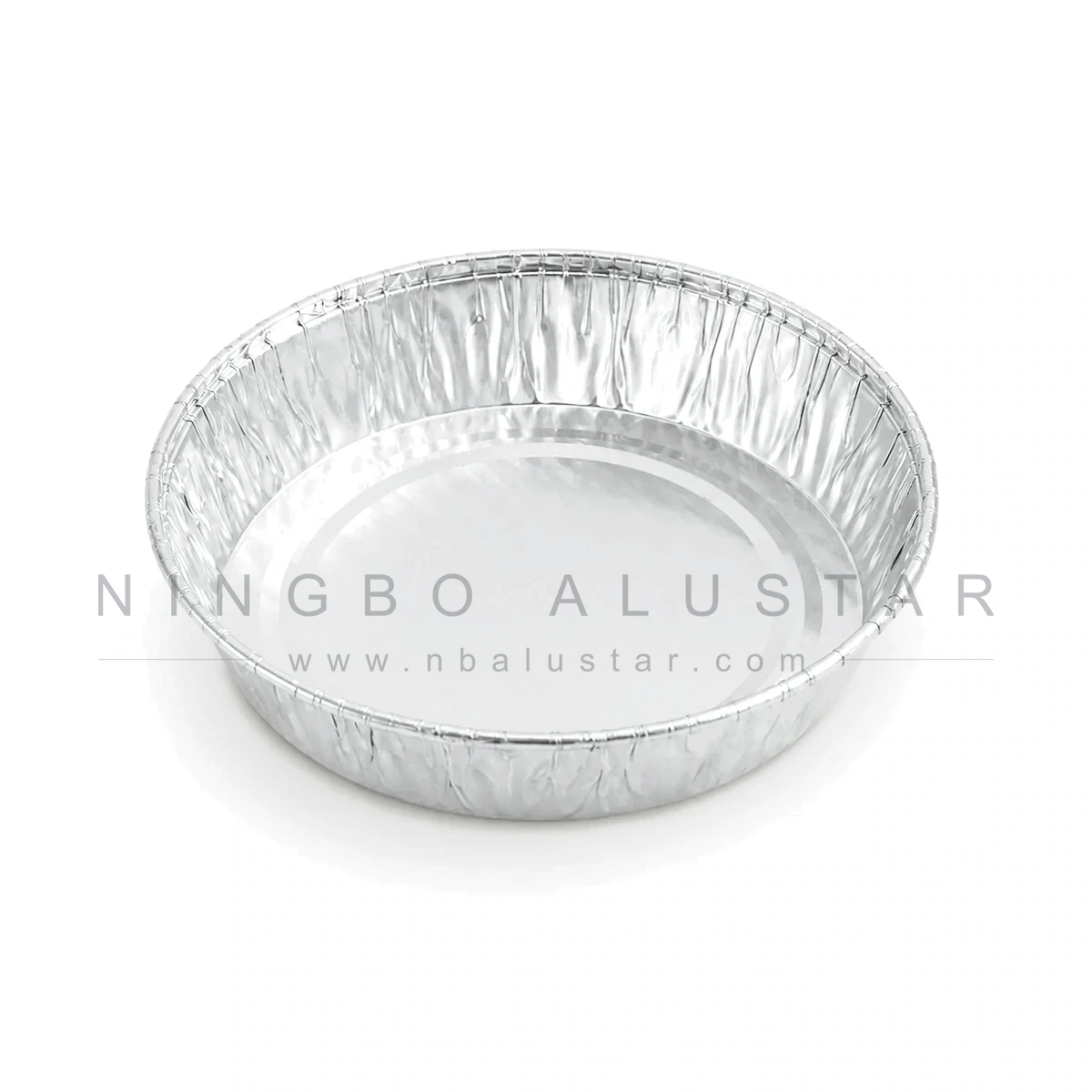
SP818
SP818 132 mm Round Foil Pan
Φ132 outer / 27 high
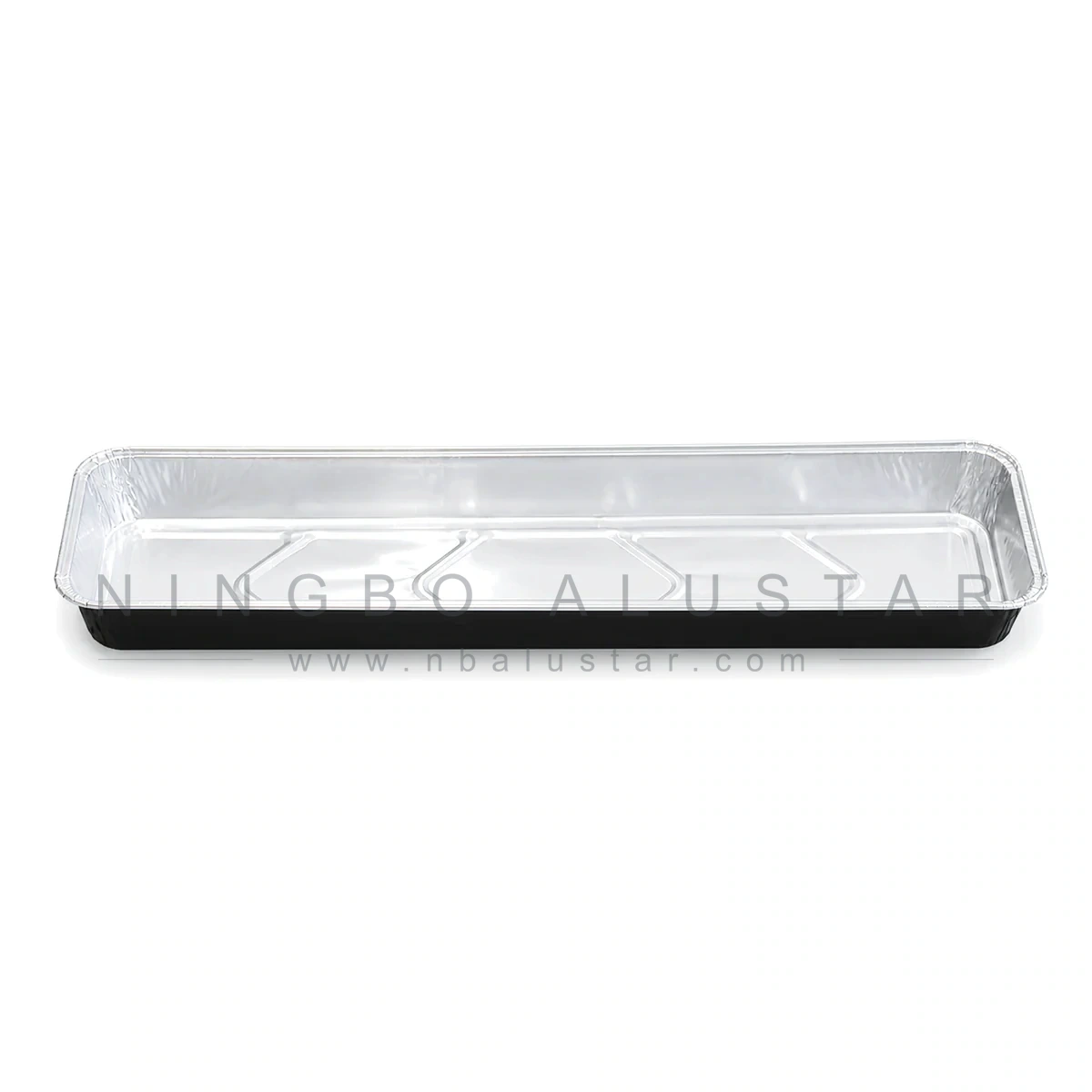
SF390
SF390 Long Foil Loaf Pan
391x106 outer / 30 high
Buyer next steps
FAQ
Should a bakery choose foil cups by volume or by fill weight?
Use both, but approve the pack by recipe fill weight, fill height, expansion, and finished appearance. Nominal volume alone cannot show rise clearance, center bake, release, or whether a decoration and lid will fit.
Can SP805 and SP806 be approved from their product names alone?
No. SP805 is an existing tart-cup route and SP806 an existing cake-cup route, but the actual recipe, deposit, support, oven, cooling, and retail pack still need a filled trial before commercial approval.
Why should bakery foilware be tested at several oven positions?
Airflow and heat exposure can differ between the center, edge, upper, and lower positions. Testing the intended production load reveals color, set, and shape variation that a single center-position sample can hide.
What must be frozen in an approved bakery foil specification?
Freeze the foil code and controlled dimensions or weight, approved sample, recipe fill range, support method, oven and cooling route, release treatment, lid or film, nesting and carton pack, artwork, and acceptance photos.